FDA Advisory Panel Recommends Placing TB-500 on Compounding List
What's Happening
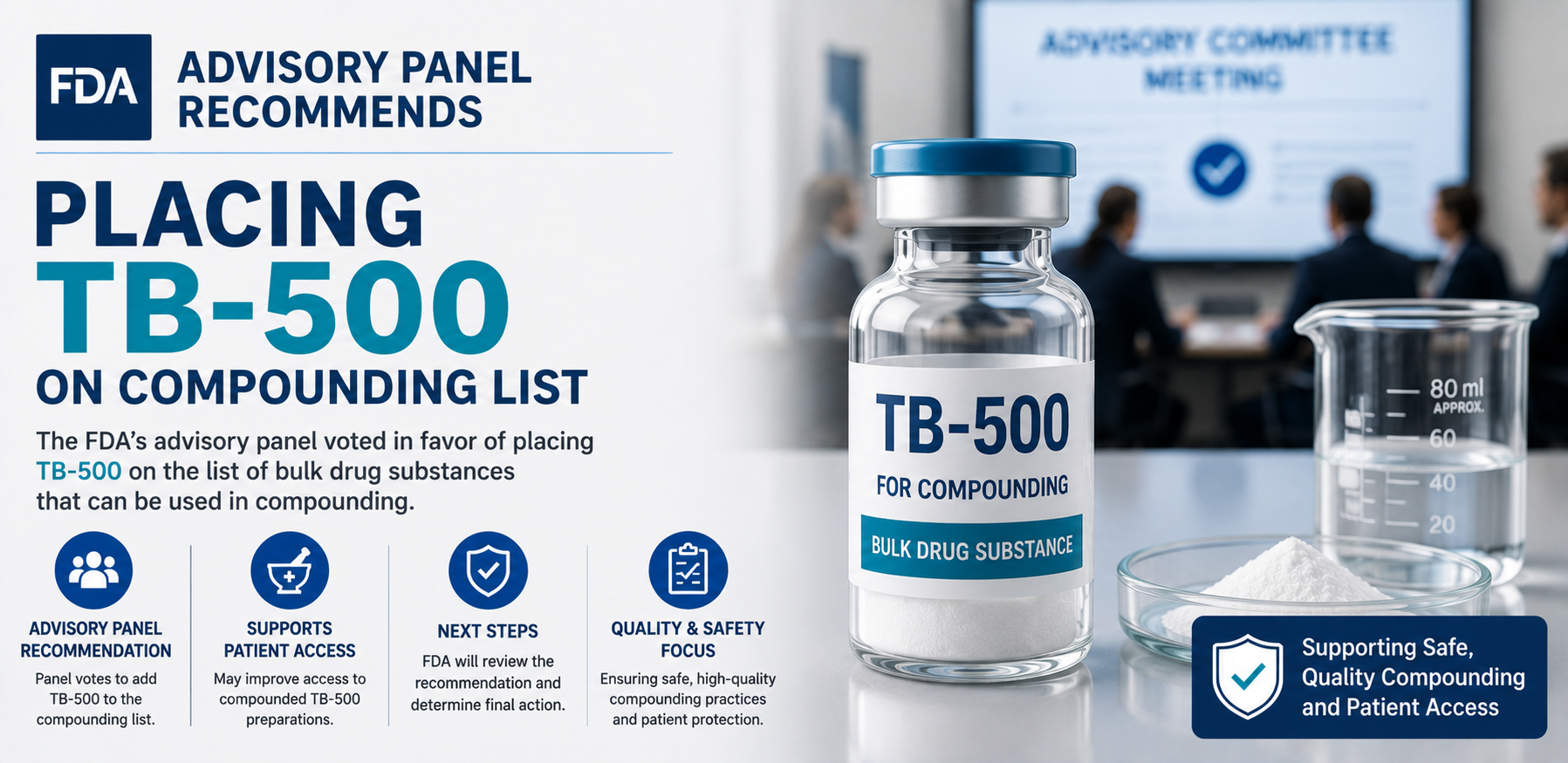
An independent advisory panel to the U.S. Food and Drug Administration (FDA) has voted to place TB-500, a synthetic peptide that has gained popularity in wellness, anti-aging, and sports medicine circles, on the agency's list of drug substances that may be eligible for pharmacy compounding.
The recommendation follows growing interest in peptides that are marketed for muscle recovery, tissue repair, and injury healing despite limited clinical evidence supporting their safety and effectiveness. The panel's vote is advisory, meaning the FDA will make the final decision after reviewing the committee's recommendation and public comments.
The decision is part of a broader FDA effort to evaluate several widely used peptides that have increasingly been sold through compounding pharmacies and wellness clinics.
What Is TB-500?
TB-500 is a synthetic version of a naturally occurring peptide fragment known as thymosin beta-4. It has been promoted for its potential ability to:
- Support tissue repair.
- Accelerate wound healing.
- Improve muscle recovery.
- Reduce inflammation.
- Enhance recovery after injuries.
Although these claims have made TB-500 popular among athletes and consumers seeking regenerative therapies, the peptide has not been approved by the FDA for any medical indication.
Most of the available research has been conducted in laboratory or animal studies, and there is limited high-quality clinical evidence demonstrating its safety or effectiveness in humans.
Why the FDA Is Reviewing Peptides
Compounding pharmacies are permitted to prepare customized medications for patients whose medical needs cannot be met by commercially available products. However, compounded drugs do not undergo the same FDA approval process required for branded or generic medications.
To help determine which bulk drug substances may be used in compounding, the FDA periodically reviews scientific evidence through advisory committees.
The panel evaluates factors such as:
- Available clinical evidence.
- Safety profile.
- Medical necessity.
- Potential public health benefits.
- Existing approved treatment alternatives.
The recommendation regarding TB-500 is one of several peptide evaluations currently underway as regulators respond to rapid growth in the compounded peptide market.
Why This Decision Matters
Interest in peptide therapies has expanded significantly in recent years, fueled by demand for regenerative medicine, longevity treatments, fitness recovery, and wellness services.
Many peptides have become commercially available through compounding pharmacies even though they lack FDA approval for specific medical uses. As utilization has increased, regulators have faced growing pressure to clarify which substances can legally be compounded and under what circumstances.
The FDA's review represents an effort to balance patient access with the need to ensure compounded medications are supported by sufficient evidence of quality, safety, and clinical need.
Industry Impact
- Compounding Pharmacies: The FDA's final decision could determine whether pharmacies may continue compounding TB-500, potentially affecting one of the fastest-growing segments of the personalized medicine market.
- Healthcare Providers: Physicians offering regenerative medicine, sports medicine, and wellness treatments may face changes in product availability depending on the FDA's final ruling.
- Patients: Individuals seeking peptide-based therapies could experience changes in access, pricing, or prescribing practices as federal oversight evolves.
- Regulatory Landscape: The recommendation signals increased regulatory scrutiny of compounded peptides, with additional reviews expected for other popular substances marketed for anti-aging and performance enhancement.
Why This Matters
The rapid expansion of the peptide market has created new opportunities for innovation while also raising important questions about evidence, regulation, and patient safety.
As demand grows for personalized and regenerative therapies, regulators are increasingly focused on ensuring that compounded products are supported by scientific evidence and appropriate manufacturing standards.
The FDA's final decision on TB-500 could influence how future peptide therapies are evaluated and shape the regulatory framework for a market that continues to expand beyond traditional pharmaceutical products.
Key Takeaways
- An FDA advisory panel voted to recommend placing TB-500 on the list of substances eligible for pharmacy compounding.
- TB-500 is a synthetic peptide promoted for tissue repair and recovery but is not FDA approved for any medical use.
- The recommendation is advisory, and the FDA will make the final decision after reviewing the panel's findings.
- The review is part of a broader FDA evaluation of several widely used compounded peptides.
- The outcome could affect compounding pharmacies, healthcare providers, and patients seeking peptide-based therapies.
What This Means for Healthcare Marketers
The FDA's continued review of compounded peptides reflects the growing demand for regenerative medicine alongside increasing regulatory oversight. Organizations involved in pharmacy services, biologics, sports medicine, and precision therapeutics should monitor these decisions closely, as they may influence prescribing patterns, patient demand, and market access. For healthcare marketers, clear communication around scientific evidence, regulatory compliance, and clinical credibility will become increasingly important as providers and patients navigate a rapidly evolving peptide landscape.