FDA Advisory Panel Supports Replimune's Skin Cancer Drug Data, Moving Therapy Closer to Potential Approval
What's Happening
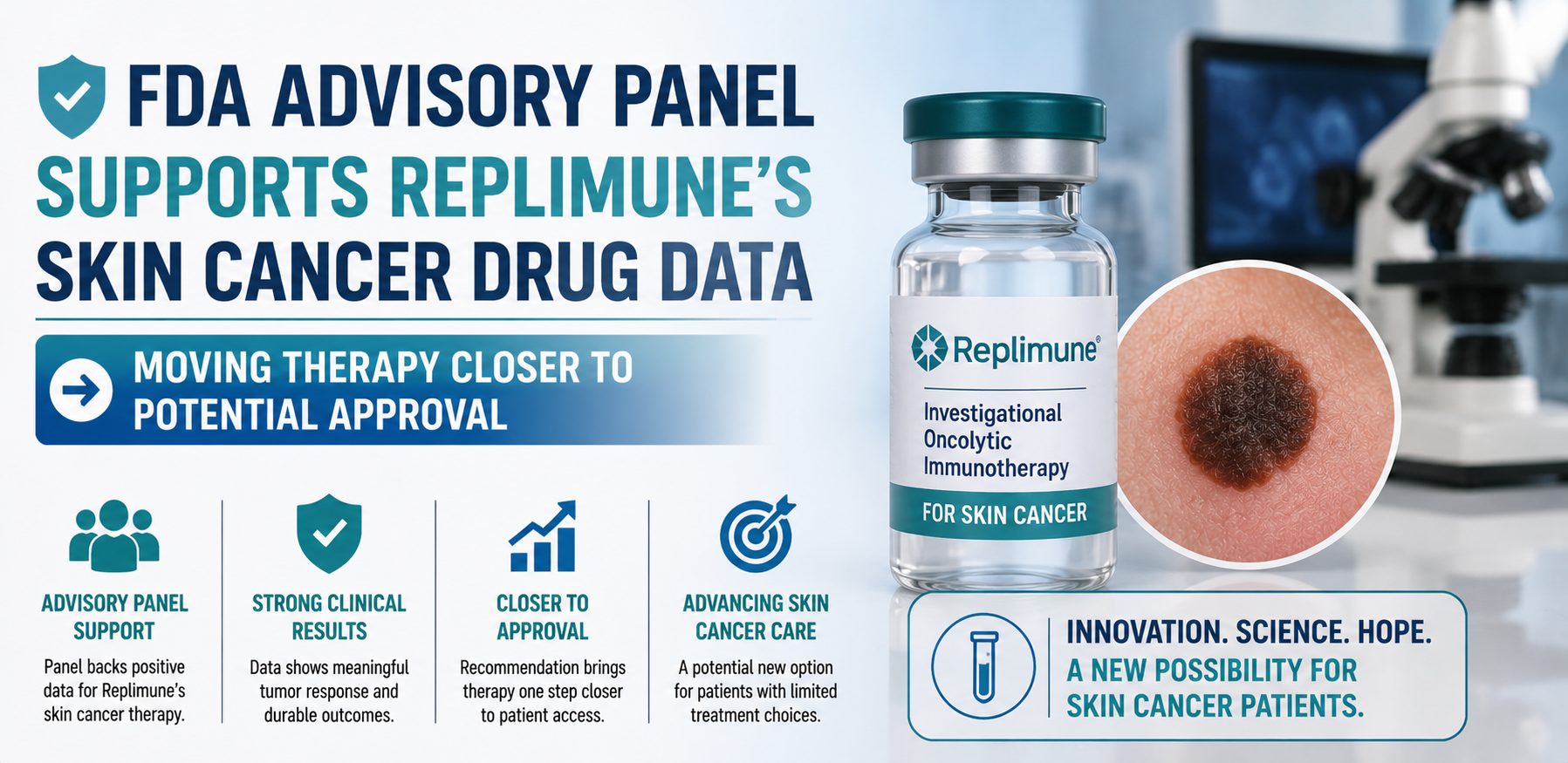
An advisory committee to the U.S. Food and Drug Administration (FDA) has voted in support of the clinical data submitted by Replimune for its experimental treatment for advanced skin cancer, marking an important milestone in the company's regulatory review process.
The panel concluded that the available evidence supports the effectiveness of the therapy, despite earlier concerns raised by FDA reviewers about aspects of the clinical trial. While the committee's recommendation is not binding, the FDA often considers advisory panel input when making final approval decisions.
If approved, the therapy could provide patients with an additional treatment option for advanced melanoma that cannot be completely removed through surgery.
Understanding the Treatment
Replimune's therapy is an oncolytic immunotherapy, a type of cancer treatment that uses a genetically modified virus to attack cancer cells while stimulating the body's immune system.
The treatment is injected directly into tumours, where the virus infects and destroys cancer cells. As these cells break down, they release tumour proteins that help activate the immune system, enabling it to recognize and attack cancer throughout the body.
This approach combines direct tumour destruction with immune activation, making it different from traditional chemotherapy or radiation therapy.
Why the FDA Advisory Panel Matters
The FDA frequently convenes independent advisory committees to review scientific evidence for new medicines before making approval decisions.
These panels evaluate whether the available data demonstrate that a treatment is both safe and effective for its intended use.
Although the FDA is not required to follow the committee's recommendation, advisory panel votes often play a significant role in the agency's final regulatory decision.
A positive recommendation generally strengthens a company's chances of obtaining approval, though additional data or post-marketing studies may still be required.
Potential Impact on Melanoma Treatment
Melanoma is the most serious form of skin cancer and can become life-threatening if it spreads beyond the skin.
Over the past decade, immunotherapies have significantly improved outcomes for many patients, but not everyone responds to existing treatments.
If approved, Replimune's therapy could expand the range of immunotherapy options available to patients with advanced melanoma, particularly those who require additional treatment approaches after surgery is no longer possible.
Industry Impact
- Biotechnology Companies: The advisory panel's support highlights continued innovation in cancer immunotherapy and reinforces interest in oncolytic virus technologies as a growing area of oncology research.
- Healthcare Providers: Oncologists may soon have access to another treatment option for patients with advanced melanoma, allowing for more individualized treatment strategies.
- Patients: People living with advanced melanoma could benefit from an additional therapy designed to activate the immune system while directly targeting tumours.
- Cancer Research: The decision encourages continued investment in novel immunotherapy platforms that combine targeted tumour destruction with broader immune activation.
Looking Ahead
The FDA will review the advisory committee's recommendation before issuing its final decision on whether to approve the treatment.
If approved, Replimune will focus on bringing the therapy to eligible patients while continuing to collect long-term safety and effectiveness data.
The outcome could also influence future development of similar oncolytic immunotherapies for other types of cancer.
Why This Matters
Cancer immunotherapy continues to reshape oncology by providing treatments that harness the body's own immune system to fight cancer.
The advisory panel's support represents another step toward expanding treatment options for patients with advanced melanoma, particularly those who have limited alternatives.
The decision also reflects continued scientific progress in developing innovative therapies that move beyond conventional cancer treatments.
Key Takeaways
- An FDA advisory committee supported the clinical data for Replimune's experimental melanoma therapy.
- The treatment is an oncolytic immunotherapy designed to destroy tumours while stimulating the immune system.
- The committee's recommendation strengthens the therapy's prospects for FDA approval.
- If approved, the treatment could provide another option for patients with advanced melanoma.
- The decision highlights continued innovation in cancer immunotherapy and targeted oncology treatments.
What This Means for Healthcare Marketers
The positive advisory panel vote underscores growing investment in oncology, immunotherapy, and precision cancer care. Biotechnology companies, oncology providers, cancer centres, specialty pharmacies, and life sciences organisations continue expanding innovative treatment portfolios to address unmet clinical needs. For healthcare marketers, organisations involved in cancer therapeutics represent high-intent opportunities for physician education, medical affairs initiatives, patient awareness campaigns, clinical partnerships, and commercial launch strategies as next-generation immunotherapies move toward approval.