FDA Advisory Panel to Review Popular Peptides as Consumer Demand Continues to Grow
What's Happening
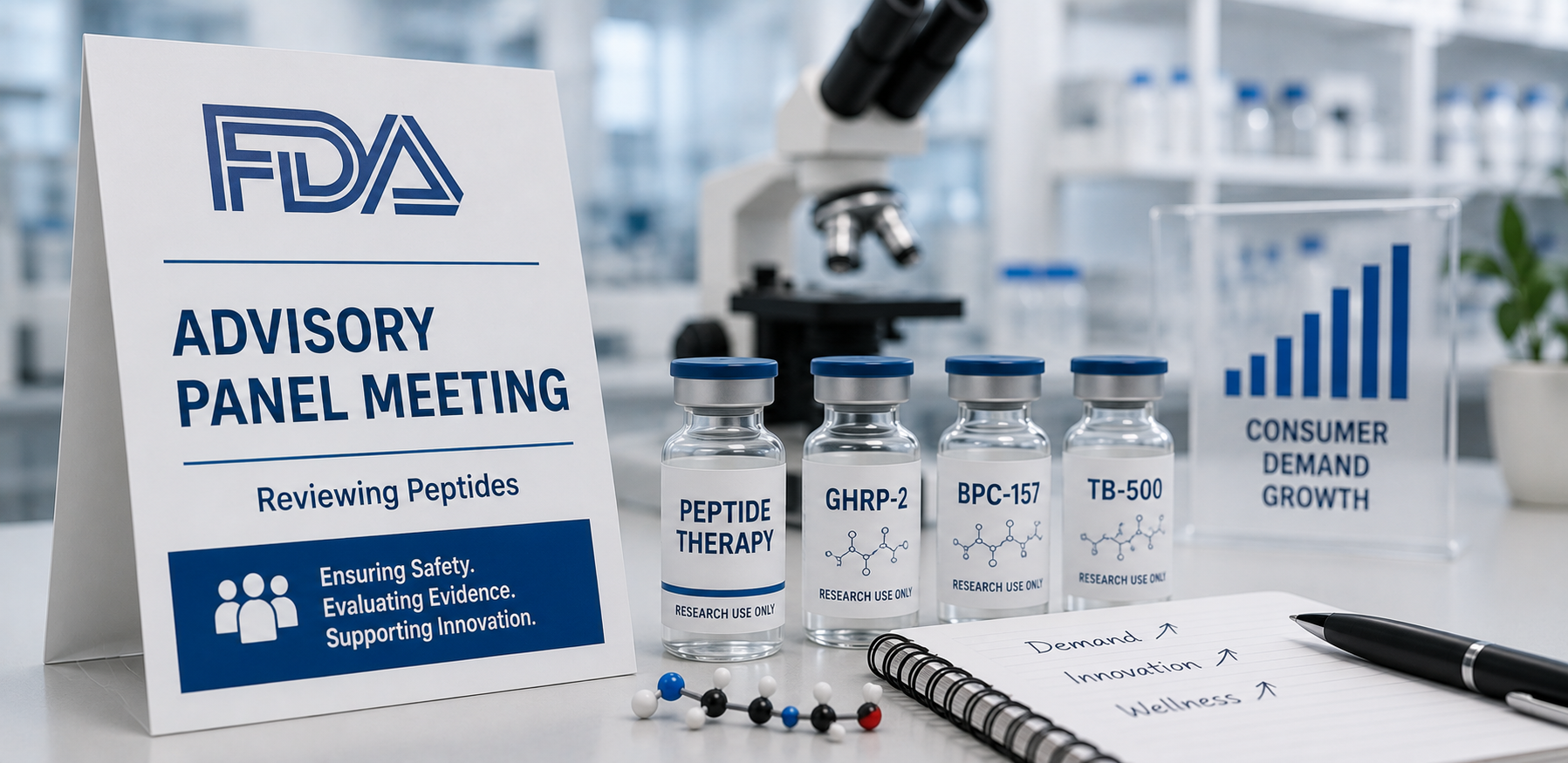
The U.S. Food and Drug Administration (FDA) is convening its Pharmacy Compounding Advisory Committee to evaluate whether seven widely used peptides should be permitted for compounding by licensed pharmacies. The decision could shape future access to these products in the United States.
The review comes amid a surge in consumer interest driven by wellness clinics, biohacking communities, social media influencers, and growing public attention toward peptides marketed for recovery, longevity, weight management, and overall wellness.
While supporters argue that regulated access through licensed compounding pharmacies would improve product quality and patient safety, FDA staff have previously concluded that there is insufficient clinical evidence demonstrating the safety and effectiveness of these peptides for their intended uses.
The advisory committee's recommendation will not be binding, but it is expected to play an important role in the FDA's final regulatory decision.
What Are Peptides?
Peptides are short chains of amino acids that serve as building blocks of proteins and perform numerous biological functions within the human body.
Some peptides occur naturally, while others are manufactured for research or therapeutic purposes.
The seven peptides under review include:
- BPC-157
- TB-500
- Semax
- KPV
- MOTS-c
- Emideltide (DSIP)
- Epitalon
These compounds have gained popularity for claims related to:
- Injury recovery.
- Muscle repair.
- Athletic performance.
- Weight management.
- Anti-aging.
- Cognitive function.
- Sleep support.
However, many of these proposed benefits have not been confirmed through large, high-quality human clinical trials.
Why Is the FDA Reviewing Them?
The committee will determine whether these peptides should be added to the FDA's 503A Bulks List, which specifies substances that licensed compounding pharmacies may use to prepare customized medications for individual patients under certain circumstances.
If a peptide is added to the list, compounding pharmacies may have a clearer legal pathway to produce it when appropriate. If not, access through regulated compounding pharmacies may remain limited, although unregulated products may still circulate through online marketplaces and other channels.
The FDA has emphasized that decisions will be based on available scientific evidence, product quality considerations, and patient safety.
Why Are Regulators Concerned?
Ahead of the meeting, FDA reviewers concluded that current evidence does not adequately demonstrate that the seven peptides are safe and effective for their proposed uses.
Among the concerns identified were:
- Limited human clinical trial data.
- Insufficient evidence of effectiveness.
- Uncertainty regarding appropriate dosing.
- Potential safety risks.
- Variable manufacturing quality.
Because many products are sold outside traditional pharmaceutical approval pathways, regulators also face challenges ensuring consistency, purity, and quality.
Why Consumer Demand Remains Strong
Despite limited clinical evidence, peptides have become increasingly popular within the wellness industry.
Several factors have fueled demand:
- Growing interest in longevity medicine.
- Biohacking communities.
- Social media promotion.
- Celebrity and public figure endorsements.
- Consumer interest in personalized health solutions.
Industry representatives argue that demand is unlikely to disappear regardless of the FDA's decision. Instead, they contend that allowing regulated pharmacy compounding could improve oversight and reduce reliance on gray-market products whose quality may be uncertain.
What Happens Next?
The Pharmacy Compounding Advisory Committee will review scientific evidence and hear testimony from experts, stakeholders, and members of the public before issuing recommendations.
The FDA is not required to follow the committee's advice, but advisory panel recommendations frequently influence the agency's final regulatory decisions.
The outcome could shape future policies governing compounded peptide products and influence how these therapies are regulated within the broader wellness and healthcare markets.
Industry Impact
- Compounding Pharmacies: The FDA's decision could determine whether licensed pharmacies gain expanded opportunities to prepare certain peptide-based medications under federal compounding rules.
- Wellness Industry: Clinics specializing in longevity, recovery, and regenerative medicine are closely monitoring the review because regulatory changes could affect the availability of products frequently requested by patients.
- Healthcare Providers: Clinicians may continue facing questions from patients about peptides. This underscores the importance of evidence-based discussions regarding potential benefits, risks, and uncertainties.
- Regulators: The review reflects the FDA's ongoing effort to balance consumer demand with scientific evidence and patient safety while addressing the rapidly expanding market for wellness products.
Why This Matters
The upcoming FDA review highlights the growing challenge regulators face as consumer interest in emerging wellness therapies outpaces available clinical evidence.
Peptides occupy a unique position between pharmaceutical innovation and the wellness marketplace. While some peptide-based medicines have established clinical uses, many of the products currently marketed for recovery, longevity, and performance enhancement remain largely unsupported by rigorous human research.
The committee's recommendations could influence not only access to these specific compounds but also the broader regulatory framework for compounded therapies. As interest in personalized medicine continues to expand, regulators, healthcare providers, and manufacturers will increasingly need to balance innovation, consumer demand, and evidence-based medicine.
Key Takeaways
- The FDA's Pharmacy Compounding Advisory Committee will review whether seven popular peptides should be eligible for pharmacy compounding.
- FDA reviewers have previously concluded there is insufficient evidence supporting the safety and effectiveness of these peptides for their intended uses.
- Consumer demand continues to grow despite limited clinical evidence, driven largely by the wellness industry and biohacking communities.
- Supporters argue that regulated compounding could improve product quality and reduce reliance on gray-market products.
- The committee's recommendation is advisory, but it could significantly influence future FDA policy regarding compounded peptide therapies.
What This Means for Healthcare Marketers
The FDA's peptide review illustrates the growing intersection between consumer wellness trends and healthcare regulation. Interest in therapies marketed for longevity, recovery, and performance enhancement continues to rise, creating opportunities and challenges for healthcare organizations operating in this space. Companies developing evidence-based peptide therapeutics, diagnostics, and pharmacy services will be watching closely as regulators define the future of compounded peptide access.
For healthcare marketers, the discussion reinforces the importance of distinguishing scientifically validated treatments from products supported primarily by anecdotal claims. Educational, transparent messaging grounded in clinical evidence will become increasingly valuable as patients seek reliable information about emerging therapies.
For healthcare intelligence teams, the advisory committee's recommendations may provide early insight into how the FDA plans to regulate rapidly growing wellness markets. Monitoring these developments can help organizations anticipate changes in compounding policy, pharmaceutical innovation, patient demand, and competitive dynamics across the healthcare ecosystem.