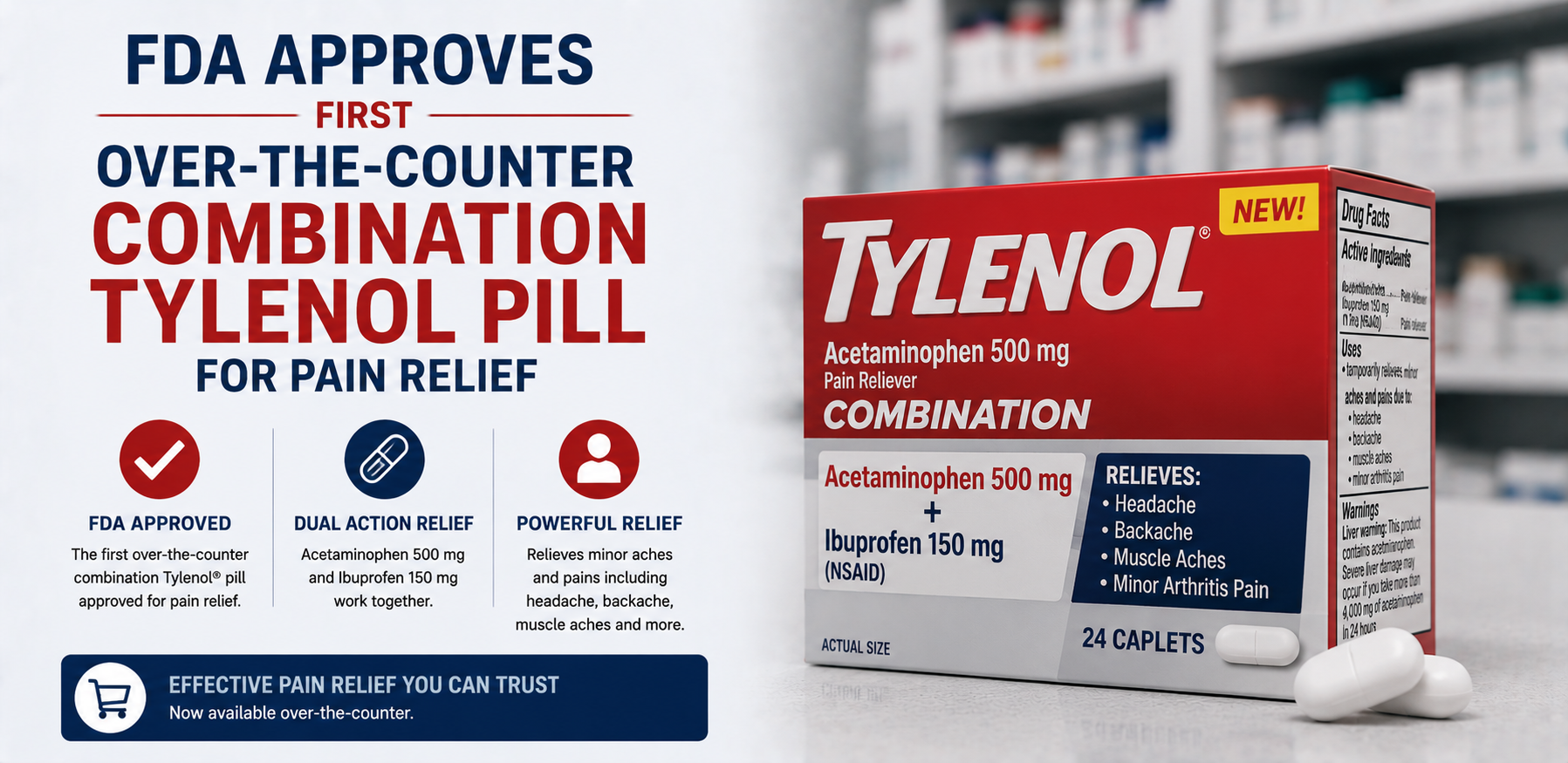
FDA Approves First Over-the-Counter Combination Tylenol Pill for Pain Relief
What's Happening
The U.S. Food and Drug Administration (FDA) has approved the first over-the-counter (OTC) combination Tylenol product that contains two well-established pain-relieving ingredients in a single tablet.
The newly approved product combines acetaminophen, the active ingredient in Tylenol, with naproxen sodium, a widely used nonsteroidal anti-inflammatory drug (NSAID). The approval allows consumers to purchase the medication without a prescription, providing a new option for managing short-term pain and fever.
Although many people already take acetaminophen and NSAIDs together under the guidance of healthcare professionals, this marks the first time the FDA has approved an OTC product that combines acetaminophen and naproxen sodium into a single formulation specifically labeled for consumer use.
The approval reflects a broader trend toward improving access to self-care treatments while helping consumers manage common health conditions safely and effectively without requiring a healthcare visit.
Understanding the Two Active Ingredients
The newly approved medication combines two of the most commonly used pain relievers in the United States.
Acetaminophen
Acetaminophen works primarily within the central nervous system to reduce pain and lower fever. It is commonly used for headaches, muscle aches, toothaches, fever, minor arthritis pain, and cold and flu symptoms. Unlike NSAIDs, acetaminophen has very little anti-inflammatory activity.
Naproxen Sodium
Naproxen sodium belongs to the NSAID class of medicines. It reduces pain by blocking enzymes involved in inflammation, making it particularly useful for conditions where swelling contributes to discomfort while offering longer-lasting relief. Common uses include back pain, sprains and strains, menstrual cramps, dental pain, joint inflammation, and sports injuries.
By combining medications that work through different biological mechanisms—the fast-acting relief of acetaminophen combined with the extended duration of an NSAID—healthcare providers have often been able to achieve comprehensive pain relief.
Why Combination Pain Medicines Matter
Pain is one of the most common reasons people seek medical care. Millions of Americans experience acute pain each year due to minor injuries, dental procedures, headaches, viral illnesses, musculoskeletal conditions, and postoperative recovery.
Historically, patients who wanted to use both acetaminophen and an NSAID needed to separate products and carefully manage dosing schedules. A single combination product may simplify treatment by:
- Reducing the number of tablets patients take.
- Improving dosing convenience.
- Supporting better adherence to recommended schedules.
- Reducing confusion about alternating medications.
Simplified treatment can be particularly helpful for consumers managing short-term pain at home, although patients should always follow the product's dosing instructions.
How Combination Therapy Works
Acetaminophen and naproxen sodium relieve pain through different biological pathways. Because they target different mechanisms, combining the two medications provides both fast onset and up to 12 hours of extended pain relief without relying on stronger prescription medicines such as opioids.
As healthcare systems continue seeking non-opioid pain management strategies, combination therapies have become an increasingly important part of multimodal pain treatment.
Safety Considerations
Although both medicines have long histories of safe use when taken correctly, combining them does not eliminate the need for careful dosing.
Acetaminophen Risks
Taking more than the recommended daily amount of acetaminophen can cause serious liver injury. Consumers should also be aware that acetaminophen is present in many cold, flu, and prescription medicines, making accidental overdose possible if multiple products are taken simultaneously.
Naproxen Sodium Risks
Naproxen sodium may increase the risk of stomach irritation, gastrointestinal bleeding, kidney problems, and elevated blood pressure in some individuals. People with certain medical conditions, including kidney disease, stomach ulcers, or cardiovascular disease, should consult a healthcare professional before using NSAIDs.
Because the new product combines both medicines, consumers should avoid taking additional acetaminophen- or NSAID-containing products unless advised by a healthcare provider.
Industry Impact
- Consumers: The approval expands access to another non-prescription pain management option that offers greater convenience and up to 12-hour relief compared to purchasing separate medications.
- Pharmacies: Retail pharmacies will likely see increased demand as consumers seek simplified pain relief products. Pharmacists will continue playing an important role in educating patients about proper dosing and avoiding duplicate medications.
- Healthcare Providers: Primary care physicians, emergency clinicians, dentists, and orthopedic specialists frequently recommend both acetaminophen and NSAIDs for acute pain. A single combination product may simplify patient instructions while supporting evidence-based, non-opioid pain management.
- Pharmaceutical Industry: The approval demonstrates continued innovation within mature therapeutic categories. Rather than introducing an entirely new active ingredient, manufacturers are developing formulations that improve convenience, patient adherence, and real-world medication use.
The Growing Importance of Non-Opioid Pain Management
Over the past decade, healthcare systems have increasingly emphasized alternatives to opioid medications whenever appropriate. Clinical guidelines now encourage healthcare providers to consider non-opioid therapies as first-line treatment for many forms of acute pain.
This shift has driven innovation in combination pain medicines, extended-release formulations, topical therapies, digital pain management tools, physical rehabilitation programs, and multimodal treatment strategies.
The FDA's approval of an OTC combination acetaminophen-naproxen sodium product aligns with this broader movement toward effective pain management while reducing unnecessary opioid exposure.
Why This Matters
Pain affects millions of people every day, making over-the-counter medicines one of the most widely used categories of healthcare products. The FDA's approval provides consumers with a more convenient way to access two trusted pain-relieving medicines in a single tablet while supporting modern approaches to non-opioid pain management.
For healthcare providers, the approval introduces another evidence-based option that may simplify treatment recommendations for patients experiencing mild to moderate acute pain.
More broadly, the decision illustrates how healthcare innovation often involves improving the way existing medicines are delivered, making treatments easier to use while maintaining established standards for safety and effectiveness.
Key Takeaways
- The FDA approved the first over-the-counter Tylenol combination product containing acetaminophen and naproxen sodium.
- The product combines two widely used pain relievers with different mechanisms of action to provide fast onset and 12-hour relief.
- A single combination tablet may simplify pain management and improve dosing convenience.
- The approval supports broader efforts to expand access to effective non-opioid pain treatment.
- Consumers should continue following dosing instructions carefully to avoid accidental overdose or duplicate medication use.
What This Means for Healthcare Marketers
The approval highlights continued innovation in consumer healthcare and over-the-counter medicines, where convenience and adherence are becoming key differentiators alongside clinical effectiveness. Pharmaceutical companies, retail pharmacies, consumer health brands, and digital health platforms have opportunities to educate patients about safe self-care, appropriate medication use, and non-opioid pain management strategies. For healthcare marketers, regulatory approvals in the OTC space often signal increased investment in consumer engagement, pharmacy partnerships, and patient education initiatives that support responsible medication use.