FDA Approves Freenome's Blood Test for Colorectal Cancer Screening
What's Happening
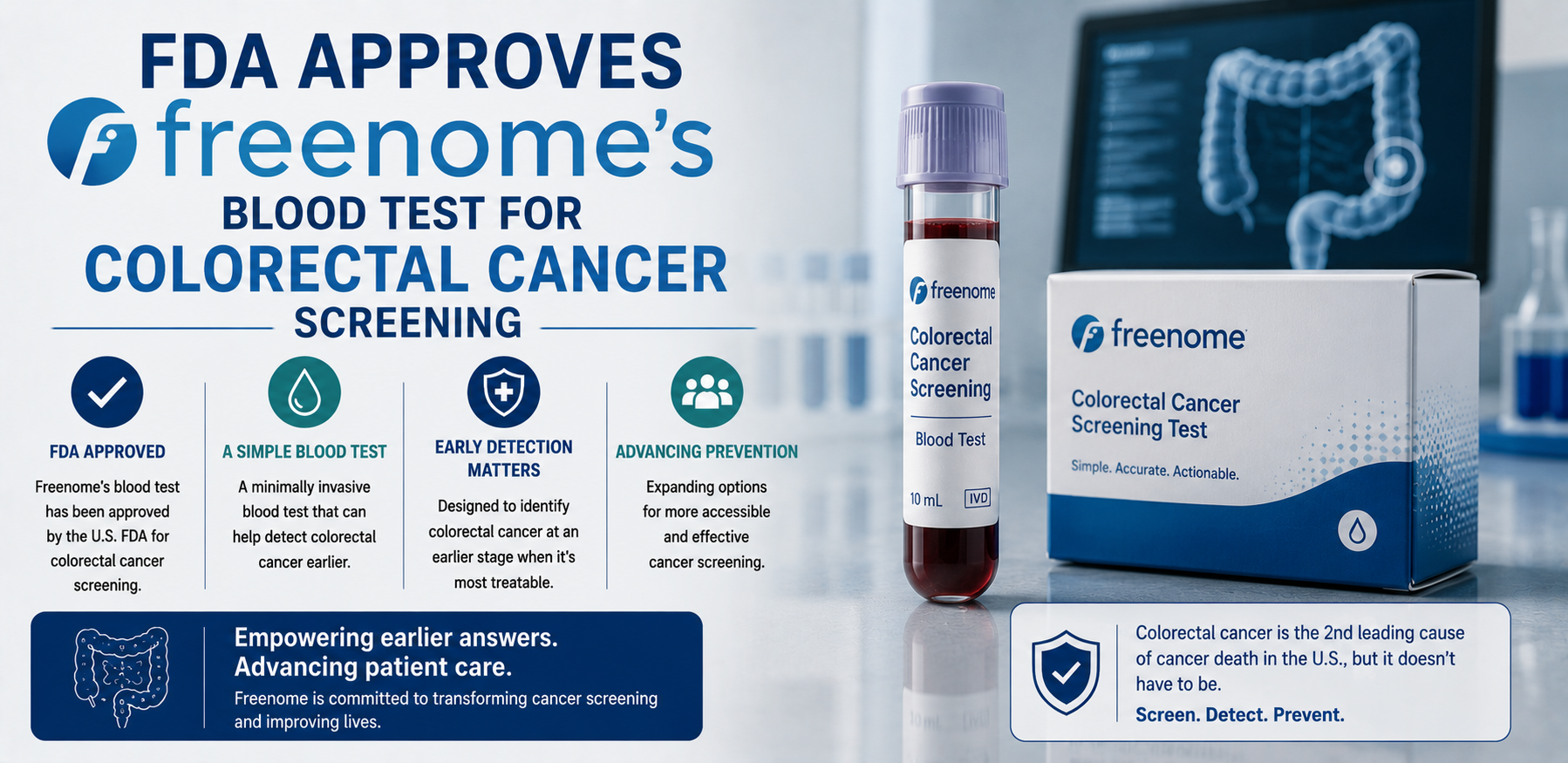
The U.S. Food and Drug Administration (FDA) has approved Freenome's SimpleScreen CRC, a blood-based screening test for colorectal cancer in average-risk adults aged 45 and older. The approval marks Freenome's first commercial product and paves the way for its commercial partner, Abbott, to launch the test across the United States later this year.
The approval introduces another non-invasive screening option for one of the most common and preventable cancers in the United States. It also expands the growing market for blood-based cancer screening tests, where companies are developing alternatives to traditional stool-based tests and colonoscopies.
Understanding the Test
SimpleScreen CRC is a liquid biopsy that detects biological signals associated with colorectal cancer from fragments of cell-free DNA circulating in the bloodstream. Instead of collecting a stool sample or undergoing an invasive procedure, patients only need a routine blood draw.
The test is intended for average-risk adults aged 45 years and older, the population currently recommended to undergo regular colorectal cancer screening.
The FDA approval was supported by the PREEMPT CRC clinical study, one of the largest prospective studies ever conducted for a blood-based colorectal cancer screening test. The trial enrolled more than 48,000 adults across over 200 clinical sites in the United States.
Why This Approval Matters
Colorectal cancer is the third most commonly diagnosed cancer in the United States and remains one of the leading causes of cancer-related deaths. Yet millions of eligible Americans remain overdue for routine screening.
While colonoscopy remains the gold standard for colorectal cancer detection, many eligible individuals avoid screening because of concerns about preparation, invasiveness or inconvenience. Blood-based screening tests offer another option that could encourage more people to participate in routine cancer screening.
In the clinical study supporting approval, SimpleScreen CRC detected colorectal cancer with 81.1% sensitivity. The test also detected advanced precancerous lesions, although at a lower rate than established screening methods, reinforcing that positive blood test results should still be followed by diagnostic colonoscopy.
Industry Impact
- Cancer Diagnostics: The approval further validates blood-based cancer screening as one of the fastest-growing areas in diagnostic medicine. Companies are increasingly developing liquid biopsy technologies designed to detect cancer earlier through a simple blood sample.
- Healthcare Providers: Primary care physicians now have another screening option for patients who decline colonoscopy or stool-based testing. Greater flexibility may help improve screening participation and earlier cancer detection.
- Patients: A simple blood draw could remove one of the biggest barriers to colorectal cancer screening, making it easier for more eligible adults to participate in preventive care.
- Diagnostics Market: Competition within the colorectal cancer screening market is expected to intensify as Freenome joins other companies already offering FDA-approved blood-based screening tests. Increased competition could drive further innovation, improve accessibility and expand patient choice.
Looking Ahead
Early detection remains one of the most effective ways to reduce deaths from colorectal cancer. Expanding the range of screening options gives healthcare providers more opportunities to reach patients who might otherwise go unscreened.
The approval also reflects the rapid evolution of precision diagnostics. Advances in molecular biology, artificial intelligence and liquid biopsy technologies are making it possible to detect cancer earlier using minimally invasive approaches that fit more easily into routine clinical care.
Key Takeaways
- The FDA has approved Freenome's SimpleScreen CRC blood test for colorectal cancer screening in average-risk adults aged 45 and older.
- Abbott will exclusively commercialise the test in the United States later this year.
- The approval was supported by a clinical study involving more than 48,000 participants across over 200 sites.
- Blood-based screening provides another non-invasive option for people who do not complete traditional colorectal cancer screening.
- The approval is expected to strengthen competition and innovation within the rapidly growing cancer diagnostics market.
What This Means for Healthcare Marketers
The approval highlights the growing demand for accessible, patient-friendly diagnostics that improve participation in preventive care. Healthcare organisations, diagnostic companies and life sciences marketers should expect increased interest in liquid biopsy technologies, population screening programmes and early cancer detection solutions. As screening increasingly shifts toward minimally invasive diagnostics, organisations that clearly communicate clinical evidence, convenience and patient outcomes will be well positioned to drive adoption among both providers and patients.