FDA Approves Merck's Once-Daily Cholesterol Pill, Expanding Treatment Options for Patients with High LDL
What's Happening
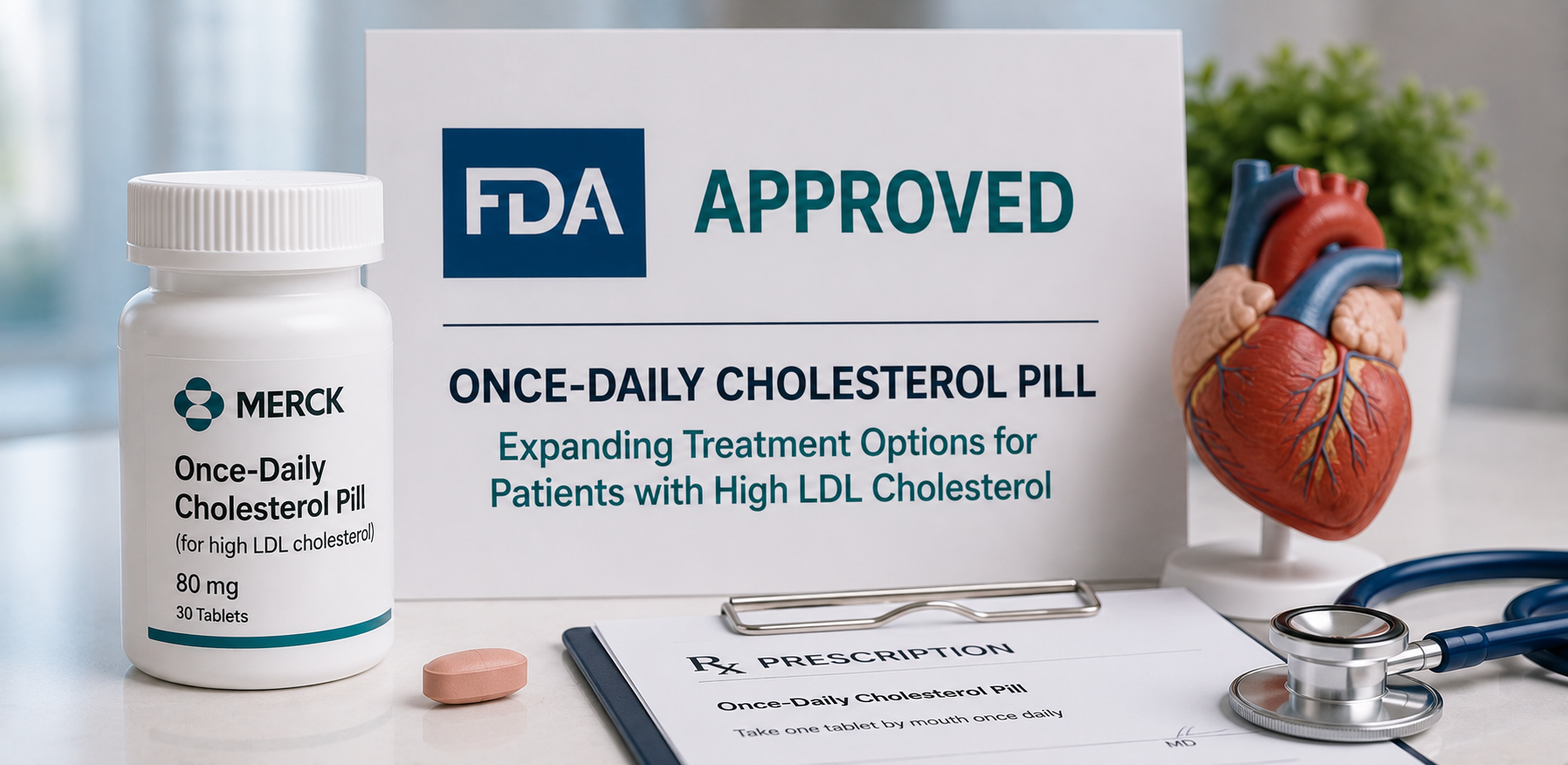
The U.S. Food and Drug Administration (FDA) has approved Merck's once-daily cholesterol-lowering pill, providing a new treatment option for adults with elevated low-density lipoprotein (LDL) cholesterol who require additional cholesterol reduction despite existing therapies.
The approval strengthens Merck's cardiovascular portfolio and introduces another non-statin option for patients who are unable to achieve recommended cholesterol targets through statins alone or who cannot tolerate high-intensity statin therapy. The decision also reflects the continued focus on reducing cardiovascular disease through innovative lipid-lowering treatments. (reuters.com)
Cardiovascular disease remains the leading cause of death in the United States, making cholesterol management one of the most important preventive strategies in modern healthcare.
Understanding High Cholesterol
Cholesterol is a waxy substance that circulates in the bloodstream and is necessary for many normal bodily functions. However, excessive amounts of low-density lipoprotein (LDL)—often referred to as "bad cholesterol"—can accumulate inside blood vessels.
Over time, this buildup forms plaques that narrow arteries, reducing blood flow and increasing the risk of:
- Heart attacks.
- Strokes.
- Peripheral artery disease.
- Coronary artery disease.
Many people with high cholesterol experience no symptoms, which is why routine cholesterol screening plays an essential role in preventive healthcare.
Why Lowering LDL Cholesterol Matters
Decades of clinical research have shown that reducing LDL cholesterol significantly lowers the risk of cardiovascular events.
Healthcare providers typically recommend a combination of:
- Healthy eating habits.
- Regular physical activity.
- Weight management.
- Smoking cessation.
- Cholesterol-lowering medications when necessary.
Statins remain the first-line treatment for most patients. However, not everyone achieves adequate cholesterol reduction with statins alone, and some individuals experience muscle-related side effects or other limitations that require additional therapies.
The availability of more treatment options allows physicians to better personalize cholesterol management based on each patient's cardiovascular risk.
How the New Therapy Fits into Treatment
Merck's newly approved oral therapy offers physicians another tool for lowering LDL cholesterol.
Unlike injectable cholesterol-lowering medicines that require administration every few weeks or months, a once-daily pill may be more convenient for some patients and could improve long-term treatment adherence.
Depending on individual patient needs, physicians may prescribe the medication:
- Alongside statins.
- With other cholesterol-lowering medicines.
- As an alternative for selected patients who cannot tolerate certain therapies.
The exact treatment plan will depend on a patient's cholesterol levels, cardiovascular risk, medical history, and physician recommendations.
The Growing Need for Better Cholesterol Management
Heart disease continues to place a significant burden on healthcare systems.
Several factors are contributing to rising cardiovascular risk worldwide:
- Aging populations.
- Increasing rates of obesity.
- Diabetes.
- High blood pressure.
- Sedentary lifestyles.
- Poor dietary habits.
As more people live longer with chronic cardiovascular conditions, healthcare providers are increasingly focused on preventing first and recurrent cardiovascular events through aggressive cholesterol management.
New therapies expand the options available to clinicians working toward these goals.
Innovation in Cardiovascular Medicine
The treatment landscape for high cholesterol has evolved considerably over the past decade.
In addition to statins, physicians now have access to several newer classes of lipid-lowering therapies that target cholesterol production or removal through different biological pathways.
These advances have enabled more patients—including those at very high cardiovascular risk—to achieve recommended LDL cholesterol goals that were previously difficult to reach.
Pharmaceutical companies continue investing heavily in cardiovascular research because heart disease remains one of the largest areas of unmet medical need globally.
Industry Impact
- Pharmaceutical Companies: Merck's approval strengthens competition in the cardiovascular market as companies continue developing innovative therapies for chronic heart disease prevention.
- Healthcare Providers: Physicians gain another option for patients who require additional LDL cholesterol reduction beyond conventional treatment.
- Patients: Individuals with difficult-to-control cholesterol may benefit from expanded treatment choices that can be tailored to their specific clinical needs.
- Healthcare Systems: Improved cholesterol management has the potential to reduce long-term healthcare costs by preventing heart attacks, strokes, and other cardiovascular complications.
Why This Matters
The FDA's approval reflects the continuing evolution of cardiovascular care toward more personalized treatment strategies.
Although statins remain highly effective for many patients, no single therapy is appropriate for everyone. Expanding the range of cholesterol-lowering medicines allows clinicians to better address individual patient needs while improving long-term prevention of cardiovascular disease.
The decision also highlights the growing emphasis on preventive medicine. Rather than treating heart attacks or strokes after they occur, healthcare systems are increasingly investing in therapies that reduce cardiovascular risk before serious complications develop.
As cardiovascular disease continues to affect millions of Americans, innovations that improve cholesterol control remain an important component of public health.
Key Takeaways
- The FDA approved Merck's once-daily cholesterol-lowering pill for adults who need additional LDL cholesterol reduction. (reuters.com)
- The approval expands treatment options for patients at risk of cardiovascular disease.
- Lowering LDL cholesterol remains one of the most effective ways to reduce the risk of heart attacks and strokes.
- The new therapy provides physicians with another option alongside existing cholesterol-lowering medications.
- The approval reflects continued innovation in preventive cardiovascular care.
What This Means for Healthcare Marketers
Merck's FDA approval reinforces the continued importance of cardiovascular disease as one of the largest therapeutic markets in healthcare. As treatment options expand beyond traditional statins, healthcare organizations have greater opportunities to personalize care based on individual patient risk, treatment response, and medication preferences. Innovation in lipid management remains a key area of investment because preventing cardiovascular events delivers significant clinical and economic value.
For healthcare marketers, the approval highlights the importance of communicating both clinical outcomes and real-world patient benefits. Providers increasingly evaluate new therapies based on their ability to improve adherence, reduce cardiovascular risk, and fit into individualized treatment plans. Educational messaging supported by strong clinical evidence will remain essential as competition within the cholesterol management market continues to grow.
For healthcare intelligence teams, the approval signals continued momentum in cardiovascular innovation. Monitoring FDA approvals, guideline updates, prescribing trends, and emerging lipid-lowering therapies can help organizations anticipate market shifts while identifying opportunities in one of healthcare's most established yet rapidly evolving therapeutic areas.