FDA Approves Outlook Therapeutics' Eye Drug, Introducing the First FDA-Approved Ophthalmic Bevacizumab for Wet AMD
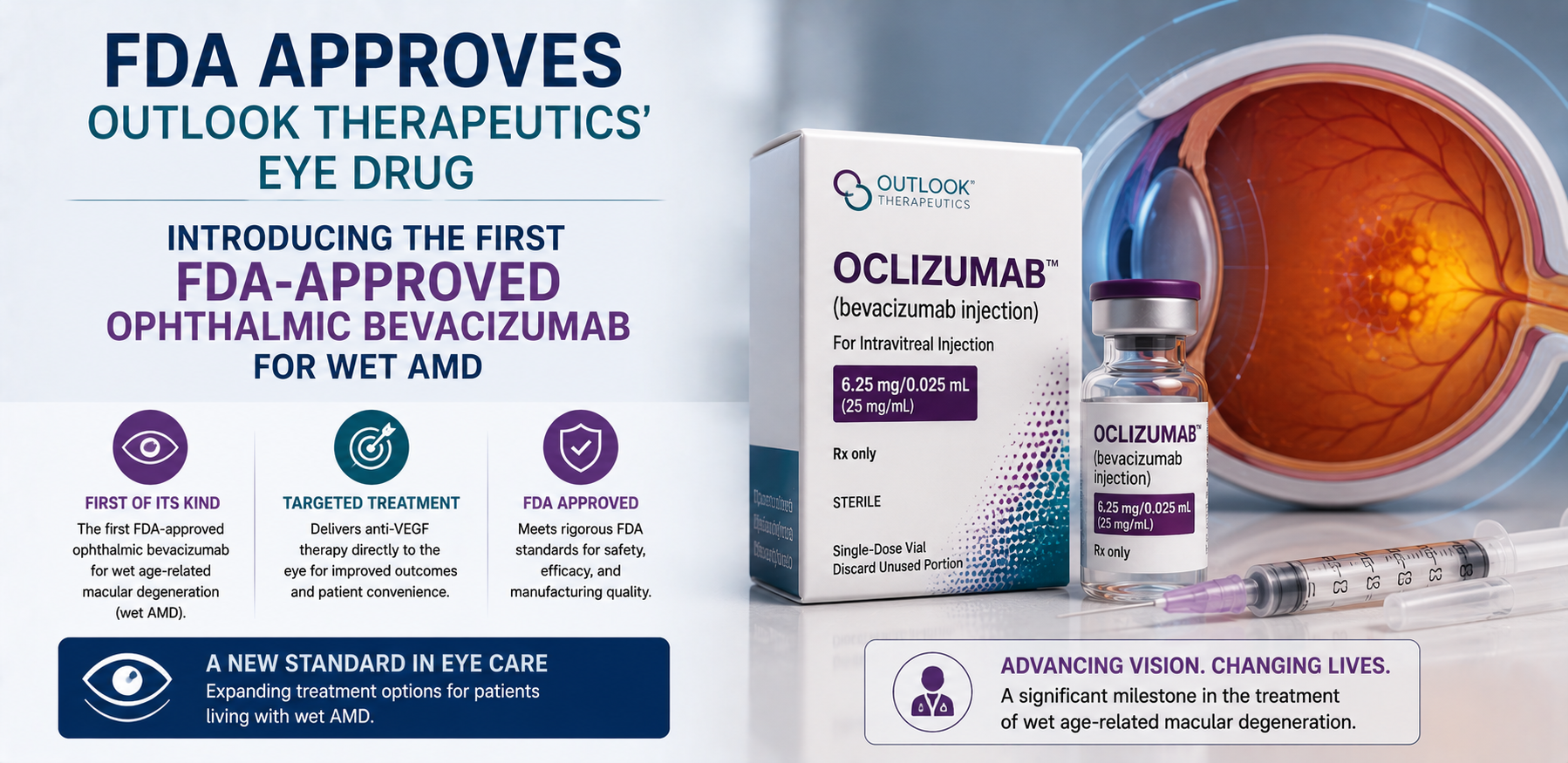
What's Happening
The U.S. Food and Drug Administration (FDA) has approved Lytenava (bevacizumab-vikg) from Outlook Therapeutics for the treatment of neovascular age-related macular degeneration (wet AMD), a chronic eye disease that is one of the leading causes of severe vision loss among older adults.
The approval marks a major milestone for Outlook Therapeutics, giving the company its first FDA-approved commercial product after several years of regulatory setbacks, manufacturing reviews, and additional data submissions. It also establishes Lytenava as the first FDA-approved ophthalmic formulation of bevacizumab specifically developed for use inside the eye.
Outlook expects to make the treatment available to eligible U.S. patients before the end of the year. Under U.S. biologics law, the therapy is also expected to receive 12 years of market exclusivity, giving the company an opportunity to establish itself in one of ophthalmology's largest treatment markets.
The decision adds another treatment option for retina specialists while introducing greater competition into a market currently led by established therapies such as Eylea, Vabysmo, and Lucentis.
Understanding Wet Age-Related Macular Degeneration
Wet age-related macular degeneration is an advanced form of macular degeneration that damages the macula, the central portion of the retina responsible for sharp, detailed vision.
The disease occurs when abnormal blood vessels grow beneath the retina and begin leaking blood or fluid. Without treatment, these leaks can rapidly damage retinal tissue and lead to permanent central vision loss.
Patients commonly experience:
- Blurred central vision.
- Difficulty reading.
- Distorted straight lines.
- Trouble recognizing faces.
- Dark or blank spots in the center of vision.
Unlike the dry form of AMD, which progresses gradually, wet AMD can worsen quickly if left untreated.
Although wet AMD accounts for a smaller proportion of AMD cases, it is responsible for the majority of severe vision loss associated with the disease.
As populations continue to age, the number of patients requiring long-term retinal treatment is expected to increase substantially.
What Is Lytenava?
Lytenava is an ophthalmic formulation of bevacizumab, an anti-vascular endothelial growth factor (anti-VEGF) therapy.
Anti-VEGF medicines work by blocking vascular endothelial growth factor, a protein that stimulates the growth of abnormal blood vessels beneath the retina.
By suppressing VEGF activity, these medicines help:
- Slow abnormal blood vessel growth.
- Reduce fluid leakage.
- Preserve retinal structure.
- Maintain or improve vision.
- Reduce the risk of permanent vision loss.
While bevacizumab has been widely used by retina specialists for years, it was originally developed as a cancer medicine.
Physicians have frequently prescribed it off label by repackaging oncology formulations for use in ophthalmology because it offered a substantially lower-cost alternative to other anti-VEGF drugs.
Lytenava changes that landscape by becoming the first bevacizumab product specifically approved, manufactured, and labeled for injection into the eye.
Why This Approval Is Significant
The FDA's decision represents more than a new product approval.
It introduces an FDA-approved alternative built around one of the most commonly used molecules in retina care.
Historically, retina specialists have relied heavily on compounded bevacizumab prepared by specialized pharmacies.
Although this approach has been widely accepted in clinical practice, compounded medicines do not undergo the same manufacturing and regulatory review as FDA-approved biologic products.
An ophthalmic formulation developed specifically for retinal use offers several potential advantages, including:
- Standardized manufacturing.
- FDA-reviewed quality systems.
- Approved product labeling.
- Consistent formulation.
- Regulatory oversight throughout production.
These factors may provide additional confidence for physicians, healthcare systems, and patients while maintaining access to a familiar anti-VEGF therapy.
A Competitive Retina Market
The approval comes as competition continues intensifying within the retinal disease market.
Current treatment options for wet AMD include several anti-VEGF medicines that require repeated injections throughout the year to control disease progression.
The market has experienced continuous innovation in recent years through:
- Longer-lasting formulations.
- Higher-dose therapies.
- Extended dosing intervals.
- New delivery technologies.
- Combination treatment strategies.
Because patients often require injections for many years, physicians evaluate therapies based on several considerations, including:
- Clinical effectiveness.
- Safety.
- Injection frequency.
- Cost.
- Insurance coverage.
- Real-world treatment experience.
The introduction of another FDA-approved therapy expands physician choice while increasing competition among manufacturers.
Industry Impact
- Retina Specialists: Eye care providers gain access to the first FDA-approved ophthalmic bevacizumab, providing another treatment option for patients with wet AMD.
- Patients: Individuals living with wet AMD may benefit from increased treatment choice and potentially broader access depending on insurance coverage, reimbursement policies, and physician recommendations.
- Healthcare Systems: Hospitals, ambulatory surgery centers, and ophthalmology practices may evaluate how an FDA-approved ophthalmic bevacizumab fits within existing treatment protocols and purchasing strategies.
- Pharmaceutical Industry: For Outlook Therapeutics, the approval transforms the company from a development-stage biotechnology firm into a commercial organization entering an estimated $8.5 billion U.S. retina market. It also increases competitive pressure within the anti-VEGF market as manufacturers continue developing next-generation retinal therapies.
Looking Ahead
The FDA approval concludes a lengthy regulatory journey for Outlook Therapeutics.
After previous FDA rejections and additional review, the company ultimately demonstrated sufficient evidence to secure approval for Lytenava, providing a pathway toward commercial launch.
The next challenge will be commercial adoption.
Success will depend on physician confidence, reimbursement support, patient access programs, manufacturing scale, and the company's ability to compete against well-established brands that already have significant market share.
As retinal diseases become increasingly common in aging populations, continued innovation in anti-VEGF therapies, sustained-release treatments, and next-generation biologics is expected to remain a major area of investment across ophthalmology.
Why This Matters
Wet AMD is one of the leading causes of irreversible vision loss among older adults, making timely treatment essential for preserving independence and quality of life.
The approval of Lytenava expands the range of FDA-approved therapies available to retina specialists while introducing the first ophthalmic bevacizumab specifically designed for use in the eye.
For the healthcare industry, the decision highlights how innovation is not limited to discovering entirely new molecules. Developing improved formulations of well-established medicines can also address important clinical and regulatory needs by enhancing manufacturing quality, standardization, and patient confidence.
As demand for retinal care continues growing, expanding treatment options will become increasingly important for supporting both physicians and patients.
Key Takeaways
- The FDA approved Lytenava for the treatment of wet age-related macular degeneration.
- It is the first FDA-approved ophthalmic formulation of bevacizumab developed specifically for retinal use.
- Outlook Therapeutics expects to launch the therapy in the U.S. before the end of the year.
- The approval gives physicians another anti-VEGF treatment option in a highly competitive retinal disease market.
- The company anticipates receiving 12 years of biologic market exclusivity.
What This Means for Healthcare Marketers
The FDA approval of Lytenava illustrates how commercial opportunities continue to emerge within established therapeutic areas through formulation innovation, regulatory differentiation, and improved manufacturing standards. Organizations involved in ophthalmology, biologics, specialty pharmaceuticals, retina care, and healthcare delivery should monitor adoption trends as providers evaluate new treatment options. For healthcare marketers, approvals like this identify organizations entering commercialization, expanding field teams, investing in physician education, and building market access strategies, all of which can signal increased demand for healthcare technologies, services, and strategic partnerships.