FDA Approves Sanofi's Wearable Injector for Blood Cancer Drug Sarclisa, Expanding Treatment Options
What's Happening
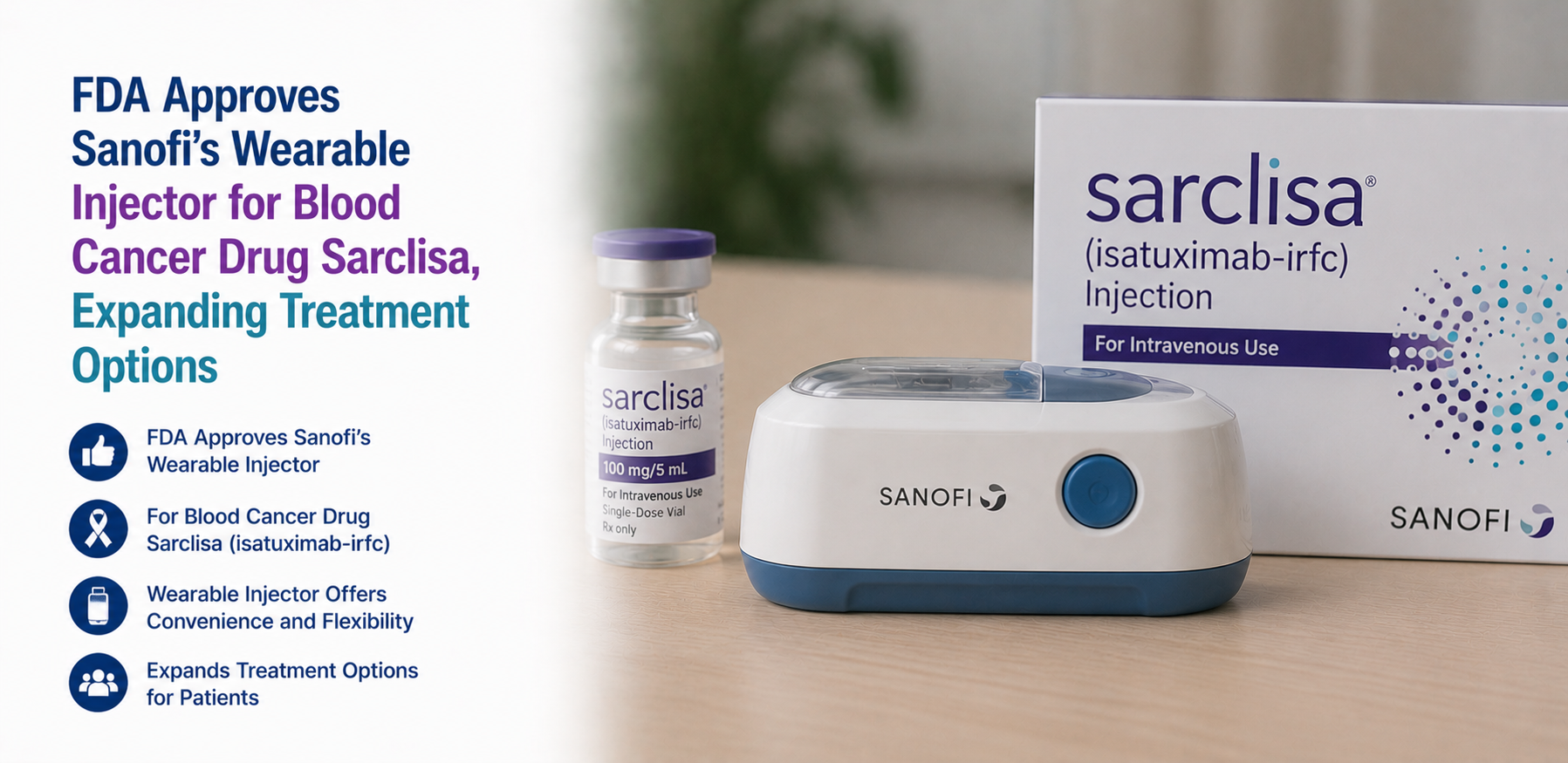
The U.S. Food and Drug Administration (FDA) has approved a wearable injector version of Sanofi's blood cancer medicine Sarclisa (isatuximab), offering patients with multiple myeloma a more convenient way to receive the therapy. The new device allows the medicine to be administered under the skin instead of through a traditional intravenous (IV) infusion, reducing the time patients spend receiving treatment at healthcare facilities. (reuters.com)
Sarclisa is already approved for treating certain patients with multiple myeloma, a cancer of plasma cells found in the bone marrow. The FDA's latest decision expands how the medicine can be delivered, reflecting a broader shift toward more patient-friendly drug administration methods.
The approval follows growing interest across the pharmaceutical industry in wearable injectors and subcutaneous drug delivery systems that improve patient convenience while reducing demands on hospitals and infusion centers.
What Is Multiple Myeloma?
Multiple myeloma is a type of blood cancer that develops in plasma cells, a type of white blood cell responsible for producing antibodies that help fight infections. When plasma cells become cancerous, they multiply uncontrollably inside the bone marrow, crowding out healthy blood-forming cells. Common symptoms include:
- Bone pain
- Fatigue
- Frequent infections
- Anemia
- Kidney problems
- Elevated calcium levels
- Bone fractures
Although multiple myeloma is generally not considered curable, advances in treatment have significantly improved survival and quality of life for many patients.
What Is Sarclisa?
Sarclisa (isatuximab) is a monoclonal antibody designed to recognize and attach to a protein called CD38, which is found in high amounts on multiple myeloma cells. Once attached, the therapy helps the immune system identify and destroy cancer cells. Sarclisa is commonly used in combination with other anti-cancer medicines for patients whose disease has returned or become resistant to previous treatments. It belongs to a growing class of targeted therapies that have transformed multiple myeloma treatment over the past decade.
What Is a Wearable Injector?
A wearable injector is a medical device that delivers medication under the skin (subcutaneously) over a controlled period of time. Unlike traditional IV infusions that require intravenous access and extended visits to infusion centers, wearable injectors are attached directly to the patient's body and automatically administer the medicine. These devices offer several advantages:
- Shorter treatment times.
- Greater patient comfort.
- Reduced need for IV infusions.
- Improved clinic efficiency.
- Increased treatment convenience.
Healthcare professionals still supervise administration when required, but wearable technologies are helping simplify the delivery of complex biologic medicines.
Why Drug Delivery Innovation Matters
Many modern cancer medicines are highly effective but require lengthy intravenous infusions. These treatments can occupy infusion chairs for several hours, require specialized nursing staff, increase healthcare facility workload, and place additional burdens on patients and caregivers. Improving how medicines are delivered has become an important area of pharmaceutical innovation. Companies are increasingly developing:
- Wearable injectors.
- Subcutaneous formulations.
- Long-acting injections.
- At-home treatment options.
- Digital monitoring devices.
These technologies aim to improve the overall patient experience without changing the medicine itself.
Benefits for Patients and Healthcare Providers
The new wearable injector may provide several practical advantages.
For Patients
- Less time spent receiving treatment.
- Greater comfort compared with IV infusions.
- Simplified treatment experience.
- Potentially fewer hospital visits in certain care settings.
For Healthcare Providers
- Increased capacity at infusion centers.
- More efficient use of nursing resources.
- Reduced administration time.
- Greater flexibility in scheduling treatments.
As demand for cancer care continues increasing, improving treatment efficiency has become an important priority for healthcare systems.
Why This Reflects a Broader Industry Trend
Pharmaceutical companies are investing heavily in alternative drug delivery technologies. Rather than developing entirely new medicines, many companies are creating improved ways to administer existing therapies. Examples include:
- Wearable injectors
- Prefilled syringes
- Auto-injectors
- On-body delivery systems
- Extended-release formulations
These innovations can improve patient adherence, reduce healthcare costs, and make treatment more accessible. The FDA has approved an increasing number of alternative delivery systems in recent years as technology continues advancing.
Industry Impact
- Pharmaceutical Companies: Drug manufacturers continue investing in patient-centered delivery technologies that improve convenience and differentiate existing therapies.
- Healthcare Providers: Infusion centers may improve efficiency by reducing the amount of chair time required for certain treatments.
- Patients: Individuals with multiple myeloma may benefit from a more convenient treatment experience while continuing to receive the same therapy.
- Healthcare Systems: More efficient drug administration may help address growing demand for oncology services while reducing pressure on healthcare resources.
Why This Matters
The FDA's approval of Sanofi's wearable injector demonstrates that innovation in healthcare extends beyond discovering new medicines. Improving how therapies are delivered can have a meaningful impact on patients, clinicians, and healthcare systems. As biologic medicines become increasingly common, healthcare providers will continue seeking technologies that simplify treatment while maintaining safety and effectiveness. Wearable injectors represent an important step toward more patient-centered cancer care by reducing treatment burden and improving healthcare efficiency. The approval also reflects a growing industry focus on enhancing the overall treatment experience, not just clinical outcomes.
Key Takeaways
- The FDA approved a wearable injector version of Sanofi's multiple myeloma drug Sarclisa.
- The new device delivers the medicine under the skin instead of through a traditional IV infusion.
- Wearable injectors can reduce treatment time and improve patient convenience.
- Multiple myeloma is a blood cancer that affects plasma cells in the bone marrow.
- The approval reflects growing pharmaceutical investment in innovative drug delivery technologies.
What This Means for Healthcare Marketers
The approval highlights an important shift in pharmaceutical innovation: improving the patient experience through better drug delivery. While clinical efficacy remains the foundation of treatment, companies are increasingly differentiating existing therapies by making them easier, faster, and more convenient to administer. Delivery technologies such as wearable injectors can improve patient satisfaction, optimize healthcare resources, and strengthen a product's competitive position without changing its underlying mechanism of action.
For healthcare marketers, patient convenience is becoming an increasingly valuable differentiator in oncology. As healthcare systems face rising patient volumes and staffing challenges, products that reduce infusion time, simplify administration, and improve clinic efficiency can offer compelling value for providers, payers, and patients alike. Communicating these operational and patient-centered benefits will play an increasingly important role in commercialization strategies.
For healthcare intelligence teams, the approval reinforces the growing importance of drug delivery innovation as a competitive strategy. Monitoring advances in wearable devices, subcutaneous formulations, at-home therapies, and digital health technologies can help organizations identify emerging trends that are reshaping how complex treatments are delivered across oncology and other therapeutic areas.