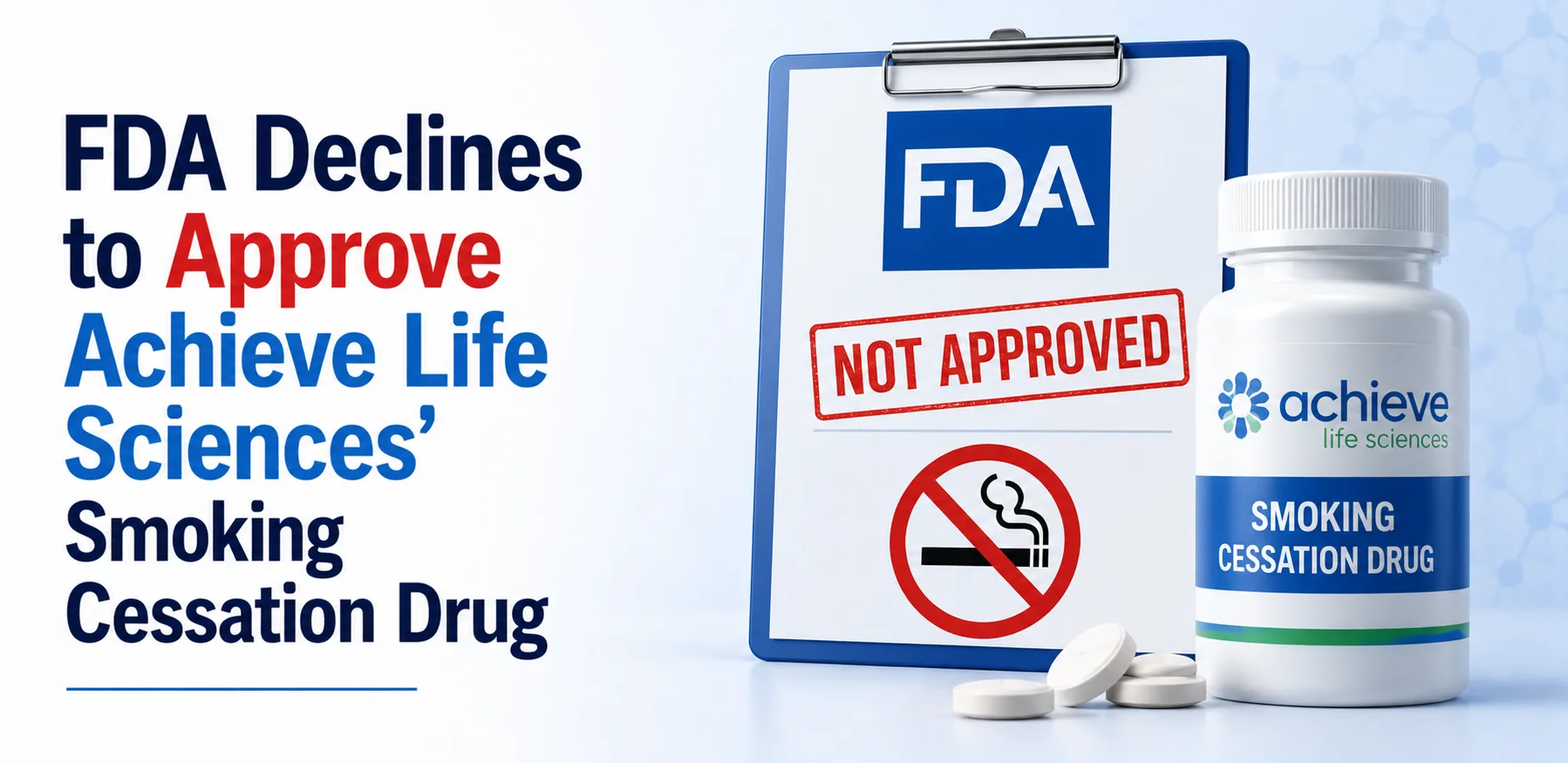
FDA Declines to Approve Achieve Life Sciences' Smoking Cessation Drug
What's Happening
Achieve Life Sciences said the U.S. Food and Drug Administration (FDA) declined to approve its experimental smoking cessation drug, cytisinicline, and instead requested additional information before making a final decision.
The company received what is known as a Complete Response Letter (CRL), a formal FDA notice indicating that the agency cannot approve a drug application in its current form. The CRL relates to outstanding manufacturing-related observations from a current Good Manufacturing Practice (cGMP) inspection of a prior third-party manufacturing facility, as well as final product labeling that was not completed by the FDA’s action date.
Importantly, the FDA identified no deficiencies regarding the clinical efficacy or safety of cytisinicline. The setback surprised many investors because cytisinicline had generated encouraging clinical trial results and was viewed as one of the most promising potential new smoking cessation treatments in years.
Why Smoking Cessation Remains a Major Public Health Priority
Despite decades of progress in reducing smoking rates, tobacco use remains one of the leading preventable causes of disease and death worldwide. Smoking contributes to:
- Lung cancer
- Heart disease
- Stroke
- Chronic obstructive pulmonary disease (COPD)
- Numerous other cancers
- Respiratory illnesses
Public health experts estimate that smoking-related illnesses continue to cause hundreds of thousands of deaths annually in the United States alone. While smoking rates have declined substantially over the past several decades, millions of Americans still smoke cigarettes or use tobacco products. Helping smokers quit remains one of the most effective ways to improve long-term health outcomes.
What Is Cytisinicline?
Cytisinicline is a plant-derived compound designed to help people stop smoking by reducing nicotine cravings and withdrawal symptoms. The drug works by targeting nicotine receptors in the brain. When smokers quit, those receptors no longer receive nicotine, often triggering uncomfortable withdrawal symptoms such as cravings, irritability, anxiety, difficulty concentrating, and restlessness.
Cytisinicline partially activates the same receptors, helping reduce withdrawal symptoms while also making smoking less rewarding. The approach is similar in some ways to existing smoking cessation medicines but uses a different compound that has been studied for decades in parts of Europe. Researchers have long been interested in cytisinicline because it may offer an effective alternative for people who struggle with currently available therapies.
What Is a Complete Response Letter?
When the FDA reviews a drug application, regulators can approve the product, request additional information, or reject the application. A Complete Response Letter (CRL) falls into the category of requesting additional information. The letter identifies issues that must be addressed before approval can occur, which may involve manufacturing questions, additional analyses, documentation requirements, or inspection findings.
Importantly, a CRL is not equivalent to a failed clinical trial. Many drugs that initially receive Complete Response Letters eventually gain approval after companies address regulatory concerns.
What Happens Next for Achieve?
The company had anticipated receiving this CRL and had already partnered with U.S.-based Adare Pharma Solutions as its new primary commercial manufacturing partner. Achieve has already completed the analytical method technology transfer to Adare’s facility, successfully manufactured its first cytisinicline engineering batch, and fully qualified all testing procedures at the site.
Achieve intends to resubmit its NDA in the fourth quarter of 2026, naming Adare as its primary manufacturing partner. With a successful resubmission, the company is targeting potential FDA approval in the first half of 2027, followed by a U.S. commercial launch.
Key Takeaways
- The FDA declined to approve Achieve Life Sciences' smoking cessation drug cytisinicline, issuing a CRL citing manufacturing-related deficiencies at a prior third-party facility.
- The FDA identified no clinical efficacy or safety deficiencies regarding the drug.
- Achieve has already transitioned to a new manufacturing partner (Adare Pharma Solutions) to resolve the identified issues.
- The company plans to resubmit its NDA in Q4 2026, with a potential approval window in the first half of 2027.
What This Means for Healthcare Marketers
This story highlights the importance of regulatory milestones as key indicators of market timing. For healthcare marketers, a Complete Response Letter can significantly alter commercialization plans, launch timelines, provider education efforts, and market-entry strategies.
The story also underscores the continued importance of smoking cessation as a healthcare priority. Despite decades of public-health efforts, tobacco use remains a major area of unmet need, creating ongoing opportunities for innovation in behavioral health, digital therapeutics, pharmaceuticals, and patient engagement. For healthcare intelligence teams, regulatory setbacks are often just as informative as approvals; understanding why products are delayed can reveal emerging regulatory expectations and help organizations anticipate future industry trends.