FDA Declines to Approve Elevar Therapeutics' Liver Cancer Drug Combination Over Manufacturing Issues
What's Happening
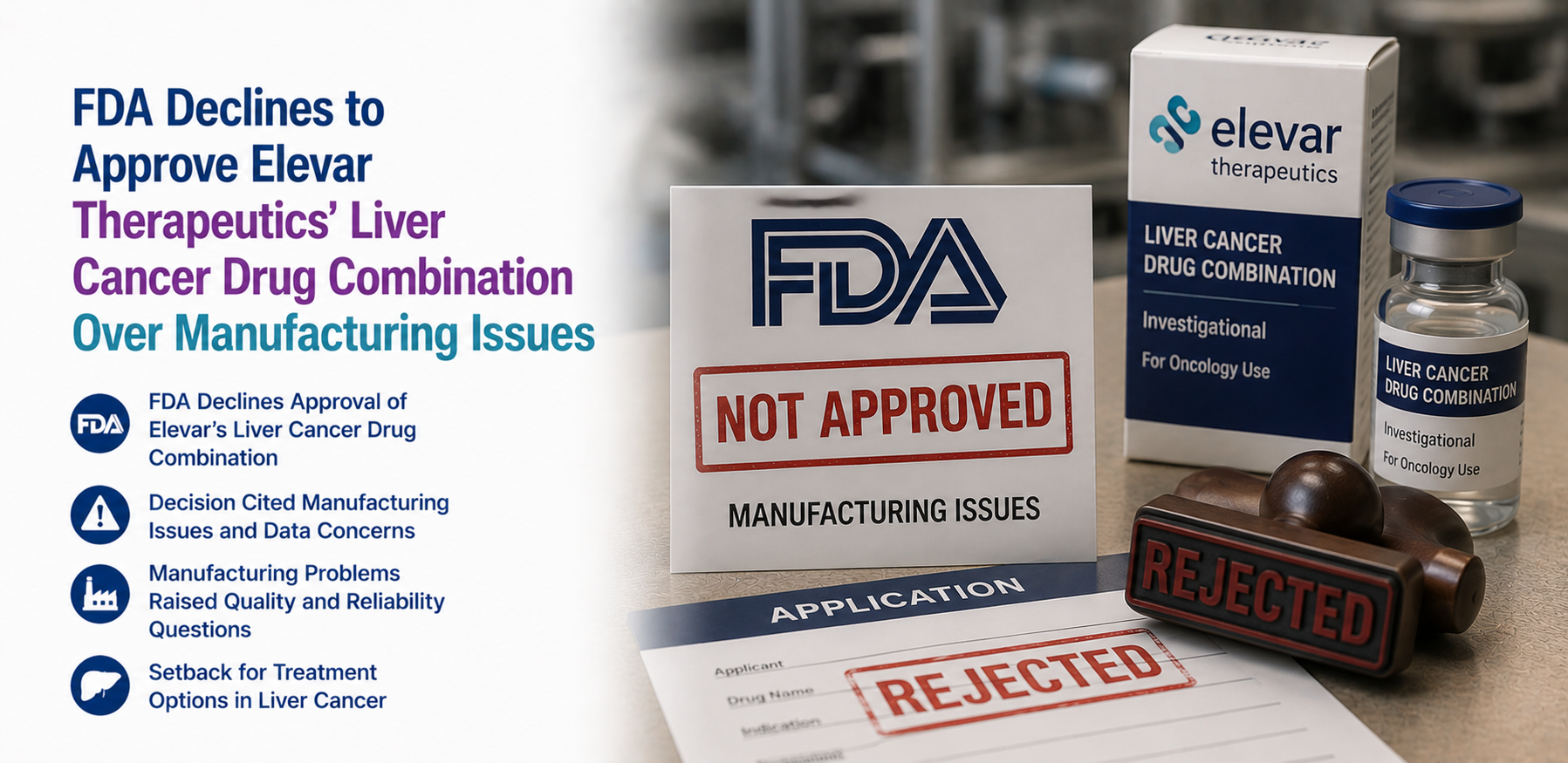
The U.S. Food and Drug Administration (FDA) has declined to approve Elevar Therapeutics' proposed combination therapy for advanced liver cancer, citing concerns related to a third-party manufacturing facility rather than the drug's clinical safety or effectiveness. The agency issued a Complete Response Letter (CRL), informing the company that it cannot approve the application in its current form until the manufacturing issues are resolved. (reuters.com)
According to Elevar, the FDA's decision was based on deficiencies identified during an inspection of the manufacturing site responsible for producing one of the medicines used in the combination therapy. The company stated that the FDA did not raise concerns about the treatment's clinical data or question its effectiveness. The decision highlights the critical role manufacturing quality plays in the drug approval process, even when a medicine demonstrates promising clinical results.
What Is Advanced Liver Cancer?
Liver cancer occurs when abnormal cells grow uncontrollably in the liver. The most common type is hepatocellular carcinoma (HCC), which accounts for the majority of primary liver cancer cases. Risk factors include:
- Chronic hepatitis B infection
- Chronic hepatitis C infection
- Cirrhosis
- Excessive alcohol consumption
- Non-alcoholic fatty liver disease (NAFLD)
- Obesity
- Type 2 diabetes
Because symptoms often appear late, many patients are diagnosed after the disease has already advanced, limiting treatment options.
What Is a Complete Response Letter?
A Complete Response Letter (CRL) is issued when the FDA determines that it cannot approve a drug application in its current form. Receiving a CRL does not necessarily mean the medicine has failed. Instead, the FDA outlines the issues that must be addressed before approval can be reconsidered. These issues may involve:
- Manufacturing deficiencies.
- Additional clinical data.
- Safety information.
- Product quality concerns.
- Labeling revisions.
Once the company resolves the identified issues, it may resubmit its application for further FDA review.
Why Manufacturing Quality Is So Important
Every medicine approved by the FDA must meet strict manufacturing standards to ensure patients consistently receive safe, high-quality products. During inspections, FDA investigators evaluate whether manufacturing facilities properly control:
- Product quality.
- Sterility.
- Equipment maintenance.
- Production processes.
- Quality assurance systems.
- Documentation practices.
Even when a medicine performs well in clinical trials, manufacturing problems can delay approval because inconsistent production may affect product safety, quality, or reliability. For biologic medicines and complex cancer therapies, maintaining high manufacturing standards is especially critical.
How FDA Inspections Work
Before approving many new medicines, the FDA inspects manufacturing facilities involved in producing the drug. Inspectors evaluate whether facilities comply with Current Good Manufacturing Practices (CGMPs), which establish standards for pharmaceutical manufacturing. If significant deficiencies are identified, the FDA may:
- Request corrective actions.
- Conduct follow-up inspections.
- Delay approval.
- Issue a Complete Response Letter.
Companies must demonstrate that identified problems have been corrected before approval can proceed.
Why Manufacturing Delays Matter
Manufacturing-related delays can have important consequences.
- For Patients: Patients may wait longer for access to promising new treatments.
- For Pharmaceutical Companies: Approval delays can postpone product launches, increase development costs, and affect future revenue.
- For Healthcare Providers: Physicians may need to continue relying on existing treatment options until new therapies become available.
Although manufacturing delays can be frustrating, regulatory oversight helps ensure that approved medicines consistently meet quality and safety standards.
What Happens Next?
Elevar will work with the manufacturing partner to address the FDA's observations. After corrective actions are completed, the company can:
- Submit updated manufacturing information.
- Request additional FDA review.
- Undergo follow-up inspections if necessary.
- Resubmit the application.
If the FDA determines that all issues have been resolved, the therapy may still receive future approval.
Industry Impact
- Pharmaceutical Companies: The decision reinforces the importance of strong manufacturing quality systems throughout drug development.
- Contract Manufacturing Organizations: Third-party manufacturing partners face increasing regulatory expectations as more companies outsource production.
- Healthcare Providers: Approval timelines for new oncology treatments may be influenced by manufacturing readiness in addition to clinical performance.
- Patients: While promising therapies may experience delays, FDA oversight helps ensure that approved medicines meet consistent quality standards.
Why This Matters
The FDA's decision illustrates that successful drug development depends on much more than positive clinical trial results. Manufacturing quality, facility compliance, and production reliability are equally important components of the approval process. As pharmaceutical manufacturing becomes increasingly global and companies rely more heavily on specialized contract manufacturers, regulatory oversight continues playing a critical role in protecting patient safety. Although Elevar's therapy was not rejected because of concerns about its clinical effectiveness, the case serves as a reminder that every stage of drug development—from laboratory research to commercial manufacturing—must meet rigorous regulatory standards before patients can access new medicines.
Key Takeaways
- The FDA declined to approve Elevar Therapeutics' liver cancer drug combination because of manufacturing issues at a third-party production facility.
- The agency did not identify concerns regarding the therapy's clinical safety or effectiveness.
- A Complete Response Letter outlines issues that must be resolved before approval can be reconsidered.
- FDA manufacturing inspections help ensure medicines are consistently produced according to strict quality standards.
- The company plans to address the manufacturing deficiencies and resubmit its application.
What This Means for Healthcare Marketers
The FDA's decision highlights that manufacturing excellence has become a strategic component of successful drug commercialization. While clinical trial results often receive the most attention, regulatory approvals depend equally on consistent product quality, reliable manufacturing processes, and compliance with Good Manufacturing Practices. Even highly promising therapies can face delays if production standards are not fully met.
For healthcare marketers, this reinforces the importance of communicating the complete drug development journey rather than focusing solely on clinical outcomes. Manufacturing quality, supply chain reliability, and regulatory readiness all contribute to healthcare providers' confidence in new therapies. Organizations that demonstrate operational excellence alongside scientific innovation are better positioned for successful product launches.
For healthcare intelligence teams, regulatory actions involving manufacturing facilities provide valuable insight into broader industry trends. Monitoring FDA inspection findings, Complete Response Letters, manufacturing investments, and supply chain developments can help organizations anticipate approval timelines, competitive launches, and evolving regulatory expectations across the pharmaceutical industry.