
FDA Updates Guidance to Help Speed Up Drug Development
What's Happening
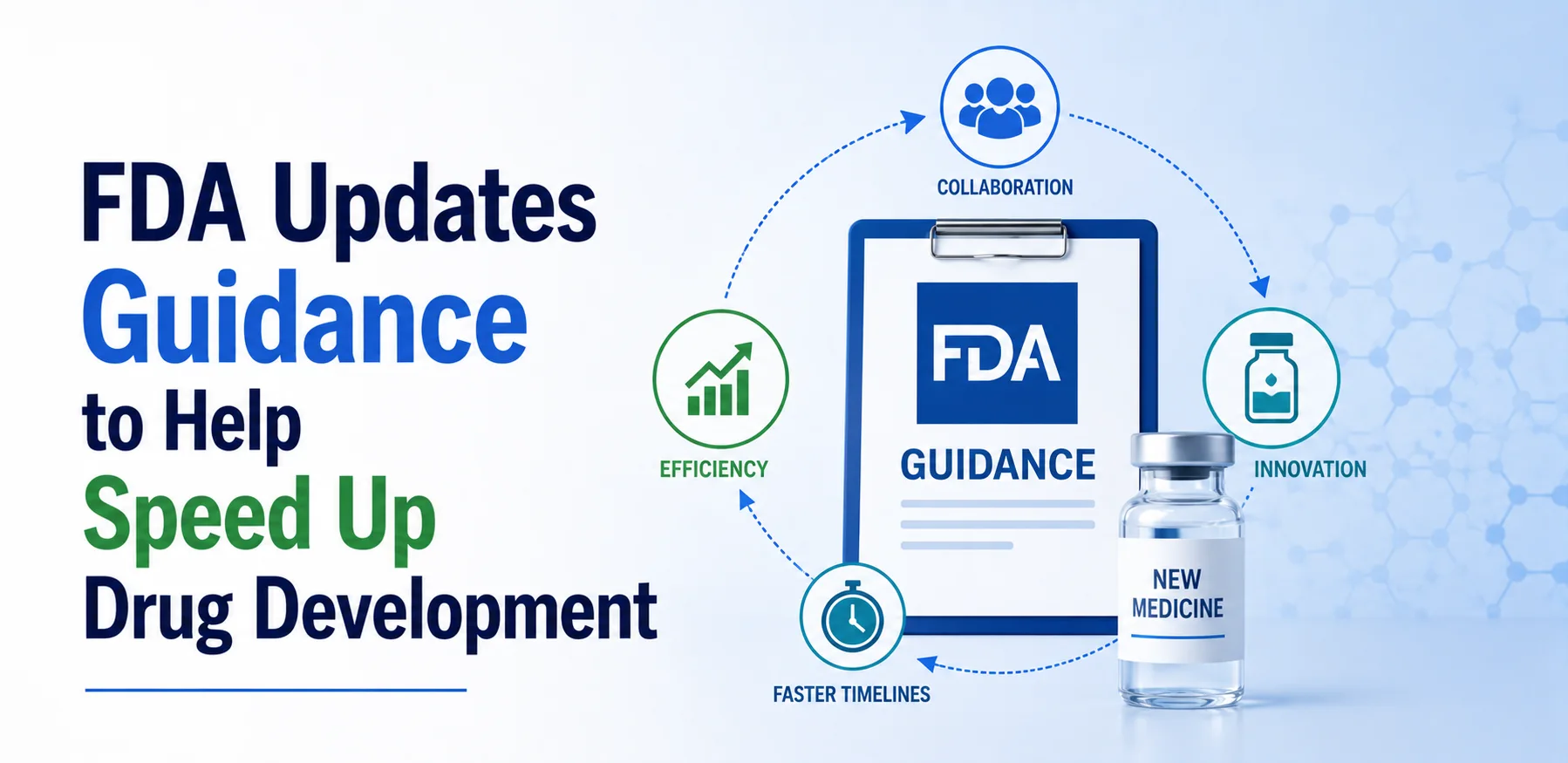
The U.S. Food and Drug Administration (FDA) released updated guidance aimed at helping pharmaceutical and biotechnology companies develop new medicines more efficiently while maintaining existing standards for safety and effectiveness.
The revised guidance encourages drug developers to make greater use of existing scientific knowledge, prior research, validated biomarkers, and accumulated clinical evidence when designing development programs. The goal is to reduce unnecessary duplication of research efforts and accelerate the process of bringing promising treatments to patients.
FDA officials emphasized that the changes are not intended to lower approval standards. Instead, the agency wants to help companies use available scientific evidence more effectively so that resources can be focused on generating the most meaningful data.
The announcement comes as regulators face increasing pressure to balance rapid medical innovation with rigorous scientific oversight.
Why Drug Development Takes So Long
Developing a new medicine remains one of the most expensive and time-consuming processes in healthcare. On average, it can take more than a decade for a drug to move from initial discovery to regulatory approval.
The process typically includes:
- Laboratory research
- Preclinical testing
- Phase 1 clinical trials
- Phase 2 clinical trials
- Phase 3 clinical trials
- Regulatory review
- Manufacturing validation
At every stage, companies must generate extensive evidence demonstrating that a treatment is both safe and effective. While these requirements protect patients, they also contribute to enormous development costs. Many experts estimate that bringing a successful medicine to market can require investments exceeding billions of dollars when accounting for unsuccessful programs.
As a result, regulators and industry leaders have spent years searching for ways to make development more efficient without compromising scientific integrity.
What the FDA Is Trying to Change
The updated guidance reflects a broader movement toward what regulators call "evidence-based efficiency." Traditionally, companies often repeated studies or generated large amounts of new data even when relevant scientific evidence already existed.
The FDA is encouraging developers to make greater use of:
- Existing Scientific Research: Researchers have accumulated decades of information regarding disease biology, treatment mechanisms, and patient outcomes. Using that knowledge more effectively can reduce unnecessary duplication.
- Biomarkers: Biomarkers are measurable biological indicators that help researchers understand disease progression or treatment response (e.g., blood-test results, genetic markers, protein levels, imaging findings). Validated biomarkers can sometimes provide meaningful evidence more quickly than waiting for long-term clinical outcomes.
- Real-World Evidence: Healthcare systems now generate enormous amounts of data through routine patient care. When appropriately validated, these data sources can help support regulatory decision-making.
- Platform Knowledge: Information gained from earlier studies involving similar technologies may sometimes inform future development programs.
Why This Matters for Rare Diseases
One area that may benefit significantly from the updated guidance is rare-disease research. Rare diseases often affect relatively small patient populations. Conducting large traditional clinical trials can therefore be difficult or even impossible. Researchers developing treatments for rare conditions frequently face challenges such as limited patient availability, small trial sizes, long recruitment timelines, and high research costs.
The FDA's emphasis on using existing evidence may help developers generate meaningful regulatory submissions with fewer patients while still maintaining scientific rigor. This could potentially accelerate access to therapies for conditions that currently have few treatment options.
The Growing Pressure to Modernize Drug Development
The healthcare industry is changing rapidly. Advances in artificial intelligence, genomics, precision medicine, gene therapy, cell therapy, and digital health technologies are creating new opportunities and new regulatory challenges. Traditional development frameworks were designed primarily around conventional medicines, and many emerging therapies operate very differently.
Regulators increasingly recognize that development approaches must evolve alongside scientific innovation. The updated guidance reflects an effort to modernize regulatory thinking without weakening standards. Instead of requiring the same approach for every product, regulators are encouraging more flexible use of scientific evidence.
What Pharmaceutical Companies Think
Many drug developers have advocated for greater regulatory flexibility for years. Industry leaders argue that unnecessary duplication can increase costs, delay patient access, slow innovation, and reduce investment efficiency. Supporters believe smarter use of existing evidence can accelerate development while preserving patient protections.
At the same time, some healthcare experts caution that efficiency should never come at the expense of scientific rigor. They emphasize that new medicines must still demonstrate clear safety and effectiveness before approval. The FDA's challenge is finding the right balance between speed and certainty.
Why Patients Could Benefit
For patients, faster development timelines could potentially mean earlier access to important therapies, which may be especially valuable for rare diseases, serious cancers, neurodegenerative conditions, genetic disorders, and unmet medical needs. Every year removed from the development process can have meaningful implications for patients waiting for new treatment options.
However, regulators continue emphasizing that speed alone is not the goal. The objective is to improve efficiency while maintaining confidence in the evidence supporting approved medicines.
Industry Impact
- Pharmaceutical Companies: Developers may gain more flexibility when designing clinical programs and regulatory strategies.
- Biotechnology Firms: Smaller companies could potentially reduce development costs by making better use of existing scientific evidence.
- Regulators: The guidance reflects continuing efforts to modernize regulatory frameworks for emerging technologies.
- Patients: Successful implementation could accelerate access to innovative therapies without reducing safety standards.
Key Takeaways
- The FDA released updated guidance intended to help accelerate drug development.
- The agency wants companies to make greater use of existing scientific evidence and validated biomarkers.
- The changes are designed to improve efficiency rather than lower approval standards.
- Rare-disease and emerging-technology developers may benefit significantly.
- The guidance reflects broader efforts to modernize healthcare regulation.
What This Means for Healthcare Marketers
This guidance represents an important signal about the future direction of healthcare innovation. For healthcare marketers, regulatory modernization often creates new opportunities across clinical development, data analytics, real-world evidence, AI-enabled research, biomarker testing, and regulatory consulting. Companies helping organizations generate, analyze, or operationalize scientific evidence may see increasing demand as development strategies evolve.
The announcement also highlights the growing importance of data as a competitive advantage. Organizations that can efficiently generate high-quality evidence may be able to move products through development more effectively than competitors relying solely on traditional approaches.
For healthcare intelligence teams, FDA guidance documents often provide valuable insight into future industry priorities. The agency's focus on evidence utilization, biomarkers, and development efficiency suggests these areas will remain important themes across healthcare innovation in the coming years.
More broadly, the update reflects a healthcare industry that is increasingly focused on working smarter with scientific evidence rather than simply generating larger amounts of data.