What’s Happening
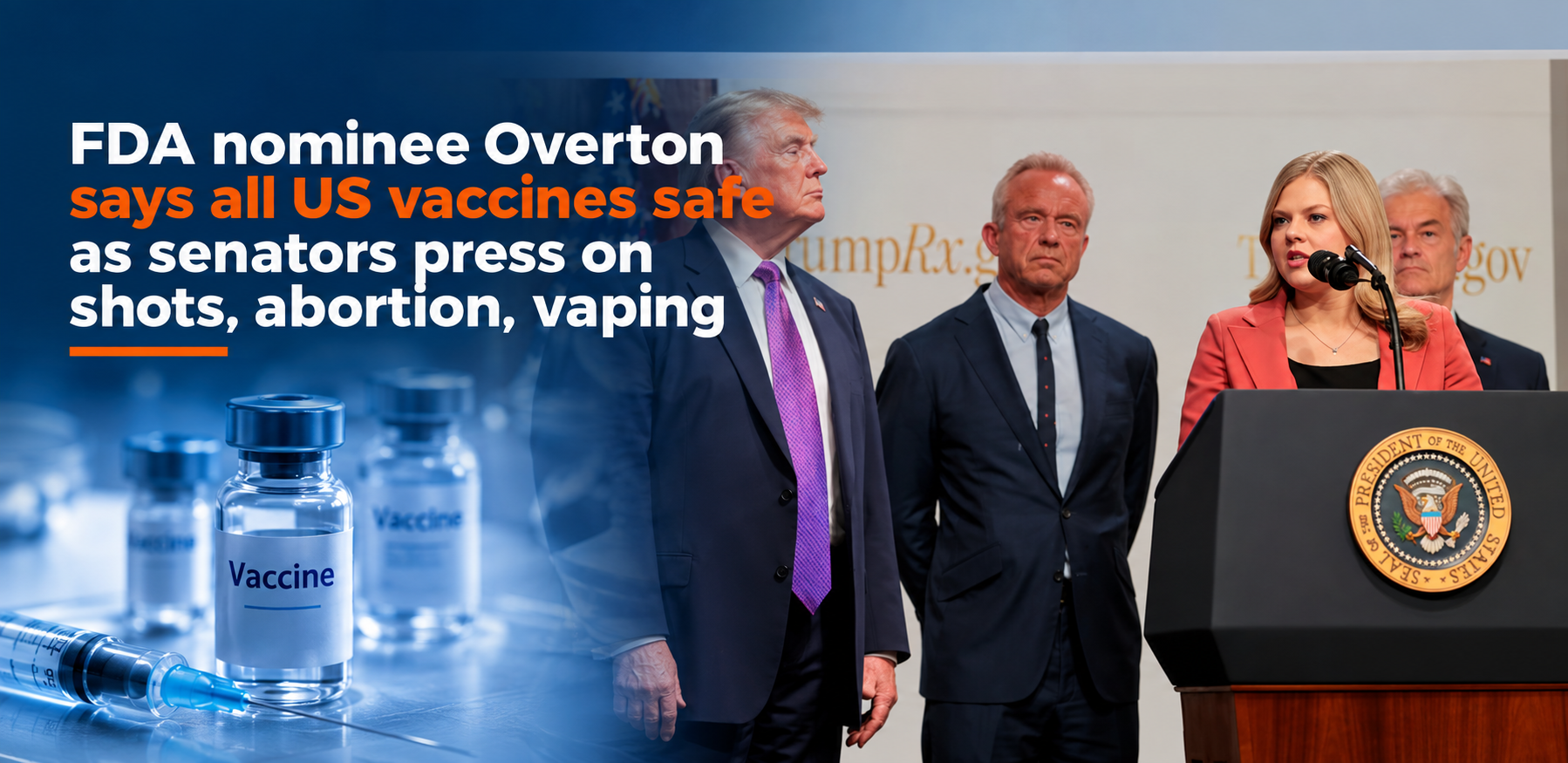
Dr. Heidi Overton, President Donald Trump’s nominee to lead the U.S. Food and Drug Administration, faced questions from senators about vaccines, the abortion medication mifepristone, vaping products, and the FDA’s independence during her confirmation hearing on September 24.
Overton told lawmakers that vaccines currently approved in the United States are safe and effective according to the FDA. She also specifically said that the measles, mumps and rubella (MMR) vaccine is not lethal.
The hearing comes as the FDA deals with major policy debates involving vaccines, tobacco and nicotine products, medicines, and the agency’s regulatory process.
Who Is Heidi Overton?
Overton is a preventive medicine physician who previously served as deputy director of the White House Domestic Policy Council.
Trump nominated her to lead the FDA in August.
If confirmed by the Senate, Overton would oversee an agency responsible for regulating prescription drugs, vaccines, medical devices, tobacco products, and other health products used in the United States.
The FDA commissioner also plays an important role in setting the agency’s priorities and overseeing how it evaluates the safety and effectiveness of new products.
What Happened During the Vaccine Discussion?
Senator Bill Cassidy, a Republican from Louisiana and a physician, questioned Overton about the safety of the MMR vaccine.
The discussion followed an administration policy calling for changes to the childhood vaccination schedule, including separating some vaccines into additional doses.
Cassidy also questioned Overton about her involvement when Trump announced the policy and about previous comments from Trump concerning combined vaccines.
Overton said clearly that the MMR vaccine is not lethal.
She also said that vaccines currently on the U.S. market are considered safe and effective according to the FDA.
However, she did not directly criticize Trump’s previous comments or reject the broader policy changes.
Overton said the administration’s approach was intended to give parents additional choices rather than eliminate access to vaccines.
What About the Abortion Pill?
Senators also questioned Overton about mifepristone, a medication used for abortion and miscarriage management.
Democratic Senator Patty Murray asked whether Overton personally believed mifepristone was safe and effective.
Overton did not directly answer the question. Instead, she said that the medication had met FDA safety standards.
The discussion was also connected to Overton’s previous public statements about abortion and medication abortion.
If confirmed, she would inherit an ongoing FDA review of mifepristone.
The agency is expected to provide a federal court with an update on that review by October 7.
Why Were Vaping Products Discussed?
Senators also questioned Overton about the FDA’s recent authorization of certain flavored nicotine pouches and vaping products.
Republican Senator Susan Collins raised concerns about the potential impact of flavored nicotine products on young people.
Overton defended the FDA’s review process, saying career FDA staff had recommended authorization for certain products. She noted that some adults who have quit smoking use flavored nicotine products as alternatives to traditional cigarettes.
Democratic Senator Chris Murphy also questioned whether political considerations could influence tobacco regulation.
Overton rejected that characterization.
The discussion reflects a broader regulatory challenge: reducing nicotine use among young people while also considering products that some adults use as alternatives to cigarettes.
What’s Changing / Business Impact
The FDA commissioner has significant influence over the regulatory environment for healthcare and life sciences companies.
Leadership decisions can affect areas such as:
- Drug approvals
- Clinical trial requirements
- Vaccine regulation
- Medical device reviews
- Tobacco and nicotine products
- Post-market safety monitoring
- Regulatory guidance
- Manufacturing and quality requirements
For pharmaceutical and biotech companies, changes in regulatory priorities can affect development plans, submission strategies, and the path toward commercialization.
For companies developing vaccines and other preventive-health products, changes in vaccination policy can also affect demand, communications, and market planning.
Why This Matters
The FDA plays a central role in determining which medicines and medical products can be marketed in the United States and under what conditions.
That makes the agency’s leadership important for pharmaceutical companies, biotechnology firms, medical-device manufacturers, healthcare providers, and other businesses operating in healthcare.
The confirmation hearing also highlighted the different policy issues surrounding FDA regulation.
Some senators focused on vaccine policy and regulatory independence. Others questioned abortion medication and tobacco-product decisions.
If confirmed, Overton would lead the agency while these issues continue to develop.
Looking Ahead
The next major step is the Senate’s consideration of Overton’s nomination.
If confirmed, she would oversee an FDA dealing with several major issues, including drug approvals, vaccine policy, tobacco regulation, and agency operations.
Her approach to existing regulatory reviews could also become important for companies whose products are currently under FDA consideration.
For the healthcare industry, an important question will be how the FDA’s leadership translates broader policy positions into specific regulatory decisions, guidance, and enforcement actions.
What This Means for Healthcare Marketers
For healthcare marketers, FDA developments can provide important signals about future commercial activity.
- Regulatory approvals: FDA decisions can determine when pharmaceutical and medical-device companies can launch or expand products.
- Clinical development: Changes in regulatory expectations can influence clinical-trial planning and timelines.
- Product launches: FDA approvals can trigger demand for launch strategy, provider education, patient engagement, and market-access programs.
- Vaccine communications: Changes in vaccine policy can affect communication strategies aimed at providers and patients.
- Tobacco and nicotine regulation: Companies in this category need to closely track authorizations, restrictions, and enforcement.
- Leadership changes: A new FDA commissioner can signal potential changes in agency priorities.
- Regulatory intelligence: FDA decisions can help marketers identify companies approaching major development or commercialization milestones.
For B2B healthcare marketers, FDA activity can be an early signal of future market activity. A regulatory milestone may indicate that a company is moving closer to a product launch, expanded market access, or increased provider and patient outreach.
Key Takeaways
- Heidi Overton, Trump’s nominee to lead the FDA, faced Senate questions about vaccines, mifepristone, vaping products, and FDA decision-making.
- Overton said the MMR vaccine is not lethal and that vaccines currently on the U.S. market are safe and effective according to the FDA.
- She did not directly criticize Trump’s previous comments about vaccines.
- Overton did not directly state her personal view on whether mifepristone is safe and effective, instead saying the medication had met FDA safety standards.
- Senators also questioned her about recent FDA decisions involving flavored nicotine products.
- If confirmed, Overton would lead the FDA during a period of significant regulatory and policy activity.