What's Happening
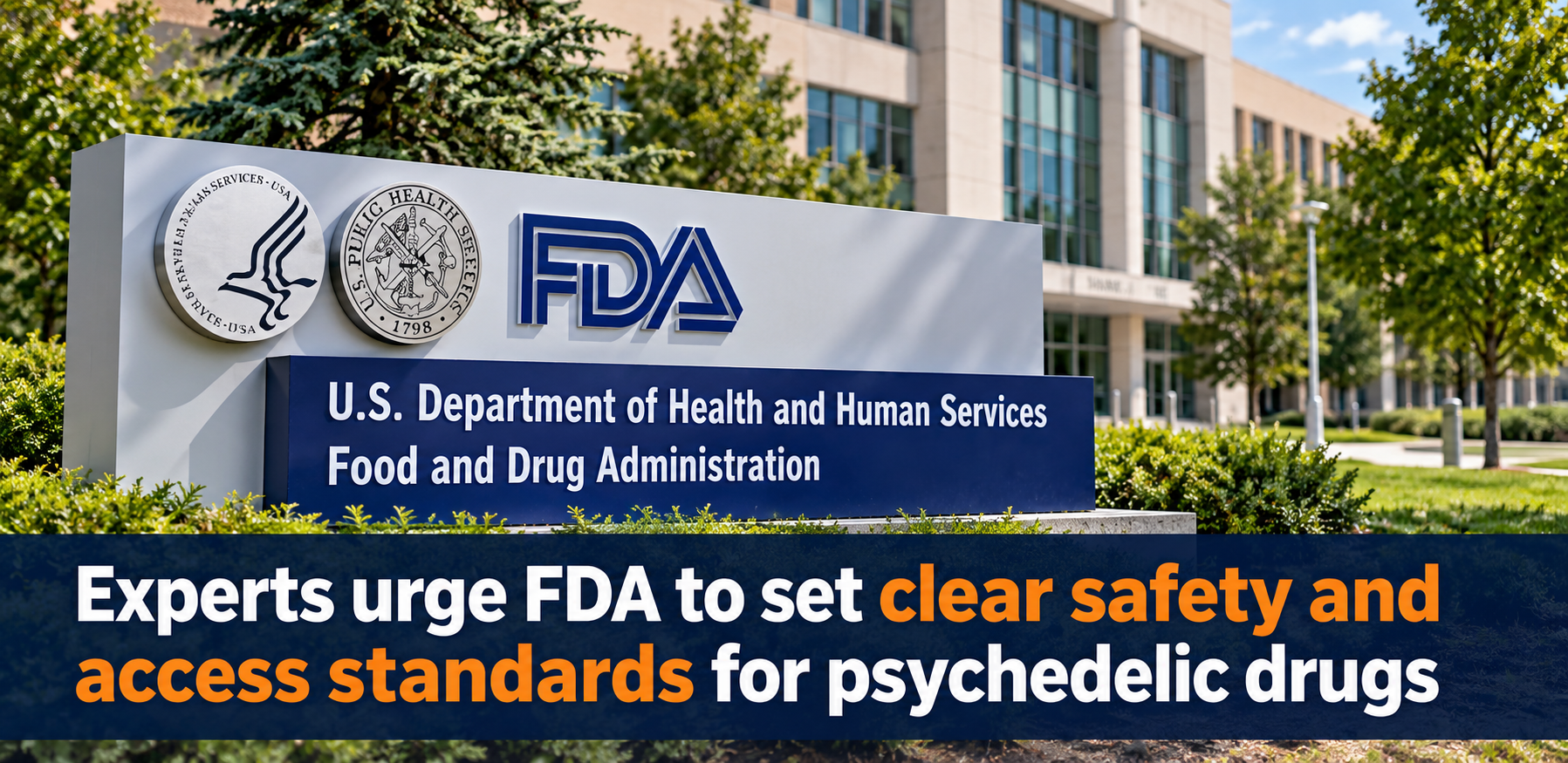
The U.S. Food and Drug Administration (FDA) held a public hearing on September 14, 2026, focused on how psychedelic drugs could potentially be used as treatments for serious mental-health conditions.
The hearing is part of a broader push by the Trump administration to accelerate the development of psychedelic therapies, including treatments based on substances such as psilocybin, methylone and ibogaine-related compounds. The effort began in April after President Donald Trump issued an executive order directing federal agencies to speed research and access to treatments for serious mental illness. (Reuters)
The hearing itself was not about legalizing psychedelic drugs or approving a specific medicine. Instead, the FDA sought input on what the healthcare system would need if psychedelic medicines eventually receive approval, including provider training, patient safety, screening, monitoring, access, reimbursement and data collection. (U.S. Food and Drug Administration)
A Major Shift in U.S. Drug Development Policy
Federal administration accelerates clinical pathways for controlled substances
Psychedelic medicines have historically faced substantial regulatory and research barriers because many of the substances being studied are federally controlled and have not been approved as medicines.
The Trump administration has taken a more aggressive approach.
In April, the FDA announced a series of measures intended to accelerate psychedelic drug development. These included the creation of expedited review opportunities through the agency's Commissioner's National Priority Voucher program. (U.S. Food and Drug Administration)
The initiative is intended to shorten regulatory timelines for qualifying products while maintaining the FDA's requirements for clinical evidence and safety.
That represents an important change in the industry's relationship with regulators: rather than simply waiting for individual psychedelic companies to complete conventional development programs, the federal government is actively exploring ways to create a regulatory pathway for the category as a whole.
Three Psychedelic Programs Received Priority Vouchers
Targeting treatment-resistant depression, major depression and PTSD
In April, the FDA awarded national priority vouchers to three psychedelic drug-development programs.
They cover:
- Psilocybin for treatment-resistant depression: Compass Pathways received a voucher for its psilocybin program, COMP360, targeting treatment-resistant depression, an area affecting patients who do not respond adequately to conventional antidepressant treatments.
- Psilocybin for major depressive disorder: The nonprofit Usona Institute received another voucher for a psilocybin program intended to investigate whether psilocybin-assisted treatment can provide meaningful improvement for patients with major depression.
- Methylone for PTSD: A third voucher went to Transcend Therapeutics for methylone, an investigational psychedelic treatment being developed for post-traumatic stress disorder.
The FDA said these vouchers were designed to accelerate the review of qualifying psychedelic medicines rather than establish that the drugs are safe or effective. (U.S. Food and Drug Administration)
The FDA Is Looking Beyond the Drug Itself
Preparing clinical infrastructure for non-traditional delivery models
One of the most important aspects of Monday's hearing was that the discussion moved beyond the traditional question of whether a drug works.
Psychedelic treatments can involve an experience that is substantially different from taking a conventional pill once or twice a day.
The FDA therefore wants to understand how these medicines would actually be delivered in clinical practice.
- Clinician Training: Healthcare professionals may need specialized education and credentialing to administer or supervise psychedelic treatments, creating an entirely new healthcare infrastructure. (Colin Leitner)
- Patient Screening and Safety: Because some psychedelic therapies produce profound psychological effects, providers will need protocols to determine appropriate candidates and mitigate risks. (U.S. Food and Drug Administration)
- Supervised Treatment: Unlike conventional medicines taken independently at home, psychedelic therapies may require administration in controlled, supportive, supervised settings. (U.S. Food and Drug Administration)
Reimbursement Could Become a Major Issue
Complex economic questions surrounding multi-hour care and specialized staffing
Even if psychedelic medicines are eventually approved, regulatory approval would not automatically guarantee widespread adoption.
Healthcare systems would still need to determine who administers the therapy, where treatment takes place, how long patients are monitored, what follow-up care is required, who pays for the treatment, and how insurers determine medical necessity.
The FDA specifically requested input on access and reimbursement, signaling that policymakers are already thinking about the practical economics of psychedelic treatment. (U.S. Food and Drug Administration)
This is particularly important because psychedelic therapy may involve more than the cost of the drug itself, encompassing trained clinicians, specialized facilities, monitoring and multiple hours of patient support.
The Role of Veterans' Healthcare
VA collaboration drives real-world evidence for PTSD indications
Veterans are an important target population in the administration's psychedelic strategy.
The FDA and other federal agencies are working together on psychedelic research and treatment development, including collaboration with the Department of Veterans Affairs.
The federal government's interest is partly driven by conditions such as PTSD, a major health issue among veterans and one of the key indications being investigated for psychedelic medicines. (U.S. Food and Drug Administration)
That means Veterans Affairs could become an important setting for generating real-world evidence and understanding how psychedelic therapies might work within large healthcare systems.
The FDA Is Not Legalizing Psychedelics
Therapeutic research pathways remain distinct from general legalization
The hearing does not mean psychedelic substances have become broadly legal medicines.
The FDA made clear that its work is focused on potential therapeutic use and drug development, not general legalization. (Reuters)
The distinction is important. A psychedelic drug would still have to satisfy the FDA's regulatory requirements before it could be legally marketed as an approved treatment for a particular condition.
The priority-voucher program also does not represent an FDA determination that a particular drug is safe or effective. (Colin Leitner)
A New FDA Guidance Framework
Industry guidance issued to navigate complex clinical trial designs
The hearing follows another significant regulatory development.
In July 2026, the FDA finalized industry guidance titled "Psychedelic Drugs: Considerations for Clinical Investigations."
The guidance provides developers with recommendations for designing clinical studies involving psychedelic drugs and addresses the unusual challenges involved in studying these treatments. (U.S. Food and Drug Administration)
This gives drug developers a clearer framework for conducting clinical trials while the government simultaneously considers how approved psychedelic treatments might eventually be delivered.
Taken together, the guidance, priority vouchers and public hearing suggest that the FDA is building a more defined regulatory pathway for the sector.
Ibogaine Research Is Also Moving Forward
Early-stage trials authorized for ibogaine-related compounds
The administration's initiative extends beyond psilocybin and methylone.
The FDA said it had also allowed an early-stage clinical study of noribogaine hydrochloride, an ibogaine-related compound, to move forward following an Investigational New Drug submission. (U.S. Food and Drug Administration)
Ibogaine has attracted particular attention because of research into its potential use for serious mental-health and substance-use conditions.
The administration has also directed federal agencies to explore ways to facilitate access to eligible psychedelic therapies, including certain ibogaine compounds, under existing legal mechanisms. (GovInfo)
Why Drug Developers Are Paying Attention
Favorable regulatory posture reduces sector uncertainty
The government's more favorable stance could materially change the investment environment for psychedelic companies.
Previously, companies operating in this field faced unusually high regulatory uncertainty. The FDA's new guidance and expedited-review initiatives could make development timelines more predictable and potentially reduce some of the regulatory risk attached to psychedelic programs.
That has already attracted investor interest in companies developing treatments based on psychedelic compounds. (Reuters)
For biotech companies, a clearer regulatory pathway can influence everything from fundraising and clinical strategy to partnerships and commercialization planning.
Challenges Still Remain
Clinical, safety, and infrastructure hurdles must be cleared
Despite the policy shift, psychedelic drug development remains scientifically and operationally complicated.
- Clinical Evidence: FDA enthusiasm for faster development does not remove the need for strong clinical evidence demonstrating that treatments are effective and that benefits outweigh risks.
- Safety: Long-term safety remains an important consideration, especially for therapies that can produce powerful psychological effects.
- Treatment Infrastructure: The healthcare system may need new models, specialized clinics, trained professionals and standardized patient-monitoring protocols.
- Reimbursement: Insurers will eventually have to determine how to pay for treatments combining drugs with extensive clinical services.
Why This Matters
The FDA's hearing is significant because it signals that psychedelic medicine is moving from a largely experimental area toward a potentially mainstream regulatory category.
The federal government is no longer simply watching the field develop. It is actively creating guidance, accelerating selected programs and gathering public input on how psychedelic treatments could function inside the U.S. healthcare system. (U.S. Food and Drug Administration)
That could eventually reshape treatment options for conditions such as depression and PTSD, particularly for patients who have not responded adequately to existing therapies.
But the transition will require more than FDA approval. Healthcare providers, insurers, regulators and patients will all have to adapt to a treatment model that can be much more resource-intensive than conventional pharmaceutical care.
Looking Ahead
Public comments open through October as clinical milestones approach
The FDA is expected to continue developing its regulatory approach while psychedelic companies advance their clinical programs.
Written comments on the public hearing are being accepted through October 5, 2026, giving stakeholders additional time to provide feedback on provider training, patient safety, access and data standards. (U.S. Food and Drug Administration)
The next major milestones will come from clinical trial results and eventual regulatory submissions.
If an early psychedelic therapy succeeds, the consequences could extend well beyond a single drug. It could establish the standards for how an entire new category of mental-health treatments is prescribed, administered and reimbursed in the United States.
Key Takeaways
- The FDA held a public hearing on September 14, 2026 about the potential future therapeutic use of psychedelic drugs.
- The hearing is part of the Trump administration's effort to accelerate treatments for serious mental illness. (U.S. Food and Drug Administration)
- The FDA has issued national priority vouchers to three psychedelic programs involving psilocybin and methylone.
- The programs target treatment-resistant depression, major depressive disorder and PTSD.
- The agency is examining practical issues including clinician training, patient screening, safety, monitoring, access, reimbursement and data collection. (U.S. Food and Drug Administration)
- The FDA finalized formal guidance for psychedelic clinical investigations in July 2026. (U.S. Food and Drug Administration)
- The FDA is also allowing early clinical research into noribogaine hydrochloride to proceed. (U.S. Food and Drug Administration)
- The hearing does not legalize psychedelic drugs or constitute approval of any individual psychedelic medicine.
- The developments could eventually create a new treatment category within U.S. mental-health care.
What This Means for Healthcare Marketers
Psychedelic medicine could create an entirely new healthcare marketing ecosystem if these therapies reach approval.
The opportunity will extend beyond pharmaceutical manufacturers to mental-health providers, specialty clinics, health systems, insurers and patient-support organizations. Marketing strategies will likely need to explain not just the drug, but the treatment experience, eligibility requirements, clinical setting, monitoring and reimbursement.
The most important signals to track will be clinical-trial outcomes, FDA actions, provider-training requirements, payer coverage decisions and the emergence of specialized treatment centers. Those signals will indicate whether psychedelic medicine is moving from an experimental biotech category into a scalable healthcare market.