FDA Reviewers Raise Concerns Over Capricor's Duchenne Muscular Dystrophy Therapy
What's Happening
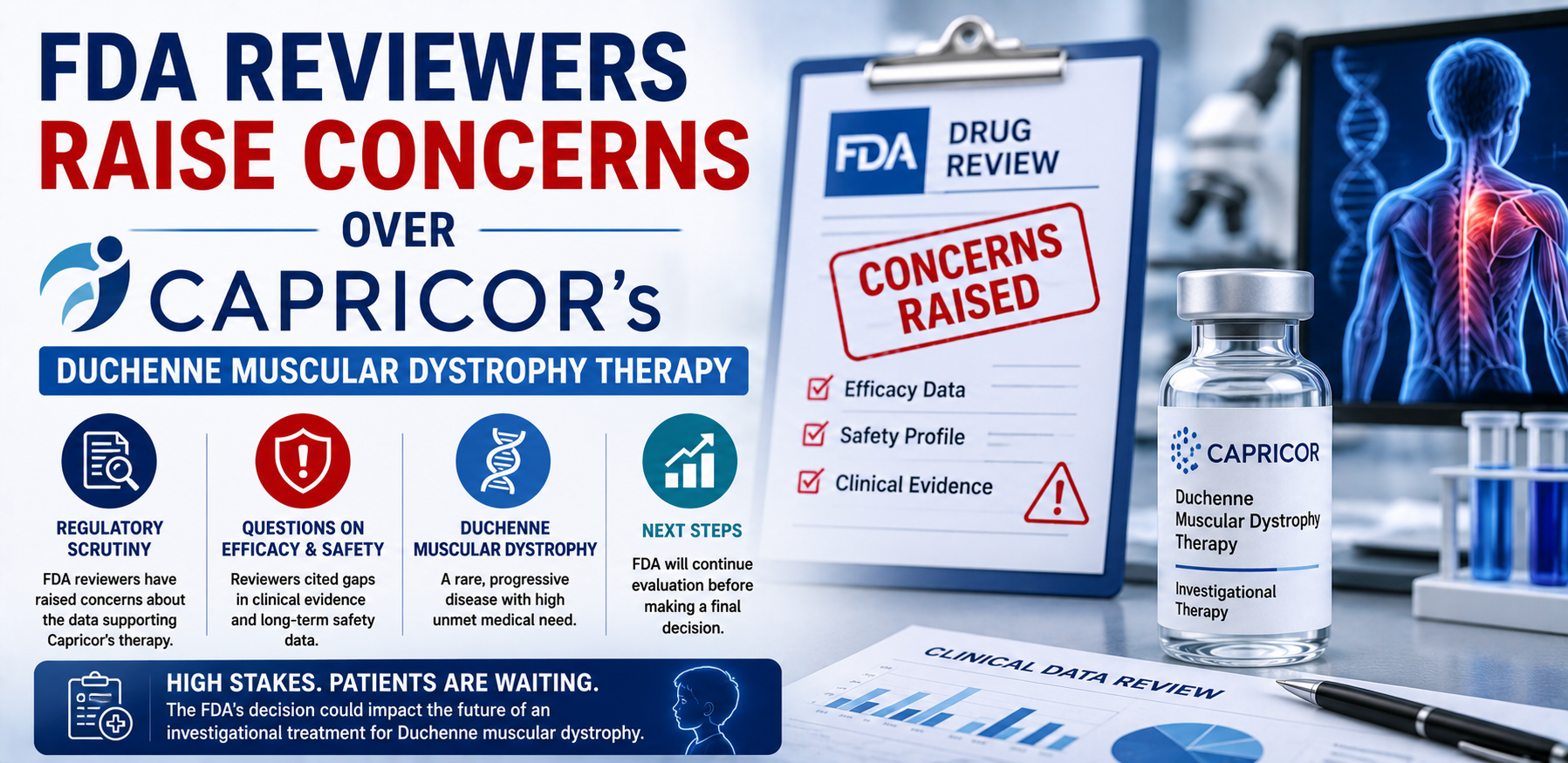
U.S. Food and Drug Administration (FDA) reviewers have raised concerns about Capricor Therapeutics' experimental cell therapy for Duchenne muscular dystrophy (DMD), questioning whether the available clinical evidence is sufficient to support approval.
The agency's review highlighted uncertainties surrounding the therapy's effectiveness and the strength of the clinical data submitted by the company. The concerns were released ahead of an FDA advisory committee meeting, where independent experts are expected to discuss the treatment's benefits and risks before the agency makes a final regulatory decision.
The announcement led to a sharp decline in Capricor's share price as investors reacted to the possibility of delays or additional data requirements.
Understanding Duchenne Muscular Dystrophy
Duchenne muscular dystrophy is a rare, inherited genetic disorder that causes progressive muscle weakness and degeneration. It primarily affects boys and is caused by mutations in the dystrophin gene, which is essential for maintaining healthy muscle cells.
As the disease progresses, patients gradually lose the ability to walk and often develop severe heart and respiratory complications. Although recent advances have expanded treatment options, there remains a significant need for therapies that can slow disease progression and improve long-term outcomes.
Why the FDA Raised Concerns
The FDA evaluates new therapies by carefully weighing their safety, effectiveness and the quality of the supporting clinical evidence.
In Capricor's case, reviewers questioned whether the available data clearly demonstrated that the treatment provides meaningful clinical benefit for patients with Duchenne muscular dystrophy.
The agency also noted limitations in portions of the clinical evidence, making it difficult to confidently determine the therapy's overall effectiveness.
These concerns do not represent a final decision. Instead, they form part of the FDA's review process, during which external experts may provide recommendations before the agency reaches its final conclusion.
Industry Impact
- Rare Disease Drug Development: The review highlights the high regulatory standards required for therapies targeting rare diseases. While regulators recognise the urgent need for new treatments, they must also ensure that approvals are supported by robust scientific evidence.
- Biotechnology Companies: The FDA's comments serve as a reminder that regulatory reviews remain one of the most significant risks for biotechnology companies. Even promising therapies can face delays if regulators determine that additional clinical evidence is needed.
- Patients and Families: Families affected by Duchenne muscular dystrophy continue to await new treatment options. Any delay in the approval process may postpone access to therapies that could potentially slow disease progression.
- Investors: Biotechnology stocks often experience significant price movements around FDA decisions. Regulatory uncertainty can rapidly affect company valuations, particularly for smaller firms with limited product portfolios.
Looking Ahead
Developing treatments for rare diseases presents unique challenges. Clinical trials often involve small patient populations, making it more difficult to generate large volumes of evidence compared with more common diseases.
At the same time, regulators must balance the urgent medical needs of patients with the responsibility to ensure that new therapies are both safe and effective. The Capricor review illustrates this balance, emphasising the importance of rigorous scientific evaluation even in areas of high unmet medical need.
Key Takeaways
- FDA reviewers have raised concerns about the clinical evidence supporting Capricor's Duchenne muscular dystrophy therapy.
- The questions focus on whether the available data sufficiently demonstrate meaningful clinical benefit.
- An FDA advisory committee is expected to review the evidence before the agency makes a final approval decision.
- The announcement triggered a decline in Capricor's share price, reflecting investor concern over potential regulatory delays.
- The case highlights the challenges of developing and evaluating therapies for rare diseases.
What This Means for Healthcare Marketers
Regulatory reviews are pivotal moments that influence market access, investor confidence and commercial planning. For healthcare marketers, the Capricor case underscores the importance of communicating clinical evidence transparently and setting realistic expectations throughout the approval process. As regulators continue to place strong emphasis on data quality and demonstrated patient benefit, organisations must ensure that scientific messaging is evidence-based and aligned with evolving regulatory standards.