FDA Reviewers Raise Questions About Replimune's Experimental Skin Cancer Therapy Ahead of Advisory Meeting
What's Happening
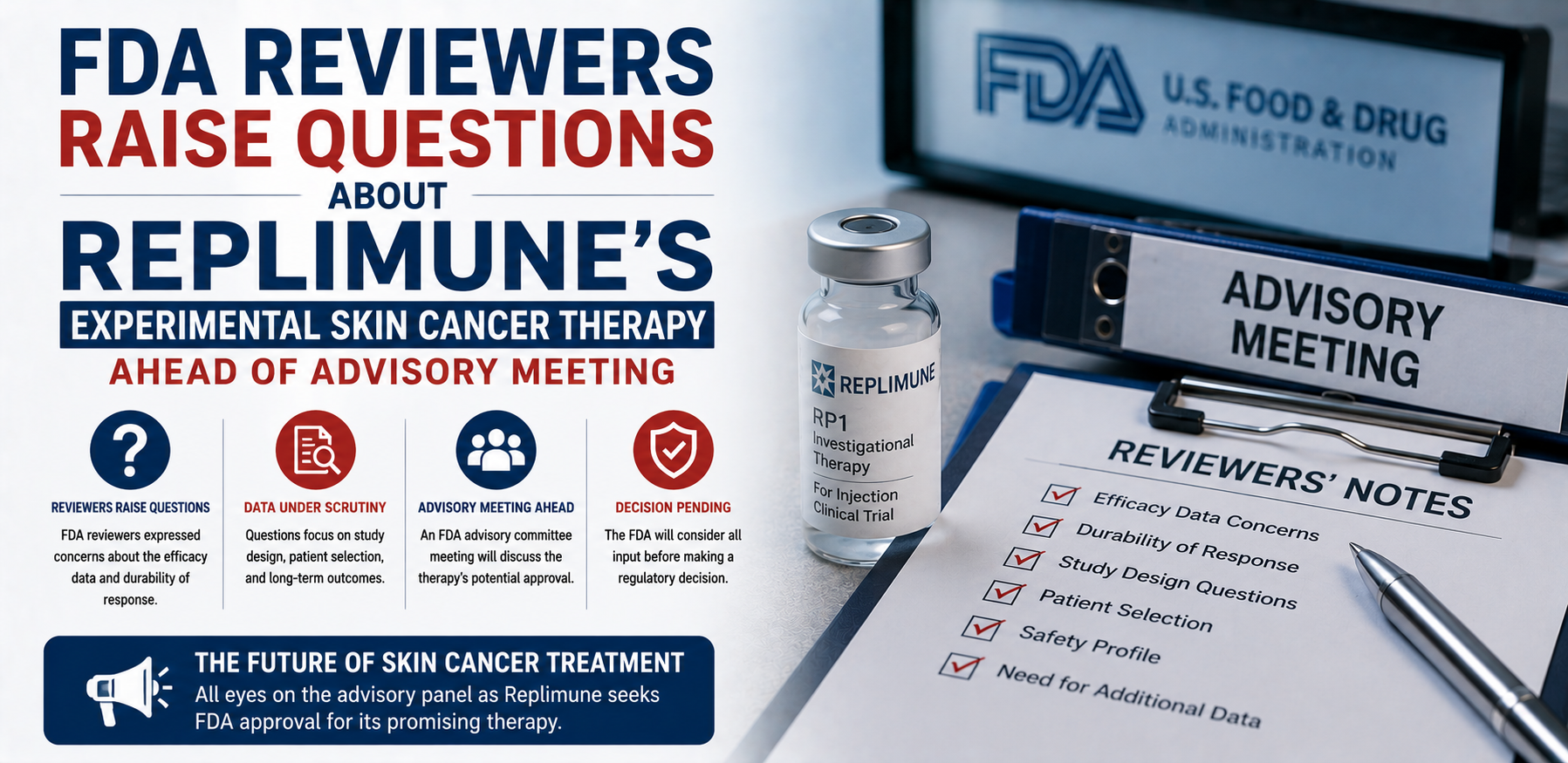
U.S. Food and Drug Administration (FDA) reviewers have raised concerns about the effectiveness of Replimune Group's experimental therapy for advanced skin cancer ahead of an upcoming advisory committee meeting.
In briefing documents released before the meeting, FDA staff questioned whether the available clinical evidence demonstrates that the treatment provides a meaningful benefit for patients. The review comes as Replimune seeks approval for its oncolytic immunotherapy, a treatment designed to stimulate the body's immune system to attack cancer cells.
The FDA's findings are part of the agency's standard review process and will be considered alongside recommendations from an independent panel of experts before a final approval decision is made.
Understanding the Therapy
Replimune's investigational treatment is an oncolytic immunotherapy, a type of cancer therapy that uses a genetically modified virus to selectively infect and destroy tumour cells while activating the immune system against cancer.
Unlike conventional chemotherapy, oncolytic therapies aim to trigger a targeted immune response that may continue attacking cancer cells even after the virus has done its work.
The therapy is being developed for patients with advanced melanoma and other forms of skin cancer that may not respond adequately to existing treatments.
Why the FDA Raised Concerns
Before approving a new medicine, the FDA evaluates whether the available evidence demonstrates that the treatment is both safe and effective.
In its review, FDA staff questioned whether:
- The clinical trial results showed a clear improvement in patient outcomes.
- The study design provided sufficient evidence of effectiveness.
- The data supported approval based on the proposed indication.
These concerns do not mean the therapy has been rejected. Instead, they identify areas that independent advisors and FDA officials will examine before making a final regulatory decision.
Industry Impact
- Oncology Drug Development: The review highlights the high standards required for cancer drug approvals, particularly for innovative therapies using new treatment approaches. Companies developing immunotherapies continue to face rigorous evaluation to ensure meaningful patient benefit.
- Biotechnology Industry: Regulatory reviews remain one of the most significant milestones for biotechnology companies. Questions raised during the review process can influence development timelines, commercial planning and investor confidence.
- Patients: People with advanced skin cancer continue to need additional treatment options, especially when existing therapies stop working. Any delay in approval may postpone access to potentially promising therapies while further evidence is reviewed.
- Investors: Biotechnology companies often experience significant share price volatility around FDA advisory committee meetings, particularly when agency reviewers identify concerns about clinical effectiveness.
Looking Ahead
Cancer immunotherapy has transformed the treatment of many cancers over the past decade, but regulatory agencies continue to require strong evidence that new therapies provide meaningful improvements over existing options.
The Replimune review demonstrates the balance regulators must maintain between accelerating access to innovative treatments and ensuring that new medicines are supported by robust clinical data. Thorough scientific evaluation helps maintain confidence in the therapies that ultimately reach patients.
Key Takeaways
- FDA reviewers have questioned the clinical evidence supporting Replimune's experimental skin cancer therapy.
- The concerns focus primarily on whether the treatment has demonstrated sufficient effectiveness for approval.
- An independent FDA advisory committee will review the evidence before the agency makes its final decision.
- The case highlights the rigorous evaluation process for innovative cancer immunotherapies.
- Regulatory decisions continue to play a critical role in shaping oncology drug development and commercial success.
What This Means for Healthcare Marketers
FDA advisory committee reviews are pivotal moments that influence physician confidence, investor sentiment and future commercial strategy. For healthcare marketers, the Replimune case reinforces the importance of evidence-based communication and transparent presentation of clinical data. As oncology therapies become increasingly specialised, organisations that clearly demonstrate clinical value, meaningful patient outcomes and scientific credibility will be best positioned to build trust among providers, payers and patients.