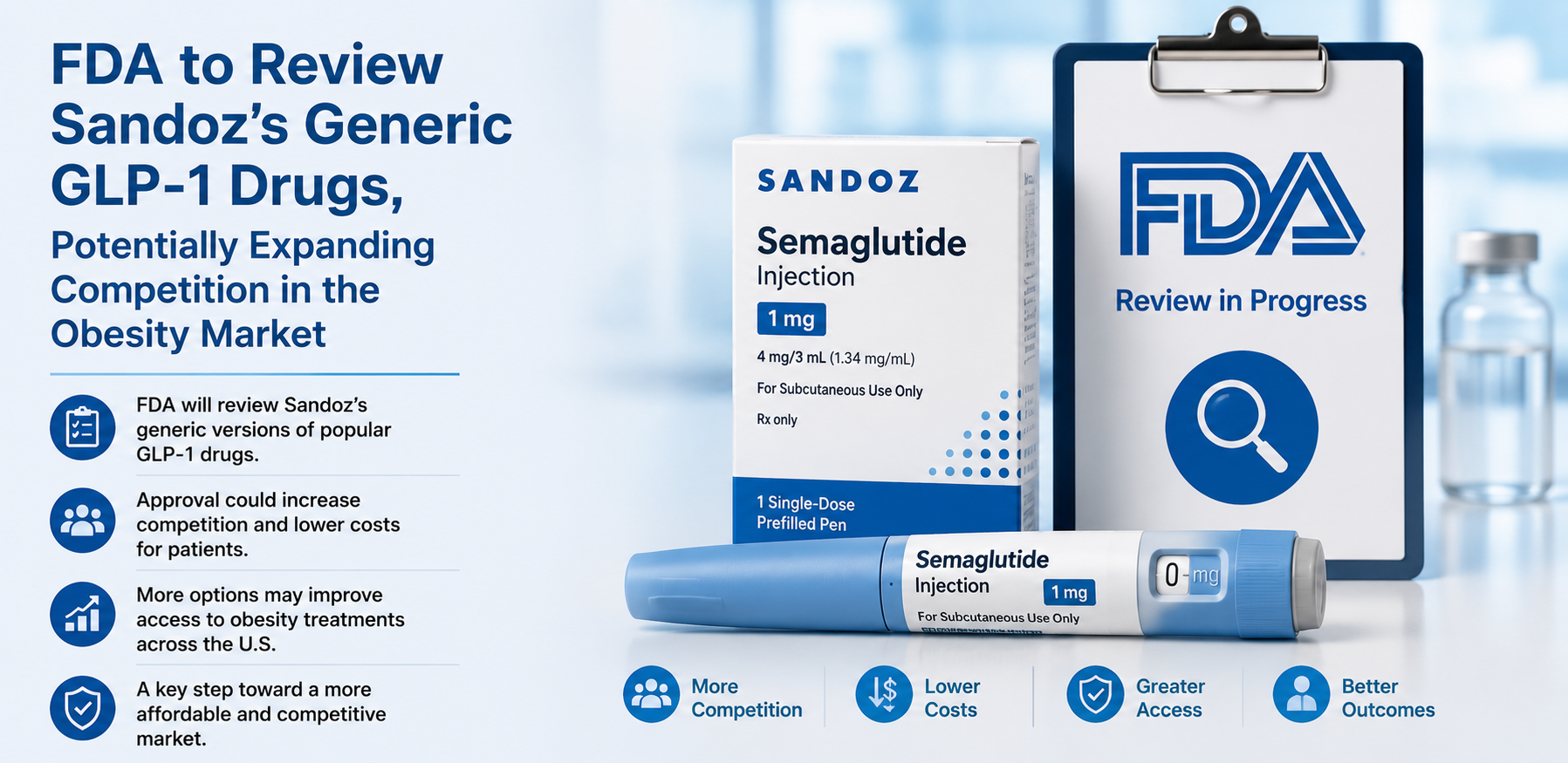
FDA to Review Sandoz's Generic GLP-1 Drugs, Potentially Expanding Competition in the Obesity Market
What's Happening
The U.S. Food and Drug Administration (FDA) is preparing to review applications from Sandoz for generic versions of GLP-1 medications, marking an important milestone in the evolution of the rapidly growing obesity and diabetes drug market.
If approved, the medicines could become some of the first generic GLP-1 treatments available in the United States after patents and exclusivity periods expire.
The review is being closely watched across the healthcare industry because GLP-1 drugs—including Novo Nordisk's Ozempic and Wegovy, and Eli Lilly's Mounjaro and Zepbound—have become some of the most commercially successful medicines in history.
These drugs have transformed the treatment of obesity and type 2 diabetes, but their high prices have limited access for many patients.
Generic versions could eventually increase competition, lower costs, and expand access to millions of people who currently cannot afford treatment.
Although regulatory approval is still pending, the FDA's review signals that the next phase of competition in the GLP-1 market may be approaching.
What Are GLP-1 Drugs?
GLP-1 receptor agonists are medicines originally developed to treat type 2 diabetes.
They work by mimicking a naturally occurring hormone called glucagon-like peptide-1 (GLP-1), which helps regulate blood sugar and appetite.
These medicines help patients by:
- Stimulating insulin release after meals.
- Reducing the amount of sugar produced by the liver.
- Slowing the rate at which food leaves the stomach.
- Reducing hunger and increasing feelings of fullness.
Researchers later discovered that these effects also produced significant weight loss, leading to approvals for obesity treatment.
Today, GLP-1 drugs are prescribed for millions of patients worldwide and have become one of the fastest-growing therapeutic categories in healthcare.
Why Are These Drugs So Popular?
Clinical studies have shown that GLP-1 medicines can produce meaningful health benefits beyond weight loss.
Patients using these therapies often experience improvements in:
- Body weight
- Blood sugar control
- Blood pressure
- Cholesterol levels
- Cardiovascular risk
Several large studies have also demonstrated reductions in major cardiovascular events among certain high-risk patients.
Because obesity is associated with dozens of chronic diseases—including diabetes, heart disease, sleep apnea, fatty liver disease, and some cancers—many healthcare providers now view GLP-1 medicines as an important tool for long-term disease management.
Demand has grown so rapidly that manufacturers have struggled at times to keep up with global supply.
Why Generic Versions Matter
Generic medicines contain the same active ingredient as brand-name drugs and are intended to provide similar safety and effectiveness once approved by regulators.
Historically, generic competition has helped reduce healthcare costs across many therapeutic areas.
Potential benefits include:
- Lower Prices: Competition typically leads to lower medication costs over time.
- Better Patient Access: More affordable medicines may allow additional patients to begin treatment.
- Reduced Healthcare Spending: Health insurers, employers, and government healthcare programs may spend less on prescriptions.
- Greater Market Competition: Multiple manufacturers can improve supply availability and reduce shortages.
Although generic medicines generally enter the market only after patent protections expire, their arrival often changes the economics of an entire therapeutic category.
Why the FDA Review Is Important
Before approving any generic medicine, the FDA must determine that it meets strict standards for:
- Quality
- Safety
- Manufacturing
- Bioequivalence
- Consistency
For complex injectable medicines such as GLP-1 therapies, the review process can be particularly challenging.
Manufacturers must demonstrate that the generic product performs similarly to the original medicine while maintaining high manufacturing standards.
Because GLP-1 medicines involve sophisticated manufacturing processes, developing generic versions may be more complex than producing traditional tablets.
The FDA's review therefore represents an important regulatory milestone.
Why the Obesity Drug Market Is Changing
The obesity treatment market has expanded dramatically over the past few years.
Pharmaceutical companies are investing billions of dollars in developing:
- New injectable GLP-1 medicines
- Oral GLP-1 pills
- Combination therapies
- Next-generation metabolic treatments
At the same time, insurers and employers continue debating how to manage the high cost of these medicines.
The arrival of generic competitors could eventually help reduce pricing pressures while making treatment more widely available.
Industry analysts expect competition within the obesity market to increase significantly over the next decade.
Challenges Facing Generic Manufacturers
Although generic competition offers many benefits, entering the GLP-1 market is not straightforward.
Manufacturers must overcome several hurdles, including:
- Complex manufacturing requirements
- Regulatory review
- Patent litigation
- Supply chain challenges
- Large-scale production demands
Even after receiving FDA approval, companies must build manufacturing capacity capable of meeting strong global demand.
Because obesity medicines require long-term treatment for many patients, ensuring consistent supply will remain an important challenge.
What This Means for Patients
For patients, increased competition could eventually improve access to one of the most effective classes of obesity and diabetes medicines.
Many individuals who could benefit from GLP-1 therapy currently face barriers such as:
- High monthly costs
- Limited insurance coverage
- Drug shortages
- Prior authorization requirements
Generic alternatives may help address some of these issues over time.
However, widespread availability will still depend on regulatory approvals, manufacturing capacity, reimbursement policies, and market competition.
Patients are therefore unlikely to see immediate changes, but the FDA review represents an important step toward expanding future treatment options.
Industry Impact
- Generic Drug Manufacturers: The FDA review signals new opportunities within one of the pharmaceutical industry's fastest-growing markets.
- Brand-Name Pharmaceutical Companies: Manufacturers such as Novo Nordisk and Eli Lilly may eventually face increased competition as patents expire.
- Health Insurers: Greater competition could reduce pharmacy spending and improve affordability.
- Patients: Lower-cost alternatives may improve long-term access to obesity and diabetes treatments.
Why This Matters
The FDA's review of Sandoz's generic GLP-1 applications marks the beginning of what could become the next major chapter in obesity treatment.
Over the past several years, GLP-1 medicines have transformed care for obesity and diabetes, but their high prices have limited access for many eligible patients.
Generic competition has historically helped expand access to important medicines while lowering healthcare costs.
If the FDA ultimately approves these products, the market could gradually shift from one dominated by a few manufacturers toward a more competitive environment offering patients additional choices.
Although the transition will take time, the review reflects how the obesity treatment market continues to evolve as innovation is increasingly followed by broader competition.
Key Takeaways
- The FDA is reviewing Sandoz's applications for generic GLP-1 medicines.
- GLP-1 drugs have become some of the most successful treatments for obesity and type 2 diabetes.
- Generic competition could eventually lower prices and improve patient access.
- The review process will evaluate safety, quality, manufacturing, and bioequivalence.
- Increased competition may reshape the obesity treatment market over the coming years.
What This Means for Healthcare Marketers
This story highlights how blockbuster healthcare markets eventually transition from innovation-driven growth to competition-driven expansion.
For healthcare marketers, the emergence of generic GLP-1 medicines represents a major shift in market dynamics. While brand manufacturers have focused on demonstrating clinical superiority and expanding treatment indications, generic manufacturers will likely compete on affordability, accessibility, and supply. This transition will influence payer negotiations, prescribing patterns, patient education strategies, and commercialization approaches across the obesity and diabetes markets.
The FDA review also illustrates how regulatory milestones can reshape competitive landscapes long before products reach the market. Organizations that closely monitor patent expirations, generic filings, and regulatory reviews can better anticipate changes in pricing, reimbursement, and market share.
For healthcare intelligence teams, generic entry often signals broader changes in healthcare spending and treatment adoption. Lower-cost alternatives may encourage wider insurance coverage, improve patient access, and increase overall utilization of obesity therapies. Monitoring these developments can help organizations identify emerging opportunities in chronic disease management, digital health, pharmacy services, and patient engagement.
More broadly, the story demonstrates that the future growth of the GLP-1 market will depend not only on developing new therapies but also on making effective treatments accessible to a much larger patient population through increased competition and more affordable pricing.