
FDA Urges Infant Formula Manufacturers to Strengthen Supplier Oversight Following Product Recall
What's Happening
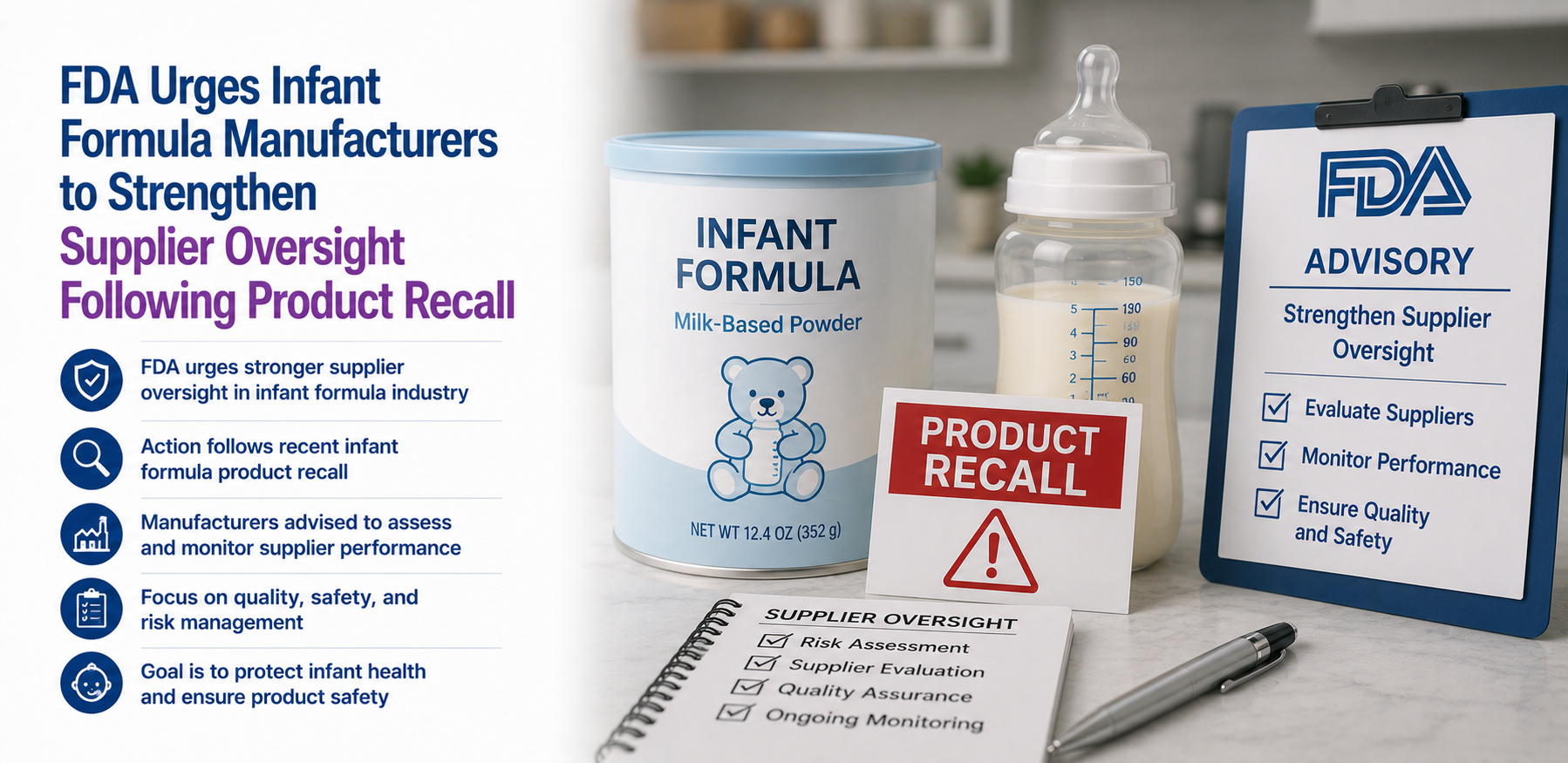
The U.S. Food and Drug Administration (FDA) has urged infant formula manufacturers to strengthen oversight of their suppliers following a recent product recall linked to concerns about product quality. The agency called on manufacturers to improve supplier verification, quality monitoring, and risk management practices to help prevent future disruptions in the infant formula supply chain.
The FDA emphasized that ensuring the safety and quality of infant formula requires close oversight not only within manufacturing facilities but also throughout the broader supply chain. The agency's recommendations are part of ongoing efforts to improve product safety after several high-profile infant formula recalls in recent years.
The announcement reflects the FDA's continued focus on protecting one of the most vulnerable patient populations, newborns and young infants.
Why Infant Formula Safety Is So Important
Infant formula is often the sole or primary source of nutrition for babies during the first months of life. Because infants have developing immune and digestive systems, formula must meet exceptionally high standards for:
- Safety.
- Nutritional quality.
- Manufacturing consistency.
- Microbiological control.
- Ingredient purity.
Even small manufacturing or ingredient problems can pose serious health risks to infants, making rigorous quality control essential throughout the production process.
What Is Supplier Oversight?
Infant formula manufacturers rely on numerous suppliers that provide:
- Raw ingredients.
- Vitamins and minerals.
- Packaging materials.
- Manufacturing components.
- Processing equipment.
Supplier oversight refers to the systems companies use to ensure these materials consistently meet quality and safety standards. This may include:
- Auditing supplier facilities.
- Testing incoming ingredients.
- Verifying manufacturing practices.
- Reviewing quality documentation.
- Monitoring supplier performance.
- Identifying potential risks before production begins.
Strong supplier oversight helps prevent contaminated or substandard materials from entering the manufacturing process.
Why the FDA Is Taking Action
The FDA's recommendations follow concerns raised during investigations into recent infant formula recalls. The agency wants manufacturers to strengthen their quality systems by:
- Improving supplier qualification procedures.
- Increasing oversight of ingredient sourcing.
- Enhancing quality assurance programs.
- Identifying potential risks earlier.
- Strengthening documentation and traceability.
The goal is to reduce the likelihood of future manufacturing issues that could lead to recalls or supply disruptions.
What Happens During a Product Recall?
A product recall occurs when a manufacturer removes a product from the market because it may pose a health or safety risk. Recalls may result from:
- Potential contamination.
- Manufacturing defects.
- Incorrect labeling.
- Quality control failures.
- Packaging problems.
- Regulatory concerns.
When recalls involve infant formula, public health agencies respond quickly because infants may rely on a limited number of products for their nutrition. Healthcare providers, retailers, and parents are typically notified so affected products can be removed from use.
Lessons from Recent Formula Shortages
Recent infant formula recalls contributed to nationwide supply shortages, making it difficult for many families to obtain appropriate products. The shortages highlighted the importance of:
- Reliable manufacturing.
- Supply chain resilience.
- Quality assurance.
- Multiple qualified suppliers.
- Strong regulatory oversight.
Since then, manufacturers and regulators have worked to strengthen production capacity while improving systems designed to prevent future disruptions.
Industry Impact
- Infant Formula Manufacturers: Companies may increase supplier audits, quality monitoring, and supply chain oversight to align with the FDA's recommendations.
- Suppliers: Ingredient and packaging suppliers may face greater quality assurance requirements and more frequent evaluations.
- Healthcare Providers: Pediatricians and hospitals continue monitoring formula availability while helping families respond to recalls when necessary.
- Parents and Caregivers: Stronger quality systems aim to improve confidence in infant formula safety while reducing the likelihood of future shortages.
Why This Matters
The FDA's recommendations reinforce that product safety depends on the entire manufacturing ecosystem, not just the final production facility. As pharmaceutical and nutrition supply chains become increasingly complex, manufacturers are expected to maintain comprehensive oversight of suppliers, ingredients, and production processes. For infant formula, where product quality directly affects newborn health, preventive quality management is particularly important. Strengthening supplier oversight can help reduce recalls, improve manufacturing consistency, and support a more reliable supply of essential nutrition products for infants across the United States.
Key Takeaways
- The FDA urged infant formula manufacturers to strengthen oversight of suppliers following a recent product recall.
- The agency recommends improving supplier qualification, quality monitoring, and risk management practices.
- Infant formula requires exceptionally high manufacturing and safety standards because it serves as a primary source of nutrition for infants.
- Strong supplier oversight helps prevent contaminated or substandard ingredients from entering production.
- The recommendations are intended to improve product safety and reduce the risk of future recalls and supply disruptions.
What This Means for Healthcare Marketers
The FDA's recommendations highlight the growing importance of supply chain quality in healthcare and nutrition. Product safety depends not only on manufacturing excellence but also on the reliability of suppliers, ingredient sourcing, and quality management systems throughout the production process. As regulators place greater emphasis on proactive risk management, manufacturers are investing more heavily in supply chain visibility and preventive quality controls.
For healthcare marketers, trust remains one of the most valuable assets in pediatric nutrition. Parents, healthcare providers, and hospitals expect manufacturers to maintain rigorous safety standards and transparent quality practices. Organizations that demonstrate strong quality systems, supply chain resilience, and regulatory compliance are better positioned to build confidence in highly sensitive healthcare products.
For healthcare intelligence teams, the FDA's guidance provides insight into evolving regulatory expectations for manufacturing oversight. Monitoring quality initiatives, supplier management practices, recall trends, and supply chain regulations can help organizations anticipate future compliance requirements while strengthening product safety and operational resilience across the healthcare industry.