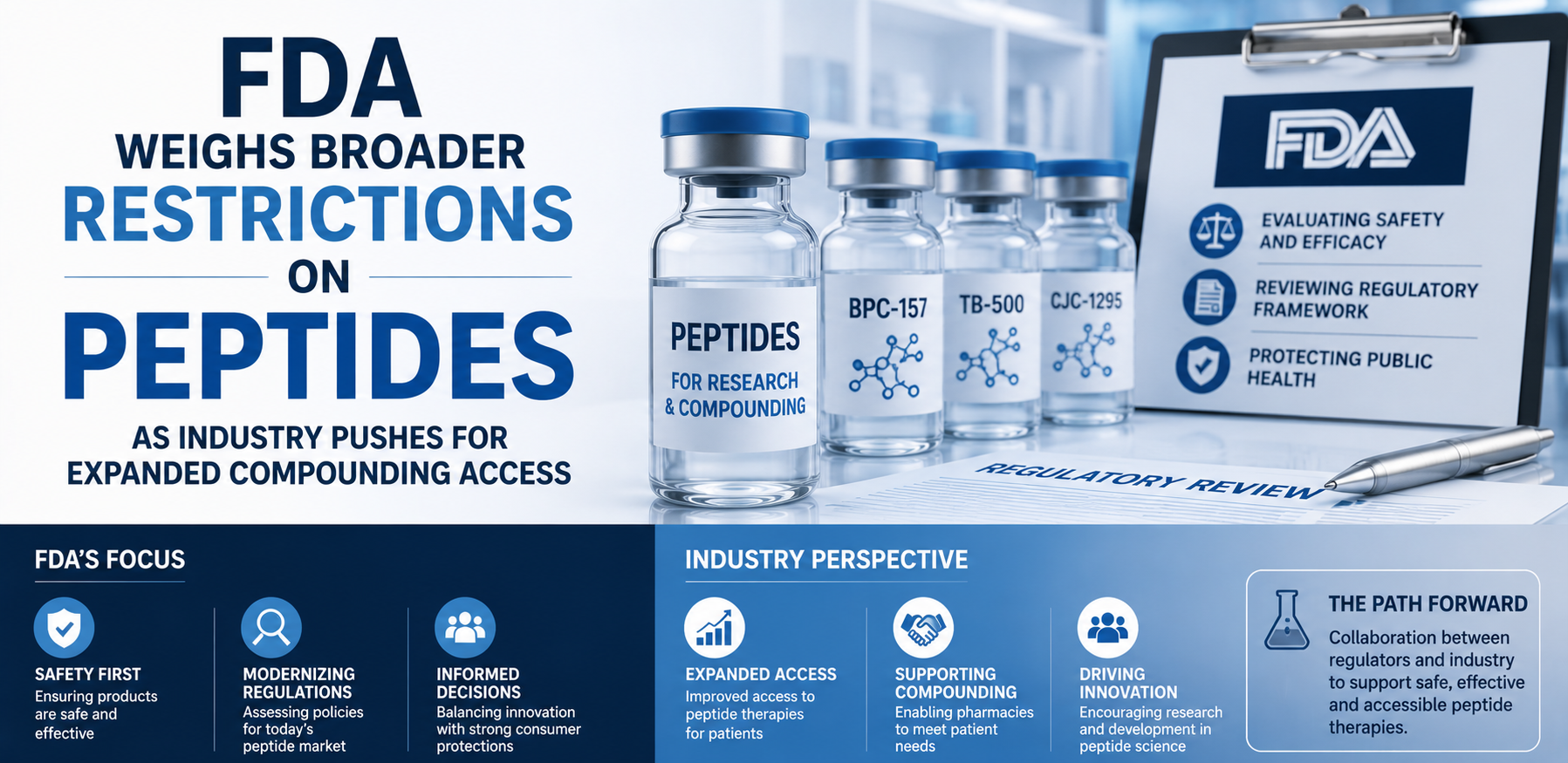
FDA Weighs Broader Restrictions on Peptides as Industry Pushes for Expanded Compounding Access
What's Happening
The U.S. Food and Drug Administration (FDA) is taking a closer look at one of the fastest-growing segments of the healthcare market: compounded peptide therapies.
During a meeting of the FDA's Pharmacy Compounding Advisory Committee, experts reviewed seven widely used peptides that are commonly marketed for tissue repair, muscle recovery, anti-aging, weight management, and regenerative medicine. The discussions come as demand for peptide-based therapies has surged across wellness clinics, telehealth providers, and compounding pharmacies, despite many of these products lacking FDA approval.
The committee considered whether each peptide should be added to the FDA's 503A Bulks List, which identifies substances that may legally be used by licensed compounding pharmacies under specific conditions. While the committee voted in favor of allowing certain peptides, including TB-500 and BPC-157, other substances received greater scrutiny due to limited clinical evidence and unresolved safety concerns.
The recommendations are advisory, meaning the FDA will make the final regulatory decisions after reviewing the committee's findings and public comments.
Why Peptides Have Become a Regulatory Focus
Peptides are short chains of amino acids that serve as building blocks for proteins and play essential roles throughout the human body. Scientists have successfully developed peptide-based medicines to treat conditions ranging from diabetes and obesity to hormone disorders and certain cancers.
In recent years, however, a new commercial market has emerged around peptides that are promoted for benefits such as:
- Faster muscle and tendon recovery.
- Injury healing.
- Anti-aging and longevity.
- Improved athletic performance.
- Enhanced metabolism.
- Reduced inflammation.
- General wellness and regenerative medicine.
Many of these products have become popular through wellness clinics, anti-aging centers, online telehealth platforms, and social media influencers. While consumer demand has grown rapidly, many of these peptides have not completed the rigorous clinical testing required for FDA approval.
This disconnect between market demand and scientific evidence has placed peptides at the center of an increasingly important regulatory debate.
What Is the FDA's 503A Bulks List?
One of the key topics discussed during the advisory committee meeting was whether these peptides should be included on the FDA's 503A Bulks List.
The list determines which bulk drug substances may be used by state-licensed compounding pharmacies when preparing customized medications for individual patients.
Unlike commercially manufactured drugs, compounded medications are created to meet specific patient needs, such as modifying dosage strengths, removing allergens, or preparing formulations that are not otherwise available.
Importantly, inclusion on the 503A Bulks List does not mean a substance has been approved by the FDA. Instead, it means the FDA has determined that, under appropriate circumstances, the substance may be suitable for pharmacy compounding.
The distinction is significant because compounded medications do not undergo the same premarket review process as FDA-approved drugs.
The Debate: Access Versus Evidence
The advisory committee heard differing perspectives from physicians, researchers, pharmacy organizations, patients, and industry representatives.
Supporters of broader compounding access argued that peptide therapies provide important treatment options for patients who may not benefit from existing therapies. They also noted that allowing regulated compounding could improve product quality by moving patients away from unregulated online suppliers.
Others argued that several peptides have shown promising biological activity in laboratory research and deserve further clinical investigation rather than outright restriction.
FDA scientists and several committee members, however, expressed concerns that many of the peptides being reviewed still lack sufficient human clinical evidence demonstrating their safety, effectiveness, and long-term risk profile.
Because many products are already being marketed aggressively despite limited evidence, regulators emphasized the importance of ensuring that patient access is supported by sound science rather than commercial demand alone.
Why This Matters for Healthcare
The committee's discussions reflect a much larger trend taking shape across healthcare.
Interest in personalized medicine and regenerative therapies continues to expand as patients seek alternatives for chronic pain, orthopedic injuries, healthy aging, and metabolic health.
At the same time, healthcare regulators are working to establish clearer rules governing therapies that fall outside traditional pharmaceutical development pathways.
The outcome of these FDA reviews could influence:
- Which peptide therapies remain legally available through compounding pharmacies.
- How physicians prescribe emerging regenerative treatments.
- How pharmacies source and manufacture compounded medications.
- Future investment in peptide research and commercialization.
- The regulatory expectations for new personalized medicine products.
The decisions may also shape patient confidence in compounded therapies by providing greater regulatory clarity.
Industry Impact
- Compounding Pharmacies: The FDA's final decisions could significantly affect pharmacies specializing in personalized medicine. Peptides approved for inclusion on the 503A Bulks List may become more widely available through regulated channels, while excluded substances could face tighter restrictions.
- Healthcare Providers: Physicians practicing sports medicine, orthopedics, pain management, functional medicine, and regenerative medicine are closely watching the outcome, as changes could influence treatment options available to their patients.
- Pharmaceutical and Biotechnology Companies: Growing regulatory attention may encourage more companies to invest in formal clinical trials for peptide-based therapies. FDA approval remains the most reliable pathway to broad commercialization, payer coverage, and physician adoption.
- Patients: Patients seeking peptide therapies may benefit from improved product oversight if more substances are regulated through licensed compounding pharmacies. At the same time, increased regulatory scrutiny could reduce access to products that lack sufficient supporting evidence.
Why This Matters
The FDA's peptide review extends beyond a handful of individual substances. It represents a broader effort to define how innovative therapies should be evaluated as personalized medicine continues to evolve.
Healthcare has entered an era where patient demand often develops faster than clinical evidence. Regulators are increasingly challenged to balance innovation with patient safety, particularly in rapidly growing markets such as regenerative medicine and longevity care.
The committee's recommendations suggest that the FDA is willing to consider expanded access where scientific evidence and medical need justify it, while remaining cautious about products that have not yet demonstrated meaningful clinical benefit.
The agency's final decisions could establish important precedents for how future peptide therapies are evaluated, compounded, and brought into clinical practice.
Key Takeaways
- The FDA's advisory committee reviewed seven widely used peptides as part of an ongoing evaluation of compounded therapies.
- The committee considered whether each substance should be included on the FDA's 503A Bulks List for pharmacy compounding.
- The discussions highlighted the growing tension between increasing consumer demand and the need for stronger clinical evidence.
- The FDA's final decisions could reshape access to peptide therapies across compounding pharmacies, wellness clinics, and regenerative medicine practices.
- The reviews represent an important milestone in the regulation of personalized and peptide-based healthcare.
What This Means for Healthcare Marketers
The peptide market is transitioning from a niche segment to a closely watched area of healthcare innovation. As regulatory oversight increases, healthcare organizations will need to communicate not only the potential benefits of emerging therapies but also their scientific evidence, regulatory status, and appropriate clinical use. For healthcare marketers, this creates an opportunity to build trust through transparent, evidence-based education while monitoring evolving FDA guidance that may influence provider adoption, patient demand, and competitive positioning. Companies that align their messaging with regulatory developments and clinical credibility will be better positioned as personalized medicine continues to mature.