Former FDA Commissioner Warns Cyclospora Outbreak May Extend Beyond U.S. Border
What's Happening
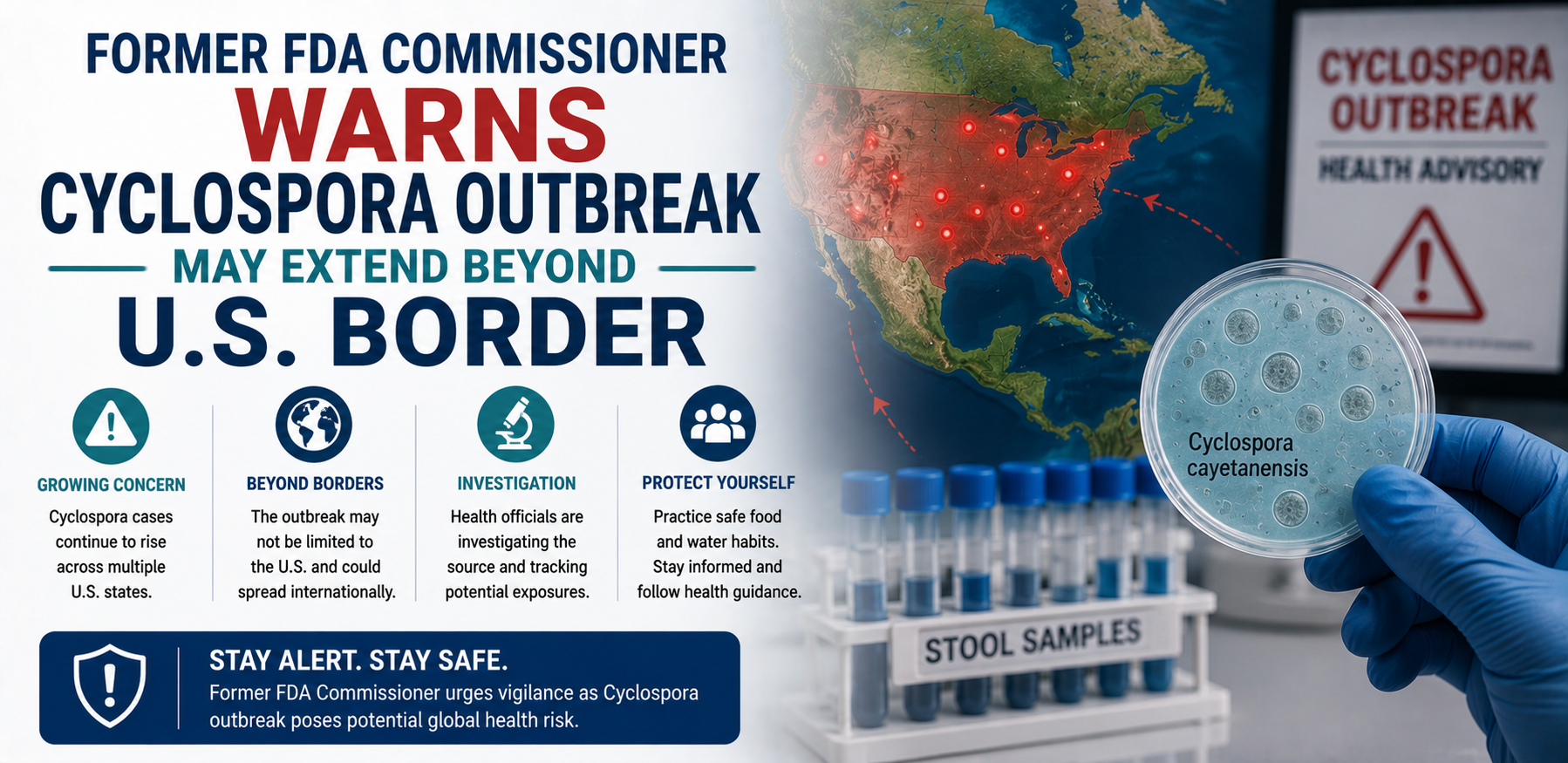
A former U.S. Food and Drug Administration (FDA) commissioner has warned that the ongoing Cyclospora outbreak affecting multiple U.S. states may be linked to broader contamination in central Mexico rather than a single farm or supplier.
The warning comes as health officials continue investigating the source of the outbreak, which has been associated with fresh produce. Experts believe the contamination may involve a wider agricultural region, making it more challenging to identify the exact source and prevent additional illnesses.
The comments follow recent food recalls and investigations after hundreds of people across the United States became ill with Cyclospora infections linked to contaminated produce.
Understanding Cyclospora
Cyclospora is a microscopic parasite that causes an intestinal illness known as cyclosporiasis. People become infected by consuming food or water contaminated with the parasite, most commonly fresh fruits and vegetables.
Symptoms typically include:
- Persistent watery diarrhoea
- Loss of appetite
- Weight loss
- Stomach cramps
- Bloating
- Nausea
- Fatigue
Symptoms often appear about one week after exposure and can last for several weeks if left untreated. While healthy individuals usually recover with appropriate treatment, the illness can be more severe for young children, older adults and people with weakened immune systems.
Why Investigators Are Concerned
Foodborne outbreaks are generally easier to control when investigators can trace contamination back to a single farm, processing facility or supplier.
However, if contamination extends across an entire growing region, the investigation becomes considerably more complex.
A broader contamination event could mean:
- Multiple farms are affected.
- Different distributors receive contaminated produce.
- Retailers and restaurants source products from several impacted suppliers.
- Additional cases may continue to emerge even after specific recalls are issued.
This makes rapid traceability essential for limiting the spread of illness and protecting consumers.
Industry Impact
- Food Safety: The investigation highlights the importance of robust food safety practices throughout the agricultural supply chain. Growers, distributors and importers may face increased scrutiny as officials work to determine the origin of the contamination.
- Public Health: Health agencies continue monitoring new cases while advising consumers and healthcare providers to remain alert for symptoms. Early diagnosis and treatment can help reduce complications and support outbreak surveillance.
- Restaurants and Retailers: Businesses that rely on fresh produce may experience operational challenges if additional recalls become necessary. Restaurants and grocery chains may need to adjust sourcing strategies while investigations continue.
- Cross-Border Supply Chains: The outbreak illustrates how international food supply chains can quickly influence public health in the United States. Close collaboration between regulatory agencies and food producers across countries is essential for identifying contamination sources and preventing future outbreaks.
Looking Ahead
Foodborne disease outbreaks are becoming increasingly complex as fresh produce moves through global supply chains before reaching consumers. A contamination event affecting multiple farms or growing regions can significantly delay investigations, increase the number of illnesses and expand the economic impact across the food industry.
The situation also reinforces the need for stronger traceability systems that enable regulators to identify contaminated products more quickly and remove them from the market before additional people become ill.
Key Takeaways
- Experts believe the current Cyclospora outbreak may involve broader contamination across central Mexico rather than a single supplier.
- A regional contamination event would make outbreak investigations significantly more challenging.
- Fresh produce remains the primary source of Cyclospora infections.
- Health officials continue working to identify the exact source while monitoring additional cases.
- The outbreak highlights the importance of food safety, international collaboration and supply chain traceability.
What This Means for Healthcare Marketers
Foodborne disease outbreaks generate increased demand for timely public health communication, laboratory testing, epidemiological surveillance and digital disease monitoring. Healthcare organisations, diagnostic companies and public health technology providers have an opportunity to support clinicians and health agencies with solutions that improve outbreak detection, traceability and patient education. As food supply chains become increasingly global, technologies that enable faster identification of contamination sources will play an increasingly important role in protecting public health.