Fresenius Medical Care Shares Fall Despite Earnings Beat as U.S. Dialysis Treatment Volumes Disappoint
What's Happening
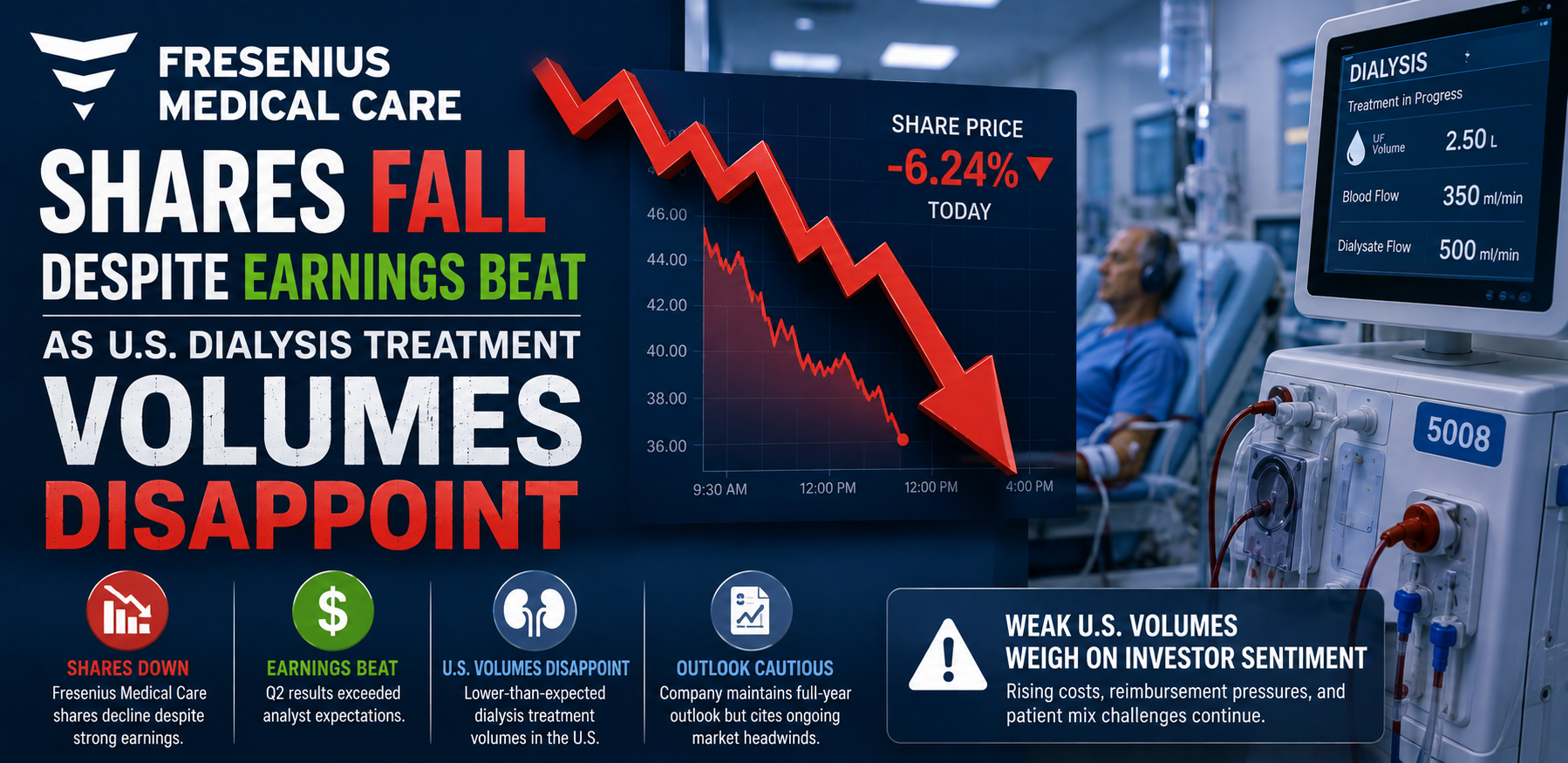
Shares of Fresenius Medical Care (FMC) fell after the company reported second-quarter earnings that exceeded analyst expectations but disclosed weaker-than-expected dialysis treatment volumes in the United States.
Although the global dialysis provider delivered stronger profits through cost-control measures and operational improvements, investors focused on slower patient treatment volumes in its largest market. The decline in U.S. treatment growth raised concerns about future revenue, overshadowing the company's otherwise solid financial performance.
Fresenius maintained its full-year 2026 financial outlook, indicating confidence that ongoing operational improvements and stable global demand will support its performance for the remainder of the year.
Understanding Fresenius Medical Care
Fresenius Medical Care is the world's largest provider of dialysis services and products for patients with chronic kidney disease and end-stage kidney disease.
The company provides:
- In-center dialysis.
- Home dialysis therapies.
- Kidney disease management.
- Dialysis equipment.
- Dialysis supplies.
- Renal care services.
Millions of patients rely on dialysis several times each week, making treatment volumes one of the company's most important business metrics.
Why Investors Were Concerned
While profitability remained strong, investors were disappointed by slower dialysis treatment volumes in the United States.
Treatment volume growth is important because dialysis providers generate revenue based largely on the number of treatments delivered.
Several factors can influence treatment volumes, including:
- Patient mortality.
- Kidney disease incidence.
- Staffing availability.
- Patient access to care.
- Demographic trends.
Lower-than-expected treatment growth can affect future revenue even when operational efficiency helps improve short-term profitability.
Industry Impact
- Dialysis Providers: The results highlight the challenges kidney care providers face in balancing operational efficiency with patient volume growth.
- Healthcare Providers: Nephrology practices and dialysis providers continue focusing on expanding patient access while improving quality of care for individuals with chronic kidney disease.
- Medical Device Manufacturers: Stable long-term demand for dialysis equipment and supplies continues to support innovation despite short-term fluctuations in treatment volumes.
- Investors: The market reaction demonstrates that investors remain focused not only on earnings but also on patient growth trends that influence future financial performance.
Looking Ahead
Fresenius Medical Care plans to continue improving operational efficiency while expanding home dialysis services, digital health capabilities, and integrated kidney care programs.
The company also expects long-term demand for dialysis to remain strong as aging populations and chronic diseases such as diabetes and hypertension continue increasing the number of patients requiring renal care.
Future treatment volume trends in the United States will remain an important indicator of the company's long-term growth.
Why This Matters
Dialysis providers play an essential role in treating patients with kidney failure, making stable patient volumes critical for both financial performance and healthcare delivery.
The market's reaction highlights how healthcare investors increasingly evaluate long-term patient demand alongside quarterly earnings.
The results also reinforce the importance of operational efficiency as healthcare providers navigate changing demographics and reimbursement environments.
Key Takeaways
- Fresenius Medical Care exceeded quarterly profit expectations but reported weaker-than-expected U.S. dialysis treatment volumes.
- Investors focused on slower patient growth despite strong operational performance.
- The company maintained its full-year 2026 financial outlook.
- U.S. treatment volumes remain a key driver of future revenue growth.
- Fresenius continues investing in operational improvements, home dialysis, and integrated kidney care.
What This Means for Healthcare Marketers
Fresenius' results highlight continued investment in kidney care, dialysis services, and chronic disease management while emphasizing the importance of patient engagement and operational efficiency. Dialysis providers, nephrology practices, medical device manufacturers, and digital health companies continue developing solutions that improve access to renal care and patient outcomes. For healthcare marketers, organizations involved in kidney care, dialysis technology, home healthcare, and value-based care represent high-intent opportunities for provider education, partnership development, patient engagement, and commercial growth.