FTC Sues Hims & Hers Over Alleged Sharing of Users' Health Information with Meta and Snap
What's Happening
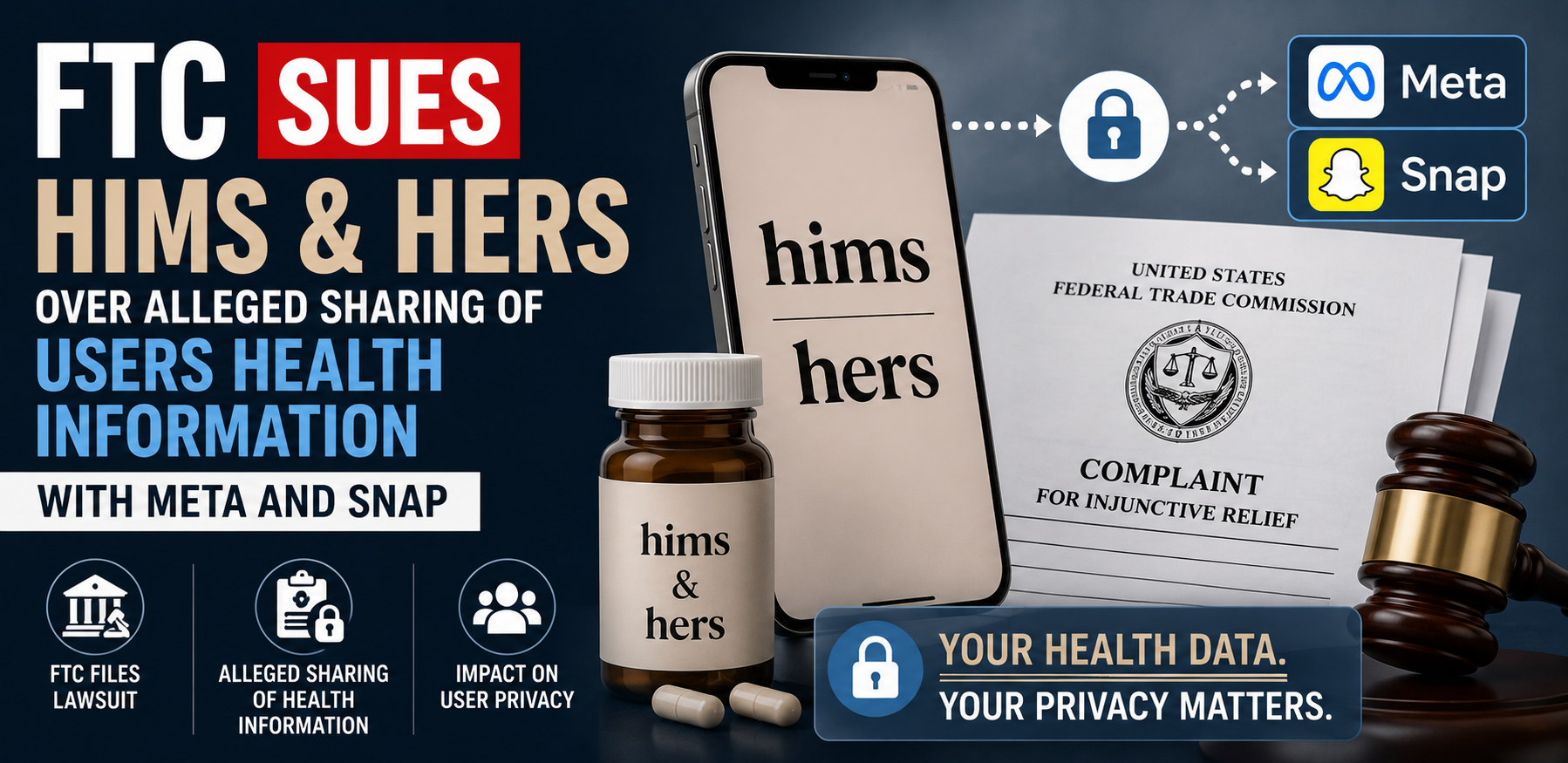
The U.S. Federal Trade Commission (FTC) has filed a lawsuit against telehealth company Hims & Hers Health, alleging that the company improperly shared consumers' sensitive health information with digital advertising platforms operated by Meta and Snap without obtaining appropriate consent.
According to the FTC, the information shared included details that could reveal users' medical conditions, healthcare interests, and prescription-related activities. The agency argues that these practices violated federal consumer protection laws and breached promises the company made about protecting user privacy.
Hims & Hers has denied the allegations and stated that it disagrees with the FTC's claims. The company says it has strengthened its privacy practices over time and intends to defend itself in court.
The lawsuit represents one of the most significant regulatory actions involving healthcare data privacy and digital advertising, reinforcing the increasing scrutiny facing healthcare organisations that rely on online marketing technologies.
Understanding Healthcare Data Privacy
Healthcare organisations collect large amounts of sensitive personal information every day.
This may include:
- Medical histories.
- Prescription information.
- Appointment requests.
- Symptoms.
- Treatment interests.
- Laboratory results.
- Insurance information.
Unlike many other forms of consumer data, health information receives heightened legal protection because unauthorised disclosure can affect an individual's privacy, employment, insurance, and personal wellbeing.
As more healthcare services move online, protecting digital health information has become a growing priority for regulators worldwide.
How Advertising Technologies Can Collect Data
Many websites and mobile applications use digital tools provided by advertising companies to understand how users interact with their services.
Examples include:
- Tracking pixels.
- Software development kits (SDKs).
- Analytics platforms.
- Conversion tracking tools.
- Advertising cookies.
These technologies can help organisations measure:
- Website visits.
- Advertisement performance.
- User engagement.
- Marketing campaign effectiveness.
- Customer acquisition.
However, if these tools transmit sensitive healthcare information to third-party platforms without proper safeguards or user consent, they may create significant privacy risks.
Healthcare organisations must carefully configure these technologies to ensure protected health information is not disclosed improperly.
Why the FTC Filed the Lawsuit
The FTC alleges that Hims & Hers shared health-related information with advertising platforms while representing to consumers that their information would remain private.
According to the complaint, the agency believes the company's disclosures were inconsistent with its public privacy commitments and may have violated consumer protection laws.
The FTC argues that consumers seeking healthcare services reasonably expect sensitive medical information to remain confidential unless they knowingly authorise its disclosure.
Hims & Hers has stated that it disagrees with the government's interpretation and intends to challenge the allegations through the legal process.
The court will ultimately determine whether the company's data practices complied with applicable legal requirements.
Why Digital Privacy Is Becoming More Important in Healthcare
Healthcare has rapidly become one of the fastest-growing sectors for digital marketing.
Telehealth providers, hospitals, pharmaceutical companies, and digital health platforms increasingly use online advertising to reach patients.
At the same time, regulators have become increasingly concerned about the use of consumer tracking technologies on healthcare websites.
Over the past several years, regulators have emphasised that organisations should carefully evaluate whether:
- Tracking technologies collect health-related information.
- Third-party vendors receive protected data.
- Consumers understand how their information is used.
- Appropriate consent mechanisms are in place.
- Privacy policies accurately describe data-sharing practices.
The Hims & Hers case reflects this broader shift toward stronger oversight of digital health privacy.
Industry Impact
- Telehealth Companies: Digital healthcare providers may review their websites, mobile applications, and advertising technologies to ensure sensitive patient information is handled appropriately and shared only where legally permitted.
- Hospitals and Health Systems: Healthcare organisations using online appointment systems, patient portals, or digital marketing campaigns may strengthen privacy reviews and conduct additional audits of third-party tracking technologies.
- Digital Advertising Platforms: Technology companies providing analytics and advertising services to healthcare organisations may face increased requests for privacy-focused solutions that minimise unnecessary data collection.
- Healthcare Compliance Teams: Privacy officers, legal departments, and cybersecurity professionals are likely to play an increasingly important role in evaluating digital marketing tools and ensuring compliance with evolving regulatory expectations.
Looking Ahead
The lawsuit is expected to move through the U.S. court system over the coming months.
Possible outcomes include:
- A court ruling in favour of the FTC.
- A ruling in favour of Hims & Hers.
- A negotiated settlement.
- Changes to the company's privacy practices.
- Additional regulatory guidance affecting the broader healthcare industry.
Regardless of the legal outcome, healthcare organisations are likely to continue reassessing how consumer information is collected, stored, analysed, and shared with third-party technology providers.
The case may also influence future regulatory expectations for digital health companies operating in an increasingly data-driven healthcare environment.
Key Takeaways
- The FTC has sued Hims & Hers, alleging the company improperly shared users' health information with Meta and Snap.
- The agency argues that the company's data-sharing practices conflicted with its privacy commitments.
- Hims & Hers denies the allegations and plans to defend itself in court.
- The case highlights increasing regulatory scrutiny of digital advertising technologies used by healthcare organisations.
- Healthcare providers and digital health companies are likely to continue strengthening privacy compliance and oversight of third-party tracking tools.
What This Means for Healthcare Marketers
The lawsuit reinforces that healthcare marketing must prioritise privacy alongside performance. As regulators increase scrutiny of digital advertising technologies, healthcare organisations are investing more heavily in first-party data strategies, consent management platforms, privacy compliance, secure analytics, and governance frameworks. For healthcare marketers, organisations modernising their marketing infrastructure while protecting patient data represent high-intent prospects for privacy-focused technology, compliant customer engagement solutions, and secure healthcare marketing platforms.