GE HealthCare Beats Quarterly Profit Expectations as Imaging Business Drives Growth
What's Happening
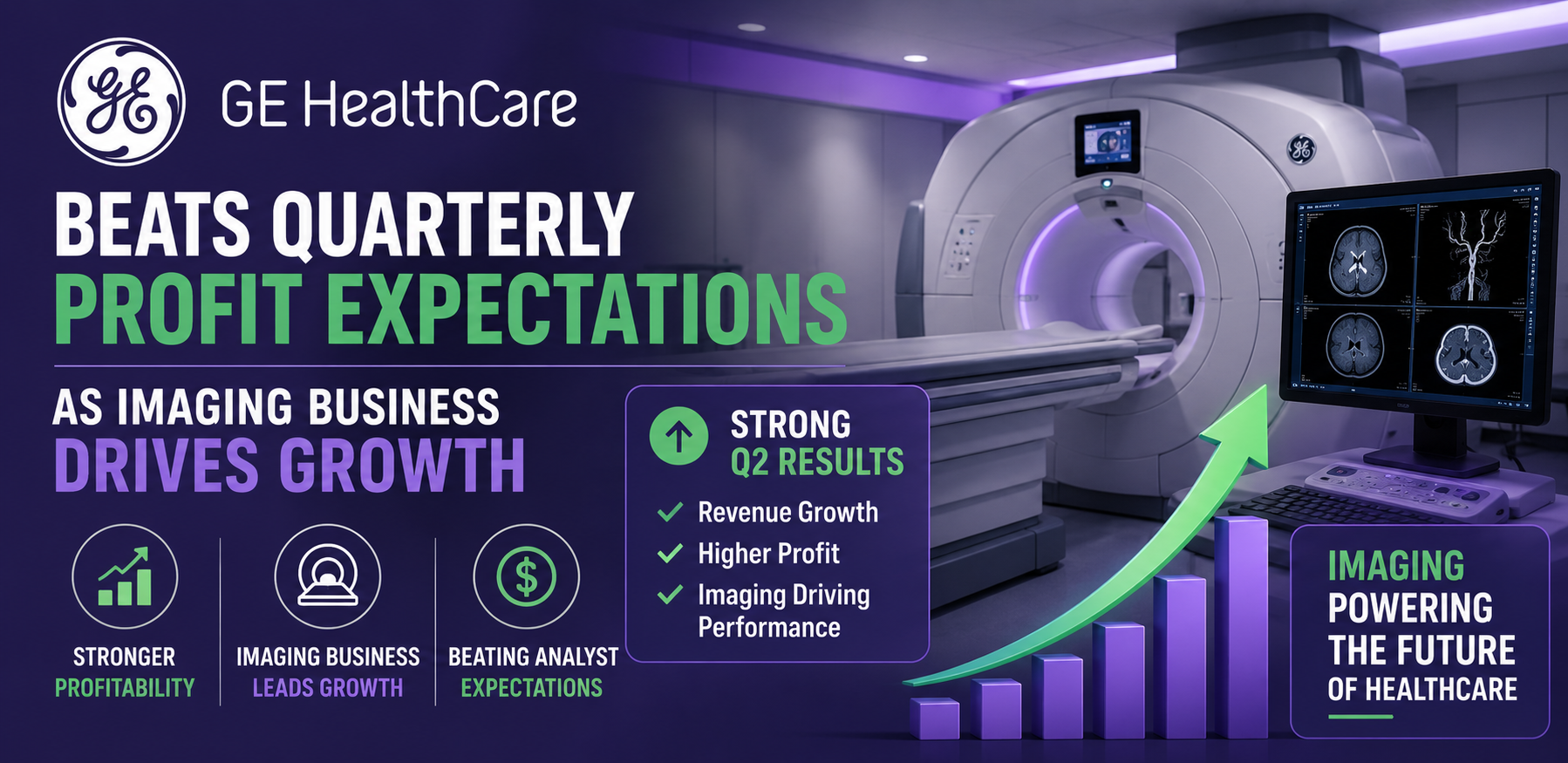
GE HealthCare reported quarterly earnings that exceeded analysts' expectations, driven by continued strong demand for its medical imaging equipment and healthcare technology solutions.
The company delivered better-than-expected profitability despite ongoing cost pressures from global tariffs and supply chain challenges. Growth in its imaging business, particularly demand for advanced diagnostic equipment, helped offset higher operating expenses and supported strong financial performance during the quarter.
Management also highlighted continued customer investment in modernising healthcare infrastructure, as hospitals and imaging centres expand their diagnostic capabilities to meet growing patient demand.
The results demonstrate that healthcare providers continue prioritising investments in diagnostic technologies, even as broader economic uncertainty and higher operating costs affect many industries.
Understanding GE HealthCare's Business
GE HealthCare is one of the world's largest medical technology companies, providing equipment, software, and services used throughout the healthcare system.
Its portfolio includes:
- Magnetic Resonance Imaging (MRI) systems.
- Computed Tomography (CT) scanners.
- Ultrasound equipment.
- X-ray systems.
- Molecular imaging technologies.
- Patient monitoring devices.
- Healthcare software and artificial intelligence solutions.
These technologies play a central role in diagnosing disease, guiding treatment decisions, and monitoring patient outcomes across hospitals, outpatient centres, and diagnostic imaging facilities.
Because imaging equipment often represents a major capital investment, purchasing decisions are closely tied to hospital budgets, reimbursement trends, and long-term infrastructure planning.
Why Medical Imaging Demand Remains Strong
Healthcare providers continue investing in imaging technology for several reasons.
Rising Demand for Diagnostic Services
An ageing population and increasing prevalence of chronic diseases have led to higher demand for diagnostic imaging.
Conditions such as:
- Cancer.
- Cardiovascular disease.
- Stroke.
- Orthopaedic disorders.
- Neurological diseases.
often require multiple imaging studies throughout diagnosis and treatment.
Equipment Modernisation
Many hospitals are replacing ageing imaging systems with newer equipment that offers:
- Higher image quality.
- Faster scan times.
- Lower radiation exposure.
- Improved workflow efficiency.
- Artificial intelligence-assisted image analysis.
Modern equipment can improve both patient experience and operational efficiency while helping clinicians make more accurate diagnoses.
Expanding Outpatient Care
Healthcare delivery continues shifting toward outpatient imaging centres, increasing demand for compact, efficient, and high-performance diagnostic systems outside traditional hospital settings.
Managing Tariff and Supply Chain Pressures
Although GE HealthCare exceeded profit expectations, the company continues to navigate higher costs associated with global trade policies and supply chain disruptions.
Medical imaging systems rely on thousands of specialised components sourced from suppliers around the world.
These may include:
- Electronic semiconductors.
- Precision sensors.
- High-performance computing hardware.
- Specialised metals.
- Medical-grade plastics.
- Advanced manufacturing components.
Tariffs on imported materials or components can increase production costs, while supply chain disruptions may delay manufacturing and equipment deliveries.
Healthcare technology companies are responding by:
- Diversifying supplier networks.
- Increasing manufacturing flexibility.
- Improving inventory management.
- Expanding regional production capabilities.
- Strengthening long-term supplier relationships.
These efforts help reduce operational risk while supporting continued product availability.
Artificial Intelligence Is Becoming a Key Growth Driver
One of the fastest-growing areas within medical imaging is the integration of artificial intelligence (AI).
AI-powered imaging systems can assist healthcare professionals by:
- Detecting abnormalities more quickly.
- Improving image quality.
- Reducing scan times.
- Automating routine workflows.
- Prioritising urgent cases.
- Supporting clinical decision-making.
Although AI does not replace radiologists, it increasingly serves as a clinical support tool that improves efficiency and helps clinicians manage growing imaging volumes.
Healthcare providers continue investing in AI-enabled imaging platforms as they seek to improve productivity while addressing workforce shortages.
Industry Impact
- Hospitals and Health Systems: Continued investment in diagnostic imaging reflects healthcare providers' focus on improving patient care while increasing operational efficiency. New imaging systems can support faster diagnoses, shorter waiting times, and improved clinical workflows.
- Medical Technology Companies: Strong demand for imaging equipment reinforces continued growth opportunities for manufacturers developing advanced diagnostic technologies, AI-powered imaging software, and workflow automation solutions.
- Healthcare Professionals: Radiologists, cardiologists, oncologists, neurologists, and emergency physicians all depend heavily on high-quality diagnostic imaging. Continued technological innovation helps clinicians make more accurate and timely treatment decisions.
- Investors: The results suggest that demand for essential healthcare technologies remains resilient even during periods of broader economic uncertainty. Investors continue viewing medical imaging as a relatively stable segment supported by long-term demographic and healthcare trends.
Looking Ahead
GE HealthCare expects continued demand for diagnostic imaging as healthcare providers modernise equipment and expand access to advanced diagnostic services.
The company is expected to remain focused on:
- Developing AI-enabled imaging platforms.
- Expanding precision diagnostics.
- Improving workflow automation.
- Strengthening global manufacturing operations.
- Managing tariff-related costs.
- Supporting healthcare providers through digital innovation.
While external cost pressures may continue, long-term demand for diagnostic imaging is expected to remain strong as healthcare systems respond to ageing populations and rising chronic disease rates.
Key Takeaways
- GE HealthCare reported quarterly profits above analyst expectations, driven by strong demand for medical imaging equipment.
- Continued investment by hospitals and imaging centres supported growth across the company's diagnostic imaging business.
- Tariffs and supply chain costs remain ongoing operational challenges, but did not prevent stronger-than-expected profitability.
- Artificial intelligence continues to play an expanding role in diagnostic imaging and clinical workflow optimisation.
- Long-term demand for imaging technology remains supported by ageing populations and increasing rates of chronic disease.
What This Means for Healthcare Marketers
GE HealthCare's performance reflects continued investment in diagnostic imaging, digital health, and hospital infrastructure despite economic headwinds. Health systems, imaging centres, medical device manufacturers, AI healthcare companies, and radiology technology providers are likely to continue expanding commercial and clinical initiatives as demand for advanced diagnostics grows. For healthcare marketers, organisations investing in imaging modernisation, workflow automation, and AI-enabled clinical solutions represent high-intent prospects seeking physician engagement, product education, and enterprise healthcare technology partnerships.