
German Hospital Treats American Ebola Patient Infected During Congo Outbreak
What's Happening
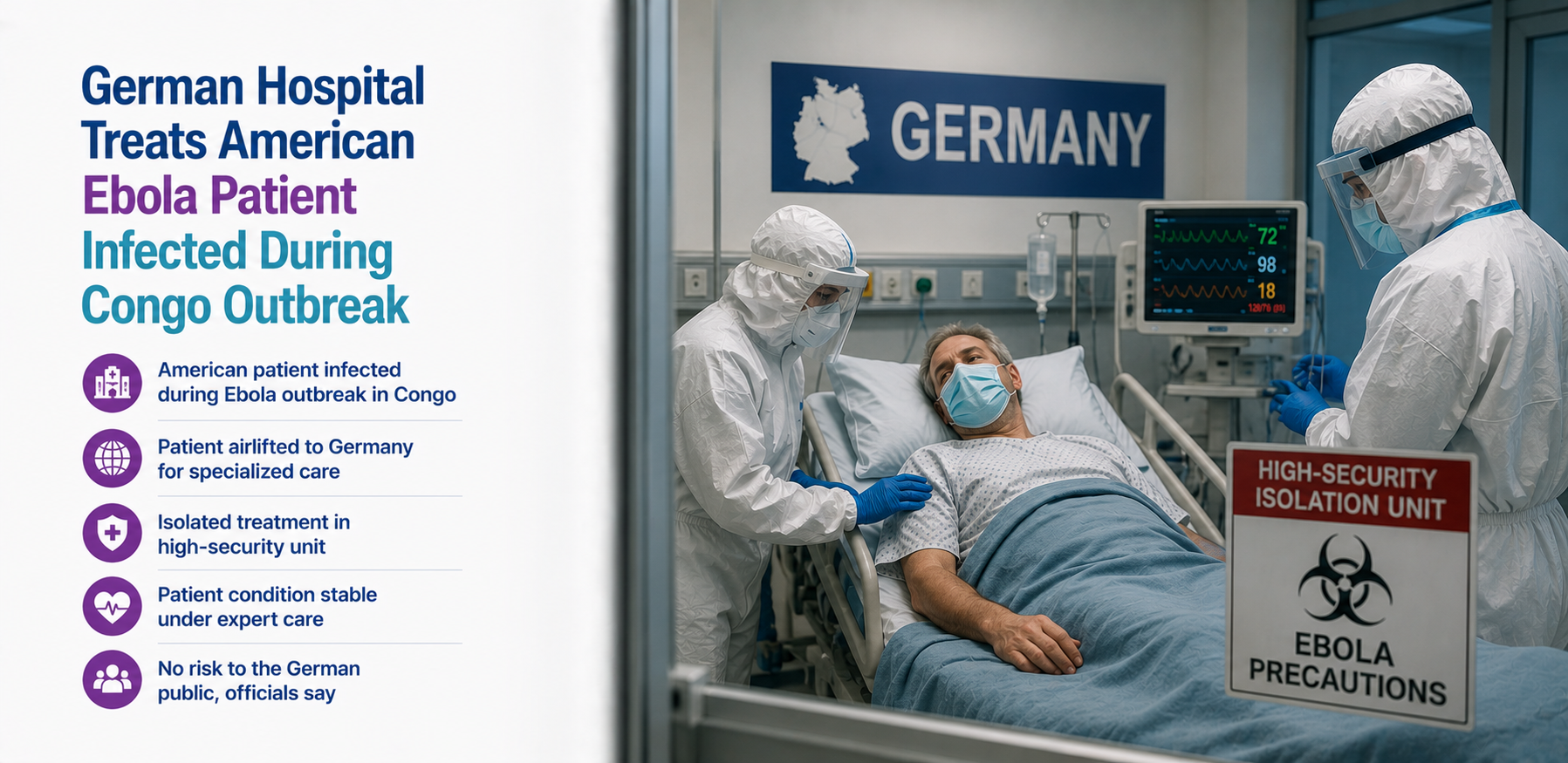
A U.S. citizen who contracted Ebola virus disease while working in the Democratic Republic of Congo (DRC) has been transferred to a specialized hospital in Germany for treatment. The patient was transported under strict medical safety protocols to receive advanced care at one of Europe's high-level infectious disease treatment centers.
Health officials have emphasized that the transfer was carefully planned to prevent any risk of transmission during transport. The patient was infected while in Congo, where authorities continue responding to an ongoing Ebola outbreak.
The case highlights the importance of international cooperation in managing highly infectious diseases and ensuring patients have access to specialized medical care.
Why Was the Patient Transferred?
Ebola is a serious viral disease that requires highly specialized treatment. Although the Democratic Republic of Congo has experienced multiple Ebola outbreaks and has considerable expertise in managing the disease, some patients, particularly international aid workers or foreign nationals, may be transferred to specialized medical centers equipped with advanced isolation facilities.
These hospitals offer:
- High-level isolation units.
- Specialized infectious disease teams.
- Intensive supportive care.
- Advanced laboratory monitoring.
- Strict infection prevention measures.
The transfer was carried out using specialized medical transport procedures designed to protect healthcare workers, flight crews, and the public.
What Is Ebola Virus Disease?
Ebola virus disease (EVD) is a rare but severe illness caused by the Ebola virus. The virus spreads through direct contact with:
- Blood.
- Bodily fluids.
- Contaminated medical equipment.
- Infected animals in certain regions.
Unlike respiratory viruses, Ebola does not spread through the air. People become contagious only after symptoms begin. Early symptoms often include fever, headache, muscle pain, weakness, and fatigue. As the disease progresses, patients may develop vomiting, diarrhea, dehydration, and, in severe cases, internal or external bleeding.
How Are Ebola Patients Treated?
There is no single cure for Ebola, but treatment has improved significantly in recent years. Modern care includes:
- Intravenous fluids.
- Electrolyte replacement.
- Oxygen therapy.
- Blood pressure support.
- Treatment of secondary infections.
- Continuous monitoring.
- FDA-approved antibody therapies in appropriate cases.
Early diagnosis and prompt medical care have substantially improved survival compared with earlier outbreaks. Specialized isolation units also help protect healthcare workers while allowing patients to receive intensive treatment.
Why Specialized Isolation Hospitals Matter
Only a limited number of hospitals worldwide are equipped to safely manage patients with highly infectious diseases such as Ebola. These facilities are designed with:
- Negative-pressure isolation rooms.
- Dedicated treatment teams.
- Specialized protective equipment.
- Strict waste management systems.
- Advanced infection-control procedures.
Such hospitals regularly train for rare infectious disease emergencies to ensure they can respond quickly while minimizing the risk of transmission.
International Cooperation During Outbreaks
Managing Ebola outbreaks requires collaboration among:
- Local health authorities.
- National governments.
- The World Health Organization (WHO).
- The U.S. Centers for Disease Control and Prevention (CDC).
- International healthcare providers.
- Humanitarian organizations.
Countries often share expertise, laboratory resources, and specialized medical capabilities to strengthen outbreak response. International cooperation has helped improve Ebola surveillance, vaccination efforts, laboratory testing, and patient care over the past decade.
Why the Public Should Not Be Alarmed
Health authorities have repeatedly emphasized that isolated Ebola cases transported under strict medical supervision do not pose a risk to the general public. Patients are moved using carefully controlled protocols that include:
- Specialized isolation transport systems.
- Trained medical personnel.
- Continuous infection-control measures.
- Coordination with public health authorities.
These procedures have been successfully used for many years when transporting patients with highly infectious diseases.
Industry Impact
- Public Health Agencies: International health organizations continue monitoring the Ebola outbreak while supporting containment efforts in the Democratic Republic of Congo.
- Hospitals: Specialized infectious disease centers remain an essential component of global health emergency preparedness.
- Researchers: Ongoing outbreaks continue supporting research into Ebola vaccines, antiviral therapies, and improved outbreak response strategies.
- Global Health Organizations: The case demonstrates the value of international collaboration in responding to emerging infectious diseases.
Why This Matters
The transfer of an American Ebola patient to Germany demonstrates the strength of international cooperation in managing rare but serious infectious diseases. Rather than treating outbreaks as isolated national events, healthcare systems increasingly work together to ensure patients receive appropriate care while minimizing the risk of further transmission. The case also highlights how advances in specialized treatment facilities, infection-control practices, and global coordination have significantly improved the world's ability to respond to Ebola outbreaks. Although Ebola remains a serious disease, modern preparedness systems have greatly strengthened the capacity to safely care for patients while protecting healthcare workers and the public.
Key Takeaways
- A U.S. citizen infected with Ebola in the Democratic Republic of Congo was transferred to a specialized hospital in Germany for treatment.
- The transfer was conducted under strict medical and infection-control procedures.
- Ebola spreads through direct contact with infected bodily fluids and is not airborne.
- Specialized isolation hospitals play a critical role in safely treating patients with highly infectious diseases.
- The case highlights the importance of international collaboration in responding to global health emergencies.
What This Means for Healthcare Marketers
The patient's transfer highlights the growing importance of global healthcare collaboration in managing infectious diseases. Modern outbreak response depends on coordinated international networks that connect public health agencies, specialized hospitals, research institutions, and humanitarian organizations. Investments in preparedness, specialized treatment facilities, and rapid patient transport continue strengthening the world's ability to respond to emerging health threats.
For healthcare marketers, the case illustrates the expanding role of advanced infectious disease infrastructure. Organizations involved in diagnostics, laboratory services, isolation technologies, medical transport, infection prevention, and critical care have opportunities to demonstrate how their solutions support safe and effective management of high-consequence infectious diseases.
For healthcare intelligence teams, international patient transfers provide insight into how global health systems coordinate during disease outbreaks. Monitoring developments in outbreak response, specialized treatment capabilities, vaccine research, and international health partnerships can help organizations anticipate future preparedness priorities while identifying opportunities for innovation in infectious disease care.