Gilead Reports Strong Second-Quarter Results as Sales Beat Wall Street Expectations
What's Happening
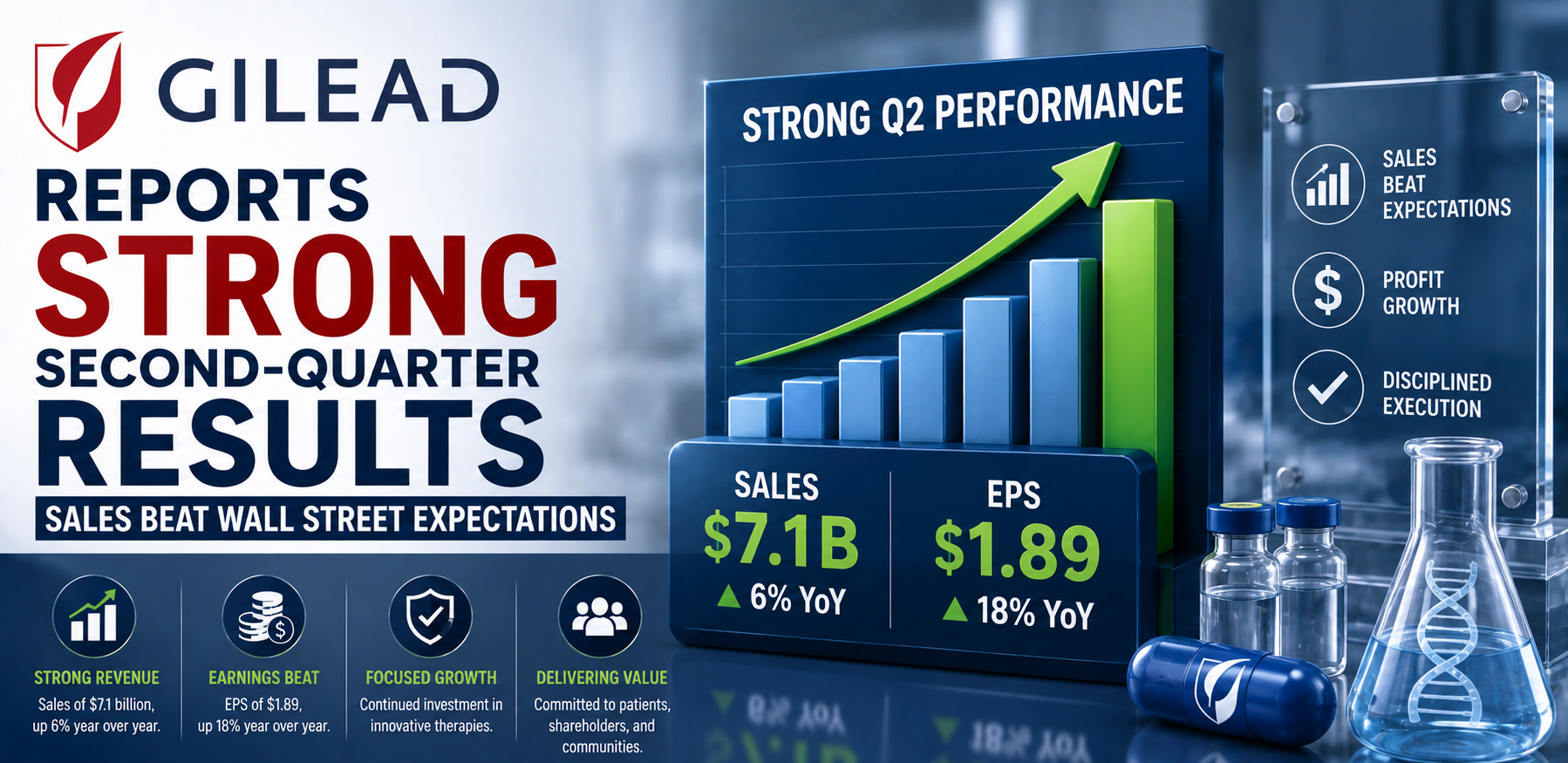
Gilead Sciences reported stronger-than-expected second-quarter financial results, with revenue rising 8% year over year, driven by continued growth in its HIV and oncology businesses.
The pharmaceutical company exceeded Wall Street's sales expectations as strong demand for its HIV medicines and cancer treatments offset declining sales of some older products. The results demonstrate Gilead's continued progress in diversifying its business beyond antiviral medicines while strengthening its oncology portfolio.
The company reaffirmed confidence in its long-term growth strategy through continued investment in research, product innovation, and pipeline expansion.
What's Driving the Growth
Gilead's strong quarterly performance was supported by sustained demand across several key therapeutic areas.
The company's HIV franchise remains its largest source of revenue, while newer oncology medicines continue contributing to overall growth.
In addition to its commercial products, Gilead continues investing in research across:
- HIV.
- Oncology.
- Liver diseases.
- Inflammatory diseases.
- Cell therapy.
The company is also expanding its pipeline through strategic partnerships and ongoing clinical development.
Industry Impact
- Pharmaceutical Companies: Gilead's results demonstrate continued strength in specialty pharmaceuticals, particularly in HIV and oncology, despite increasing competition across the industry.
- Healthcare Providers: Strong commercial performance enables continued investment in innovative treatments that expand options for patients living with HIV and cancer.
- Patients: Continued growth supports ongoing research into next-generation therapies aimed at improving long-term outcomes across several serious diseases.
- Investors: The stronger-than-expected results reinforce investor confidence in pharmaceutical companies with diversified product portfolios and robust research pipelines.
Looking Ahead
Gilead plans to continue advancing its research pipeline while expanding its presence in oncology and strengthening its leadership in HIV treatment.
The company is expected to focus on clinical trial progress, regulatory approvals, and commercialization of new therapies that support future revenue growth.
Continued innovation in cell therapy and precision medicine is also expected to play an increasingly important role in Gilead's long-term strategy.
Why This Matters
The pharmaceutical industry continues shifting toward innovative therapies that address complex chronic and life-threatening diseases.
Gilead's strong quarterly performance demonstrates the value of maintaining a diversified portfolio while investing in new areas of growth beyond its traditional HIV business.
The results also highlight continued demand for specialty medicines that improve patient outcomes and address unmet medical needs.
Key Takeaways
- Gilead reported second-quarter sales that increased 8% year over year.
- Revenue exceeded Wall Street expectations.
- Strong HIV and oncology medicine sales drove the company's performance.
- Gilead continues investing heavily in oncology, cell therapy, inflammatory diseases, and HIV research.
- The results reinforce the company's long-term strategy of portfolio diversification and innovation.
What This Means for Healthcare Marketers
Gilead's strong quarterly results highlight continued investment in HIV, oncology, specialty pharmaceuticals, and precision medicine. Pharmaceutical companies, healthcare providers, biotechnology firms, and research organizations continue expanding innovative therapies for chronic and life-threatening diseases. For healthcare marketers, organizations operating in HIV care, oncology, cell therapy, and specialty medicine represent high-intent opportunities for physician education, scientific communications, product commercialization, and strategic partnership development.