Haleon Secures Better Shelf Space at Walmart and Target to Boost U.S. Market Share
What's Happening
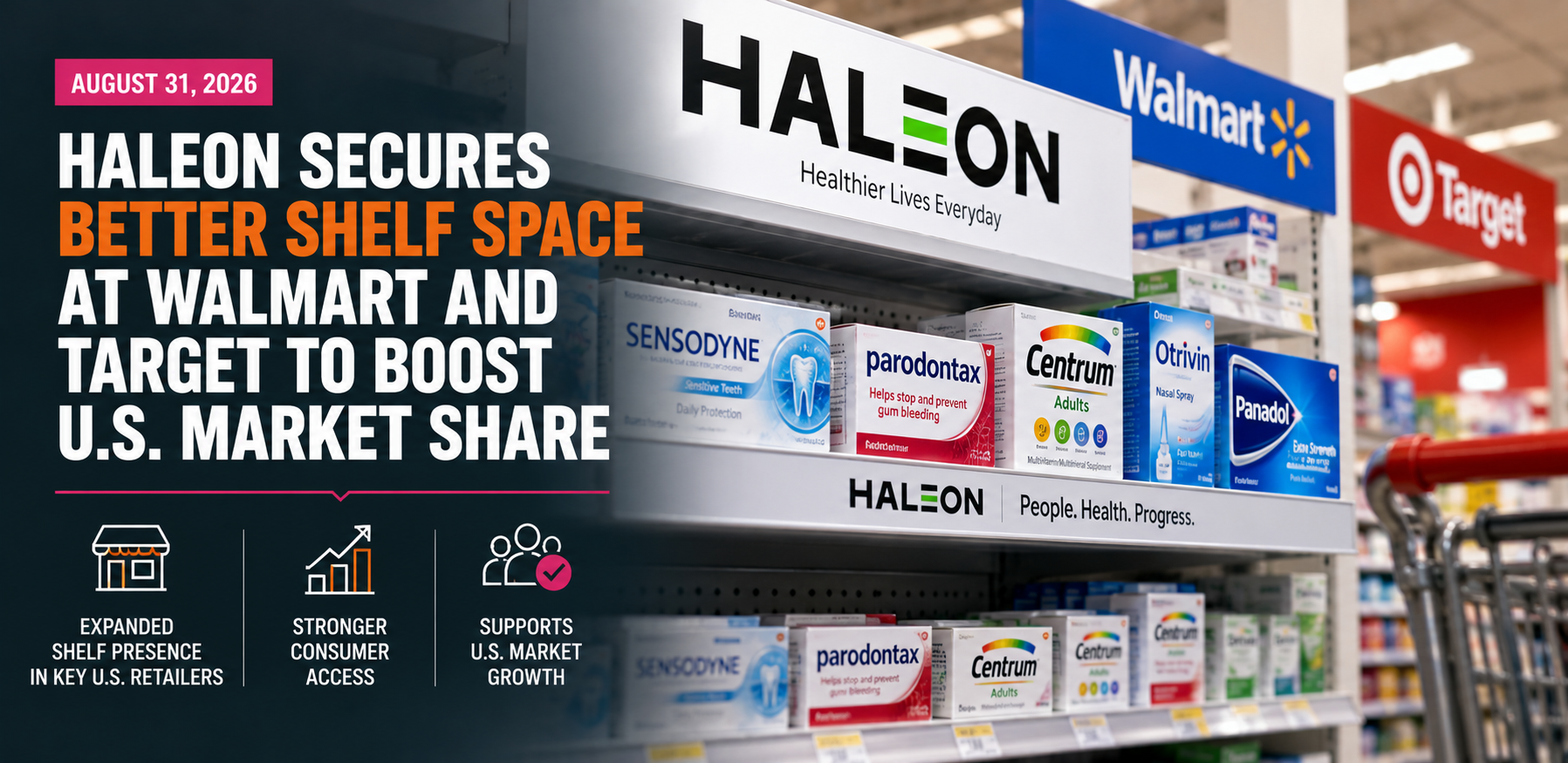
Consumer healthcare company Haleon, whose brands include Sensodyne, Centrum and Advil, has quietly negotiated better shelf positions at major U.S. retailers including Walmart and Target as it tries to gain market share at a time when consumers are becoming increasingly price-conscious.
The company has offered retailers a combination of lower prices, stronger promotions, new products and product exclusivity in exchange for more prominent placement on store shelves. Haleon says the strategy is already helping it gain visibility and market share in the United States. (Reuters)
The strategy reflects an increasingly competitive consumer-health market. With grocery and fuel costs pressuring household budgets, shoppers are paying closer attention to price while retailers are looking for products and promotions that can maintain sales. Haleon is responding by using shelf visibility itself as a competitive tool. (Reuters)
Haleon Is Fighting for Visibility at the Shelf
Retail placement can influence what shoppers buy
Haleon's strategy is built around a simple retail principle: products that shoppers can see more easily have a better chance of being purchased.
The company conducted research into where consumers expect to find its products and discovered that shoppers generally look for the brand first, then want premium and new products to be easy to identify within that brand's section.
That research led Haleon to pursue placements such as eye-level shelves and positions immediately above its existing product lines. The company then shared estimates with retailers showing how moving the products could increase sales, helping persuade stores to make the changes. (Reuters)
This represents a shift from simply negotiating for shelf space toward using consumer behavior data to demonstrate the expected financial benefit to the retailer.
Haleon's commercial terms are part of the negotiation
Haleon is not relying on visibility alone.
The company told Reuters that it is offering retailers a mix of:
- Better commercial terms
- Lower prices
- Promotions
- Exclusive products
- New product innovation
In return, Haleon receives more favorable positions within the store. (Reuters)
That means the company is effectively using pricing, innovation and promotional investment as leverage to obtain physical visibility.
U.S. Market Share Has Been Rising
Haleon has gained ground this year
The strategy appears to be translating into measurable gains.
According to NielsenIQ data, Haleon's share of the U.S. consumer-health market increased steadily throughout 2026, reaching 12% in August, compared with 11.4% in February. (Reuters)
That represents a meaningful improvement over only a few months and suggests Haleon has been gaining ground against some major competitors.
For comparison, rival Procter & Gamble's share fell to approximately 10.8% in July, while Colgate-Palmolive's share of the oral, personal-care and household market remained relatively flat at just under 5%, according to Bernstein's analysis of the data. (Reuters)
The numbers indicate that Haleon's growth is occurring within a highly competitive consumer-health environment rather than in a rapidly expanding market where everyone is automatically gaining share.
Oral Health Is One of Haleon's Key Battlegrounds
Sensodyne, Aquafresh and Polident
Haleon's oral-health portfolio includes brands such as Sensodyne, Aquafresh and Polident.
The company said its improved shelf positions have been helping its oral-health business gain market share.
Oral care is especially dependent on retail visibility because consumers frequently make purchasing decisions directly in stores, where competing products can sit next to one another on the same shelf.
A more prominent position can therefore influence which products consumers notice first and which brands they ultimately choose. (Reuters)
Premium products are a particular focus
Haleon's research suggests shoppers actively look for premium and new products once they have located a familiar brand.
That creates an opportunity for the company to use prominent shelf positions not only to protect established brands but also to introduce higher-value or newer products.
The strategy is consequently about more than defending existing market share. It is also about using retail placement to drive mix, innovation adoption and premiumization.
Centrum Is Benefiting From Better Placement Too
Vitamins are another major opportunity
Haleon said its improved shelf strategy is also benefiting its adult vitamins business.
Its Centrum products were moved into eye-level positions and supported with promotions. (Reuters)
This matters because vitamins and supplements can be highly competitive categories, with consumers choosing between established brands, private-label products and newer offerings.
Better placement can help an established brand stand out while promotions encourage consumers to switch or purchase more frequently.
Promotions Are Playing a Major Role
More than one-fifth of U.S. sales came from promoted products
The retail strategy is closely tied to promotions.
According to NielsenIQ data analyzed by Bernstein, more than 21% of Haleon's second-quarter U.S. sales came from products being sold with promotions. (Reuters)
That is significant because it shows just how important promotional activity has become to Haleon's growth strategy.
The company is effectively combining three levers:
- Visibility: Put the product where shoppers are more likely to see it.
- Price: Use discounts or more attractive commercial terms to make the purchase easier.
- Innovation: Introduce new products that give retailers another reason to allocate valuable shelf space.
Together, those tools can reinforce one another.
Consumers Are Becoming More Price-Conscious
Higher household costs are changing shopping behavior
Haleon's strategy comes at a time when American consumers are becoming increasingly cautious about spending.
Higher fuel prices and broader household expenses are pushing consumers to prioritize essential purchases and make more trade-offs when shopping. (Reuters)
That creates a difficult environment for consumer-health companies because many of their products are purchased out of pocket rather than through insurance.
A consumer deciding between two toothpaste brands, vitamins or pain-relief products may therefore become more sensitive to price and promotions.
Retailers are responding too
Retailers are also under pressure to maintain sales while customers become more cost-conscious.
Walmart recently said high gasoline prices were affecting shoppers' behavior and reported its slowest same-store sales growth in six years, even after lowering prices on thousands of products. (Reuters)
That makes retailer negotiations particularly important.
A supplier that can demonstrate that a better shelf position, promotion or product launch will generate incremental sales has a stronger argument for receiving valuable retail space.
Haleon Is Selling Retailers on the Economics
Data is helping win retailer support
Haleon did not simply ask Walmart or Target to move its products closer to consumers.
The company used its research to estimate how much additional sales growth retailers could expect from moving specific products into more visible locations.
That allowed Haleon to position the shelf-reset strategy as a mutual commercial opportunity rather than a request for preferential treatment. (Reuters)
For retailers, shelf space is limited inventory in its own right. Every inch given to one product means less space for another.
Demonstrating expected sales growth therefore becomes an important part of convincing a retailer to make a change.
Walmart and Target Are Critical Retail Partners
Shelf space can become a competitive advantage
Walmart and Target serve enormous numbers of U.S. shoppers, making them particularly valuable channels for consumer-health brands.
A change in shelf position across a major retail network can expose a product to a very large number of consumers.
That means a seemingly small operational decision, such as moving a product from a lower shelf to eye level, can have a significant impact when implemented across thousands of stores.
Haleon's negotiations demonstrate that retail execution is becoming a more sophisticated component of consumer-health growth strategy.
The Strategy Comes After Haleon's Spinout From GSK
Haleon was spun out of GlaxoSmithKline in 2022 and now operates as a standalone consumer-health company.
Its portfolio includes major everyday-health brands across oral care, vitamins and pain relief.
That gives Haleon a broad presence in categories where consumers frequently purchase products directly from retail shelves.
The company's current strategy shows how a standalone consumer-health business is trying to build scale and defend its position against much larger consumer-goods competitors. (Reuters)
The Bigger Shift in Consumer Healthcare
The competition is moving beyond product quality
Consumer-health companies have traditionally competed through brand recognition, product efficacy and advertising.
Haleon's strategy highlights another increasingly important battleground: physical access to consumers at the exact point of purchase.
Winning a consumer's attention before the purchase decision is made can be just as important as convincing them through advertising.
This makes retailer relationships, merchandising data and promotional strategy increasingly important parts of the consumer-health marketing mix.
Data is becoming a negotiation tool
Another notable element is how Haleon is using consumer research to influence its retail partners.
Instead of treating shopper insights only as a marketing tool, the company is using them as evidence in commercial negotiations.
That means consumer data is helping determine where products appear, how they are promoted and how retailers allocate shelf space.
Why This Matters
Haleon's strategy demonstrates that in consumer healthcare, distribution and visibility can be as important as demand generation.
A company can have a strong brand and a good product, but if consumers have difficulty finding it, competitors can capture the purchase.
The strategy is especially relevant in a period when consumers are becoming more price-sensitive and retailers are under pressure to generate sales from limited shelf space.
Haleon's market-share gains suggest that better placement, promotions and product innovation can work together to improve competitive performance. (Reuters)
The development also highlights a broader shift in healthcare marketing: consumer behavior data is increasingly being used not just to create advertisements, but to influence commercial decisions throughout the distribution chain.
Looking Ahead
Haleon's success will depend on whether its improved retail positioning can generate sustainable market-share gains without relying excessively on promotions and lower prices.
The company needs to balance visibility with profitability. Giving retailers better commercial terms and funding promotions can increase sales, but those actions can also put pressure on margins.
The longer-term test will therefore be whether better shelf positioning helps Haleon build organic consumer preference that remains even when promotions are reduced.
Competitors are also likely to respond.
If Haleon's approach continues generating results, other consumer-health companies may increase their own investment in retail analytics, promotions and shelf negotiations.
That could make physical retail placement an even more competitive battleground across categories such as oral care, vitamins, pain relief and personal healthcare.
Key Takeaways
- Haleon has negotiated better shelf positions at Walmart and Target to increase visibility for its consumer-health products. (Reuters)
- The company offered retailers lower prices, promotions, new products and exclusivity in exchange for improved shelf placement.
- Haleon's U.S. consumer-health market share rose from 11.4% in February to 12% in August.
- Rival P&G's share fell to about 10.8% in July, according to Bernstein's analysis of NielsenIQ data. (Reuters)
- Haleon says the strategy is helping its oral-health portfolio, including Sensodyne, Aquafresh and Polident.
- Centrum products have also received better shelf placement and promotional support.
- More than 21% of Haleon's second-quarter U.S. sales came from promoted products, according to NielsenIQ data analyzed by Bernstein. (Reuters)
- Haleon used shopper research to show retailers the potential sales benefit of moving products into more visible locations.
- The strategy comes as U.S. consumers become increasingly cost-conscious, increasing the importance of price and promotions.
- The case highlights the growing importance of retail data, merchandising and distribution strategy in consumer healthcare.
What This Means for Healthcare Marketers
This is a strong example of how market intelligence can directly influence execution.
Haleon didn't use consumer research only to decide what message to put in an advertisement. It used shopper behavior data to negotiate where products should physically appear in stores and to demonstrate the expected commercial value of that placement.
For healthcare marketers, that distinction is important. The most valuable market signals are not always campaign metrics. Changes in consumer behavior, retailer strategy, pricing, product launches and competitive visibility can directly influence whether demand turns into sales.
The broader lesson is that healthcare marketing is increasingly connected to the entire commercial journey, from identifying what consumers want to getting the product in front of them at the moment they are ready to buy.