HCA Reports Preliminary Quarterly Revenue Above Expectations as Demand for Hospital Care Remains Strong
What's Happening
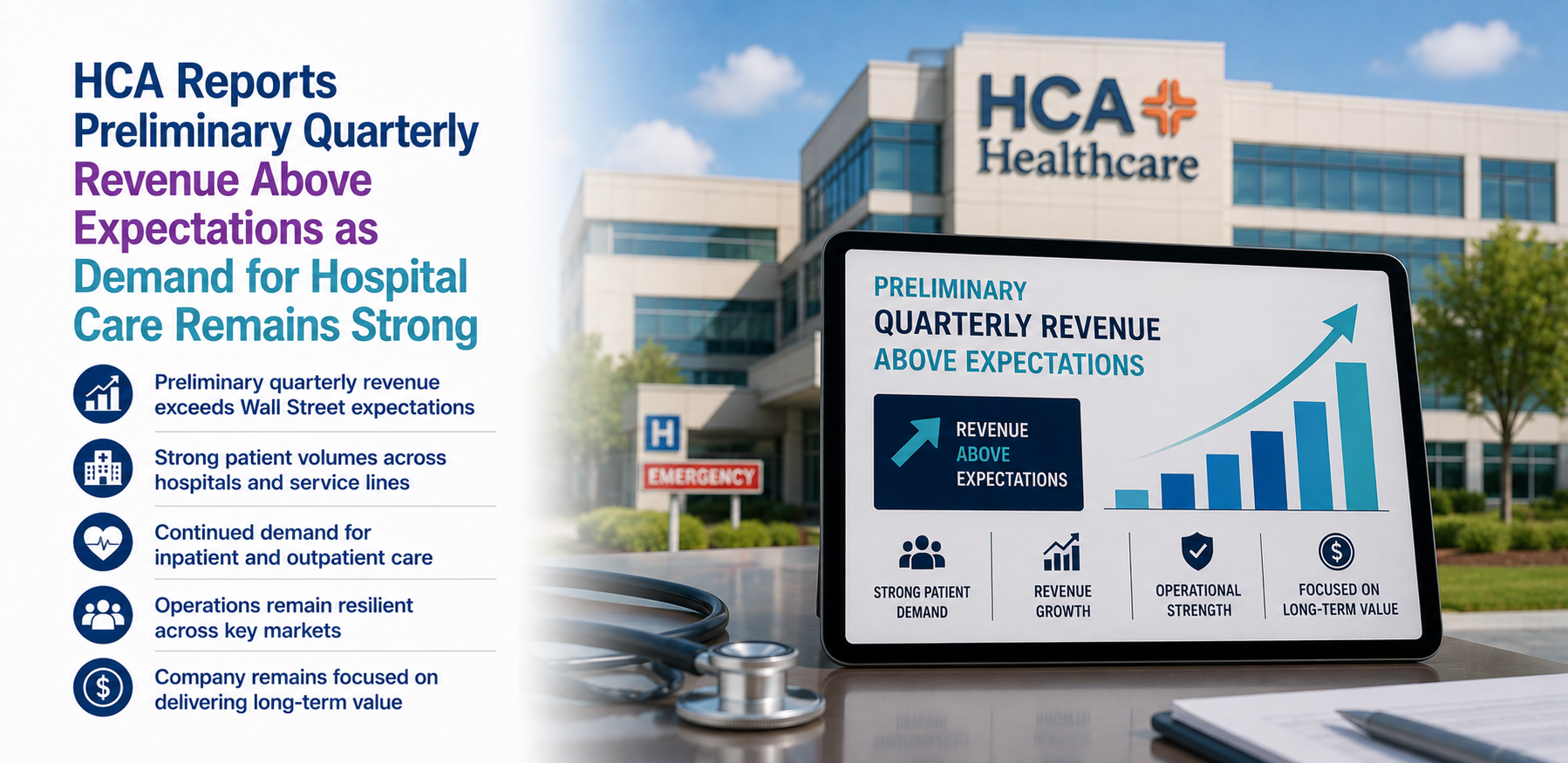
HCA Healthcare, one of the largest hospital operators in the United States, reported preliminary second-quarter revenue that exceeded analysts' expectations, driven by continued demand for inpatient and outpatient medical services.
The company said patient admissions, outpatient visits, and overall healthcare utilization remained strong during the quarter, contributing to higher-than-expected financial performance. HCA also reaffirmed its confidence in the strength of its hospital operations as demand for healthcare services continues to grow across many markets.
The preliminary results provide an early indication that hospitals are continuing to benefit from steady patient volumes despite ongoing challenges such as labor costs and inflation.
What Is HCA Healthcare?
HCA Healthcare is one of the largest healthcare providers in the United States.
The company operates:
- Hospitals
- Emergency departments
- Surgery centers
- Freestanding emergency rooms
- Urgent care facilities
- Physician clinics
HCA serves millions of patients each year across numerous states and is considered one of the largest publicly traded hospital systems in the country. Because of its size, HCA's financial performance is often viewed as an indicator of broader trends within the U.S. hospital industry.
Why Hospital Revenue Matters
Hospital revenue reflects the volume and complexity of healthcare services provided to patients.
Revenue is generated through services such as:
- Emergency care.
- Inpatient admissions.
- Outpatient procedures.
- Diagnostic imaging.
- Surgical procedures.
- Physician services.
- Specialty care.
Higher revenue generally indicates increased patient activity, although profitability also depends on operating expenses, labor costs, insurance reimbursement, and other financial factors. Healthcare analysts closely monitor hospital earnings because they provide insight into the overall health of the healthcare system.
What's Driving Higher Revenue?
Several factors contributed to HCA's stronger-than-expected performance:
- Higher Patient Volumes: Hospitals continue treating increasing numbers of patients requiring both routine and specialized medical care.
- Growth in Outpatient Services: More procedures are being performed in outpatient settings, allowing hospitals to expand services while improving efficiency.
- Increasing Healthcare Demand: An aging population, growing rates of chronic disease, and delayed medical care during previous years have contributed to sustained demand for healthcare services.
Together, these trends continue supporting patient activity across many healthcare facilities.
Challenges Facing Hospitals
Despite strong revenue growth, hospitals continue managing several operational challenges. These include:
- Rising labor costs.
- Healthcare workforce shortages.
- Higher medical supply expenses.
- Inflation.
- Increasing pharmaceutical costs.
- Changing insurance reimbursement policies.
Hospital systems continue investing in workforce recruitment, technology, and operational efficiency to manage these pressures while maintaining high-quality patient care.
Why Investors Watch Hospital Earnings
Large healthcare systems like HCA provide valuable insight into the overall healthcare economy. Investors monitor hospital earnings to understand trends involving:
- Patient admissions.
- Healthcare utilization.
- Surgical volumes.
- Insurance reimbursement.
- Healthcare spending.
- Financial stability.
Strong financial results often suggest continued demand for healthcare services across the broader industry.
The Future of Hospital Care
Healthcare providers continue adapting to changing patient needs by expanding:
- Outpatient care.
- Ambulatory surgery centers.
- Digital health services.
- Remote patient monitoring.
- Care coordination.
- Population health programs.
Many hospital systems are balancing traditional inpatient care with growing investments in community-based and technology-enabled healthcare delivery. These changes aim to improve patient access while controlling long-term healthcare costs.
Industry Impact
- Hospitals: Strong patient demand continues supporting hospital revenue despite ongoing cost pressures.
- Healthcare Providers: Growing utilization reflects continued demand for medical services across multiple specialties.
- Investors: Hospital earnings remain an important indicator of healthcare industry performance.
- Patients: Continued investment in hospital operations may improve access to healthcare services and support expansion of specialized care programs.
Why This Matters
HCA's preliminary results suggest that demand for healthcare services remains resilient across the United States. While hospitals continue facing workforce shortages and rising operating costs, increasing patient volumes are helping offset many of these financial pressures.
The results also indicate that patients continue returning for both routine and specialized care, supporting ongoing recovery and growth across the healthcare sector. As healthcare needs continue evolving, hospital systems will likely remain focused on expanding capacity, improving efficiency, and investing in technologies that enhance patient care while maintaining financial stability.
Key Takeaways
- HCA Healthcare reported preliminary quarterly revenue that exceeded analysts' expectations.
- Strong patient admissions and outpatient volumes contributed to higher revenue.
- Hospitals continue experiencing steady demand despite rising labor and operating costs.
- HCA's results provide insight into broader trends affecting the U.S. hospital industry.
- Continued healthcare demand is supporting investment and growth across hospital systems.
What This Means for Healthcare Marketers
HCA's results reinforce that demand for healthcare services remains strong across the United States. As patient volumes continue to grow, hospitals are balancing financial performance with investments in workforce, technology, and care delivery. Organizations serving health systems have opportunities to demonstrate how their solutions improve operational efficiency, patient outcomes, and capacity management while addressing ongoing cost pressures.
For healthcare marketers, hospital leaders are increasingly focused on solutions that enhance productivity without compromising quality of care. Technologies supporting clinical workflow, revenue cycle management, digital health, patient engagement, and workforce optimization are likely to remain high priorities as providers respond to rising demand and evolving patient expectations.
For healthcare intelligence teams, hospital earnings reports offer valuable insight into utilization trends, financial performance, and healthcare investment priorities. Monitoring admissions, outpatient growth, reimbursement trends, and capital spending can help organizations anticipate market opportunities while better understanding the changing needs of health systems across the U.S.