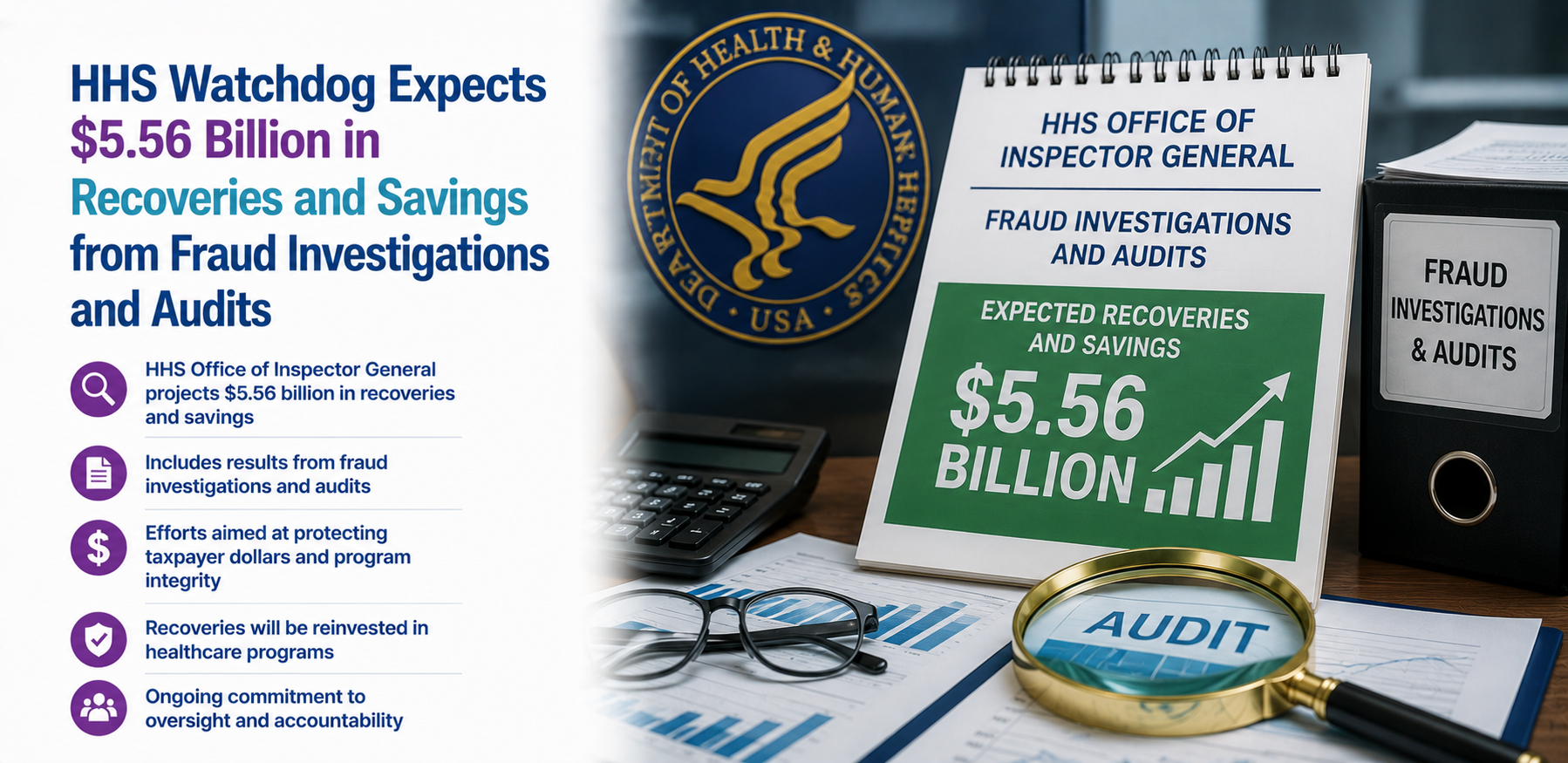
HHS Watchdog Expects $5.56 Billion in Recoveries and Savings from Fraud Investigations and Audits
What's Happening
The U.S. Department of Health and Human Services Office of Inspector General (HHS-OIG) expects its work to generate approximately $5.56 billion in expected recoveries and savings, according to its latest semiannual report. The total includes money recovered through investigations as well as projected savings from audits, evaluations, and recommendations aimed at reducing fraud, waste, and abuse across federal healthcare programs.
The report highlights the watchdog's oversight of major healthcare programs such as Medicare, Medicaid, and other HHS-administered initiatives. It also summarizes criminal and civil enforcement actions involving healthcare fraud, improper billing, and misuse of federal healthcare funds. The findings demonstrate the federal government's continued efforts to strengthen accountability while protecting taxpayer-funded healthcare programs.
What Is the HHS Office of Inspector General?
The Office of Inspector General (OIG) is an independent oversight office within the U.S. Department of Health and Human Services. Its primary responsibilities include:
- Investigating healthcare fraud.
- Conducting financial audits.
- Evaluating federal healthcare programs.
- Identifying waste and abuse.
- Recommending improvements to government operations.
- Supporting law enforcement investigations.
The agency works closely with the Department of Justice, the Centers for Medicare & Medicaid Services (CMS), the FBI, and other federal and state agencies. Its goal is to ensure that public healthcare funds are spent appropriately while protecting patients and maintaining the integrity of federal healthcare programs.
Where Do the Recoveries Come From?
The reported $5.56 billion includes both actual recoveries and expected future savings. These may result from:
- Healthcare fraud investigations.
- Civil settlements.
- Criminal prosecutions.
- Medicare overpayment recoveries.
- Medicaid fraud cases.
- Program audits.
- Recommendations that reduce future improper payments.
Not every dollar represents money physically recovered. Some of the total reflects projected savings achieved by implementing recommendations that improve program efficiency and prevent future losses.
Why Healthcare Fraud Is a Major Concern
Federal healthcare programs process millions of claims every day. Because of their size, they can become targets for fraud and abuse. Common examples include:
- Billing for services never provided.
- Paying or receiving illegal kickbacks.
- Falsifying medical records.
- Submitting duplicate claims.
- Prescribing unnecessary treatments.
- Identity theft involving healthcare benefits.
Fraud not only increases healthcare costs but can also put patients at risk by encouraging unnecessary or inappropriate medical services.
How Audits Help Improve Healthcare
The HHS-OIG does more than investigate fraud. Its audits and evaluations help identify opportunities to improve healthcare programs by:
- Strengthening payment accuracy.
- Improving oversight.
- Enhancing patient safety.
- Increasing operational efficiency.
- Reducing administrative errors.
- Identifying weaknesses in program management.
Federal agencies often use these recommendations to update policies, strengthen compliance, and improve the delivery of healthcare services.
Why Oversight Is Becoming More Important
Healthcare spending continues to grow as the U.S. population ages and demand for medical services increases. Programs such as Medicare and Medicaid represent a significant portion of federal spending. Strong oversight helps ensure that:
- Healthcare funds reach eligible patients.
- Providers are reimbursed appropriately.
- Fraudulent activity is detected quickly.
- Public confidence in healthcare programs is maintained.
As healthcare becomes increasingly digital, oversight efforts also include monitoring electronic billing systems, data analytics, and emerging fraud schemes.
Industry Impact
- Healthcare Providers: Providers are expected to maintain strong compliance programs, accurate documentation, and proper billing practices.
- Health Insurers: Public and private payers continue strengthening fraud detection systems and payment integrity programs.
- Government Agencies: Federal oversight remains focused on improving accountability and protecting taxpayer-funded healthcare programs.
- Patients: Reducing fraud and improper payments helps preserve healthcare resources while supporting the long-term sustainability of public health programs.
Why This Matters
The HHS-OIG's latest report highlights the enormous scale of federal healthcare oversight. Recovering billions of dollars and identifying opportunities to reduce waste helps protect critical healthcare programs that serve millions of Americans. Beyond recovering funds, the agency's work supports broader improvements in healthcare quality, compliance, and financial accountability. As healthcare systems become more complex, continued investment in oversight, auditing, and fraud prevention will remain essential for ensuring that public healthcare dollars are used effectively and that patients receive appropriate care.
Key Takeaways
- The HHS Office of Inspector General expects approximately $5.56 billion in recoveries and projected savings.
- The total includes fraud recoveries, audit findings, and recommendations that reduce future improper spending.
- The agency oversees major federal healthcare programs including Medicare and Medicaid.
- Healthcare fraud investigations help protect both taxpayers and patients.
- Strong oversight supports the long-term integrity and sustainability of federal healthcare programs.
What This Means for Healthcare Marketers
The report reinforces that compliance and financial integrity are becoming increasingly important across the healthcare industry. As healthcare spending continues to grow, providers, payers, and life sciences organizations face greater expectations to demonstrate accurate billing, strong governance, and responsible stewardship of public funds. Organizations that prioritize compliance and transparency are better positioned to build trust with regulators, partners, and patients.
For healthcare marketers, this highlights the growing demand for solutions that improve payment accuracy, fraud detection, revenue cycle management, and regulatory compliance. Companies offering healthcare analytics, auditing tools, artificial intelligence, and data-driven compliance solutions have an opportunity to demonstrate how their technologies help reduce waste while improving operational efficiency.
For healthcare intelligence teams, reports from the HHS Office of Inspector General provide valuable insight into evolving enforcement priorities. Monitoring fraud investigations, audit findings, compliance recommendations, and payment integrity initiatives can help organizations anticipate regulatory trends and strengthen risk management strategies across the healthcare ecosystem.