Humana Beats Quarterly Profit Expectations as Medical Costs Remain Stable
What's Happening
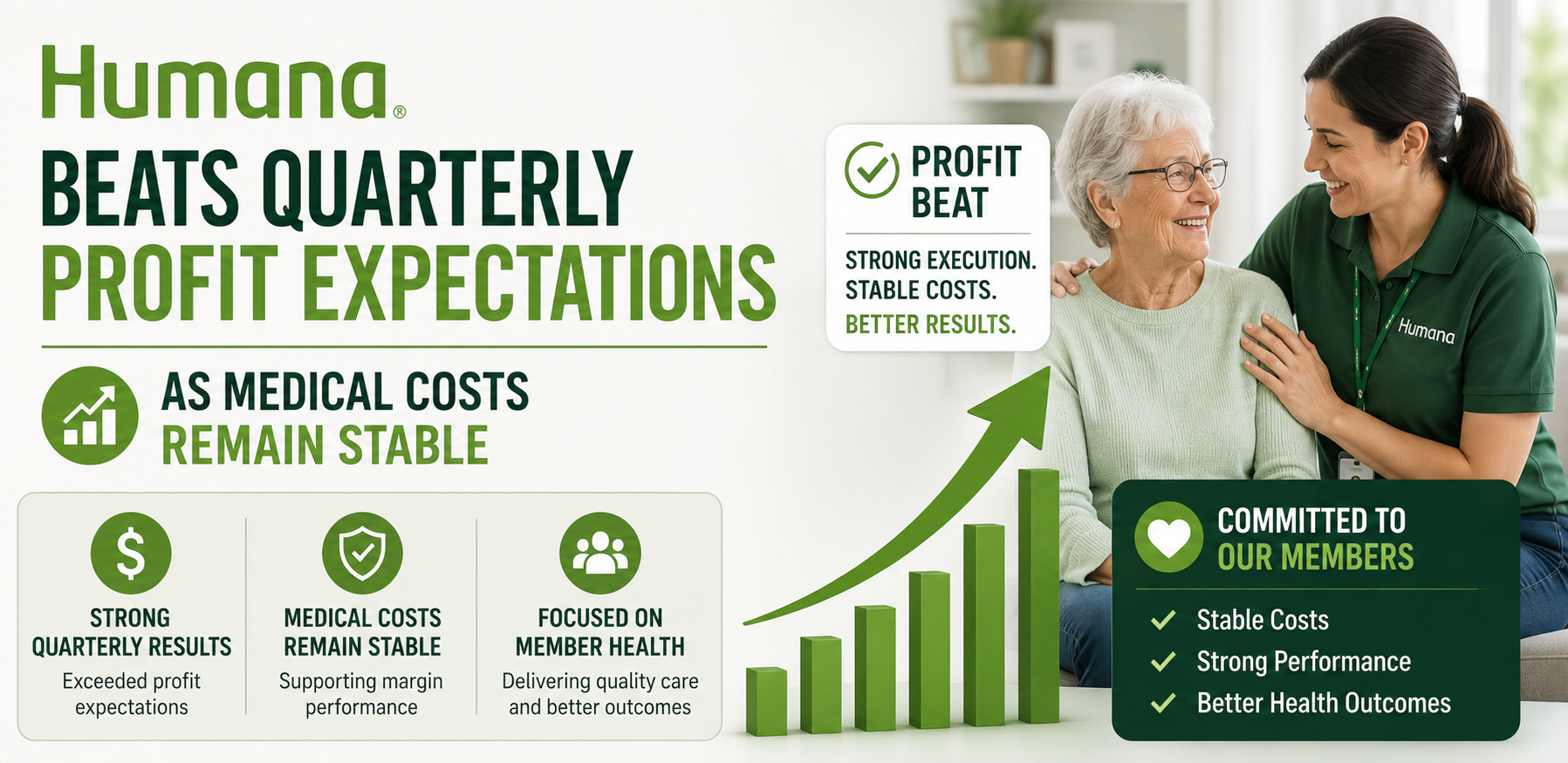
Humana reported quarterly earnings that exceeded Wall Street expectations after keeping medical costs largely in line with forecasts, easing investor concerns about rising healthcare spending across the health insurance industry.
The health insurer benefited from disciplined cost management and a stable level of medical claims during the quarter. While healthcare utilisation remains elevated compared with previous years, the company indicated that medical expenses developed largely as expected, allowing it to deliver stronger-than-anticipated profitability.
The results come at a time when many health insurers have faced pressure from increasing use of healthcare services, particularly among older adults enrolled in Medicare Advantage plans. Investors have been closely monitoring whether insurers can accurately predict healthcare costs while continuing to provide comprehensive coverage.
Humana's performance suggests that, at least during the latest quarter, the company successfully balanced healthcare spending with premium revenue and operational efficiency.
Understanding Humana's Business
Humana is one of the largest health insurance companies in the United States, with a primary focus on government-sponsored healthcare programmes.
Its business includes:
- Medicare Advantage plans.
- Medicare prescription drug coverage.
- Medicaid managed care in selected states.
- Employer-sponsored health insurance.
- Home healthcare services.
- Primary care and value-based care programmes.
The company's largest source of revenue comes from Medicare Advantage, where private insurers administer Medicare benefits for millions of older Americans under contracts with the federal government.
Because Medicare Advantage members generally require more healthcare services than younger populations, accurately forecasting medical costs is essential to maintaining profitability.
What Is the Medical Loss Ratio?
One of the most important financial measures for health insurers is the Medical Loss Ratio (MLR).
The medical loss ratio represents the percentage of premium revenue that insurers spend on healthcare services and quality improvement activities.
For example:
- A higher medical loss ratio generally means more money is being spent on patient care.
- A lower ratio may indicate lower-than-expected healthcare utilisation or more efficient cost management.
Health insurers carefully monitor this metric because even small changes can significantly affect earnings.
Factors influencing medical costs include:
- Hospital admissions.
- Outpatient procedures.
- Prescription drug spending.
- Physician visits.
- Emergency department utilisation.
- Chronic disease management.
Humana reported that medical costs remained largely within its expected range, supporting stronger quarterly earnings.
Why Healthcare Costs Matter to Insurers
Health insurance companies operate by collecting premiums and using those funds to pay for members' medical care.
Profitability depends on balancing several factors:
- Premium revenue.
- Medical claims.
- Administrative expenses.
- Regulatory requirements.
- Investment income.
When healthcare utilisation rises unexpectedly, insurers may experience lower profits because they must pay more medical claims than anticipated.
Recent years have seen increased healthcare utilisation driven by:
- Delayed procedures following the COVID-19 pandemic.
- An ageing population.
- Rising demand for outpatient services.
- Advances in expensive specialty medicines.
- Growth in chronic disease treatment.
Successfully forecasting these trends allows insurers to price plans appropriately while maintaining financial stability.
Medicare Advantage Continues to Shape the Industry
Medicare Advantage has become one of the fastest-growing segments of the U.S. health insurance market.
Instead of receiving healthcare directly through traditional Medicare, beneficiaries choose private insurance companies that provide Medicare benefits under federal contracts.
Insurers compete by offering:
- Additional healthcare benefits.
- Care coordination programmes.
- Wellness initiatives.
- Prescription drug coverage.
- Preventive care services.
As enrolment continues growing, insurers face increasing pressure to manage healthcare costs while maintaining quality ratings and regulatory compliance.
Companies that effectively coordinate care and prevent unnecessary hospitalisations may achieve better financial performance while improving patient outcomes.
Industry Impact
- Health Insurers: Humana's results may reassure investors that some insurers are successfully adapting to higher healthcare utilisation through improved forecasting and operational management. However, cost trends remain closely watched across the industry.
- Healthcare Providers: Hospitals, physician groups, and outpatient providers continue experiencing strong patient demand. Stable insurer performance supports continued reimbursement relationships and collaborative care models.
- Medicare Beneficiaries: Financially stable insurers are generally better positioned to maintain plan offerings, invest in care management programmes, and improve member services while remaining competitive in the Medicare Advantage market.
- Investors: The results demonstrate that disciplined medical cost management remains one of the most important drivers of insurer profitability. Investors will continue monitoring healthcare utilisation trends throughout the remainder of the year.
Looking Ahead
Humana is expected to continue focusing on:
- Managing healthcare utilisation.
- Improving care coordination.
- Expanding value-based care programmes.
- Maintaining competitive Medicare Advantage offerings.
- Investing in preventive health initiatives.
- Monitoring prescription drug spending.
The company will also continue adapting to evolving federal reimbursement policies, regulatory requirements, and demographic changes that influence healthcare demand.
Although medical costs remained stable during the quarter, insurers across the industry are expected to remain cautious as utilisation patterns continue to evolve.
Key Takeaways
- Humana reported quarterly profits above analyst expectations after medical costs remained largely in line with company forecasts.
- Stable healthcare utilisation supported stronger-than-expected financial performance.
- Medicare Advantage continues to be the company's primary growth and revenue driver.
- Effective management of medical costs remains critical for health insurer profitability.
- Investors will continue monitoring healthcare utilisation trends and reimbursement policies throughout the year.
What This Means for Healthcare Marketers
Humana's results reinforce the healthcare industry's continued focus on value-based care, care coordination, and Medicare Advantage growth. Health insurers, provider networks, digital health companies, population health platforms, and care management organisations are likely to continue investing in member engagement, preventive care, analytics, and healthcare technology that improve outcomes while controlling costs. For healthcare marketers, organisations expanding Medicare services or value-based care initiatives represent high-intent opportunities for partnerships, education campaigns, and healthcare professional engagement.