Johnson & Johnson Lowers 2026 Profit Forecast Despite Strong Pharmaceutical Growth
What's Happening
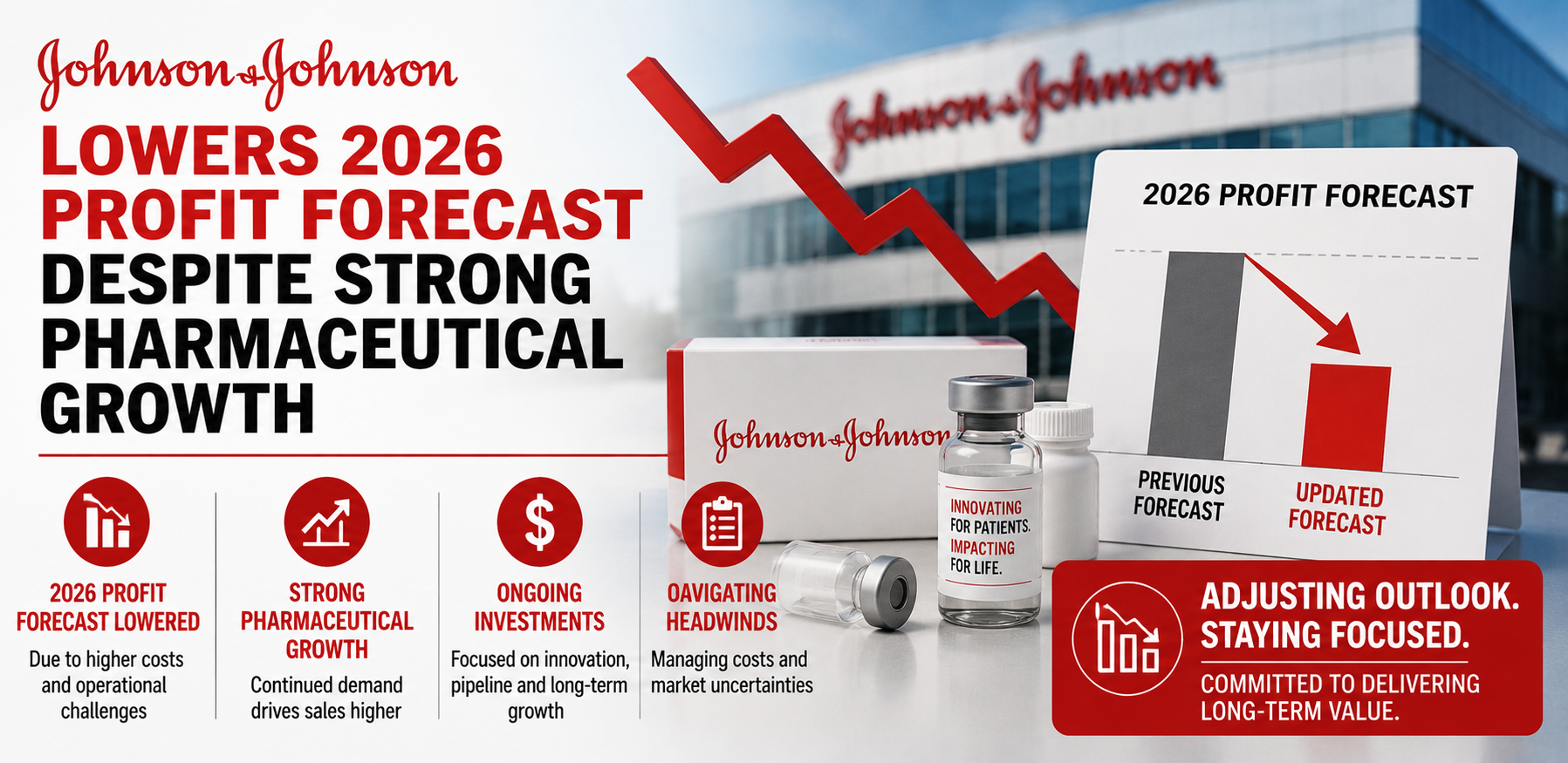
Johnson & Johnson (J&J) has lowered its full-year 2026 profit forecast after warning that rising costs, including the impact of U.S. tariffs and expenses related to recent acquisitions, are expected to weigh on earnings for the remainder of the year.
Despite the revised outlook, the healthcare giant reported strong quarterly results driven by continued growth in its pharmaceutical business and steady demand for its medical technology products. Sales from several newer medicines helped offset slowing performance from older products facing increased competition.
The updated guidance highlights a growing challenge for global healthcare companies. Even when revenue remains strong, external factors such as trade policies, supply chain costs, manufacturing expenses, and integration of newly acquired businesses can significantly affect profitability.
For investors, the announcement reflects a company that continues to grow commercially while navigating a more expensive operating environment.
Understanding Johnson & Johnson's Business
Johnson & Johnson is one of the world's largest healthcare companies, operating across two major segments:
Innovative Medicine
This division develops and markets prescription medicines across multiple therapeutic areas, including:
- Oncology.
- Immunology.
- Neuroscience.
- Cardiovascular disease.
- Pulmonary hypertension.
- Infectious diseases.
Many of J&J's fastest-growing products come from this segment, making pharmaceuticals the company's largest revenue contributor.
MedTech
The company's medical technology business supplies hospitals and healthcare providers with products such as:
- Surgical equipment.
- Orthopaedic implants.
- Vision care products.
- Cardiovascular devices.
- Electrophysiology systems.
- Robotic surgery technologies.
Demand in this segment is closely tied to hospital procedure volumes and investment in healthcare infrastructure.
Why J&J Lowered Its Profit Forecast
A profit forecast reflects how much earnings a company expects to generate after accounting for operating costs and other expenses.
Although Johnson & Johnson continues to expect healthy revenue growth, management reduced its earnings outlook because several cost pressures have intensified.
Tariff-Related Costs
Trade tariffs can increase the cost of importing raw materials, medical components, and finished healthcare products.
For multinational healthcare companies with complex global supply chains, even modest tariff increases can raise manufacturing and distribution costs across multiple product lines.
Acquisition Integration
Johnson & Johnson has continued investing in acquisitions to strengthen its pharmaceutical pipeline.
While acquisitions often support long-term growth, integrating newly acquired businesses requires substantial spending on:
- Operational integration.
- Research and development.
- Manufacturing alignment.
- Regulatory compliance.
- Information technology systems.
These investments typically reduce profitability in the short term before delivering longer-term returns.
Ongoing Investment in Innovation
Large pharmaceutical companies continue investing heavily in clinical trials, regulatory submissions, manufacturing capacity, and commercial launches.
These investments support future growth but also increase operating expenses during periods of product expansion.
Strong Pharmaceutical Performance Continues
Despite lowering its earnings guidance, Johnson & Johnson's pharmaceutical business continues to perform well.
Growth has been supported by newer medicines across several therapeutic areas, helping offset revenue declines from products facing patent expirations or increased competition.
This reflects an important characteristic of the pharmaceutical industry. Drug manufacturers continually replace ageing products with new therapies developed through years of research and clinical testing.
Maintaining a strong development pipeline helps companies sustain long-term growth even as older medicines lose market exclusivity.
For Johnson & Johnson, continued success in launching innovative therapies remains one of the company's primary competitive advantages.
The Growing Impact of Global Trade on Healthcare
Healthcare companies increasingly operate through global manufacturing networks.
A single medicine or medical device may involve:
- Raw materials sourced from multiple countries.
- Manufacturing at several production sites.
- International packaging operations.
- Cross-border distribution.
- Regional regulatory approvals.
As governments introduce new tariffs or modify trade policies, healthcare companies must evaluate how these changes affect production costs and pricing strategies.
Although demand for medicines generally remains stable regardless of economic conditions, higher manufacturing costs can reduce company profitability if expenses cannot be fully offset through efficiency improvements or pricing adjustments.
Industry Impact
- Pharmaceutical Companies: Johnson & Johnson's revised outlook illustrates the increasing influence of macroeconomic factors on pharmaceutical earnings. Other multinational drug manufacturers may face similar cost pressures as they manage global supply chains and continue investing in research and development.
- Medical Device Manufacturers: Companies producing medical equipment may also experience rising manufacturing and logistics costs due to tariffs affecting imported components and specialised materials.
- Healthcare Providers: Hospitals and health systems continue benefiting from strong innovation pipelines as pharmaceutical and medical technology companies introduce new therapies and devices despite challenging economic conditions.
- Investors: The results demonstrate that revenue growth and profit growth do not always move together. Investors increasingly evaluate healthcare companies based on their ability to balance innovation, acquisitions, and operational efficiency while managing external cost pressures.
Looking Ahead
Johnson & Johnson is expected to continue focusing on several strategic priorities throughout the remainder of 2026.
These include:
- Expanding its portfolio of innovative medicines.
- Growing its medical technology business.
- Integrating recently acquired assets.
- Managing supply chain costs.
- Advancing late-stage clinical development programmes.
Management will also continue monitoring the impact of evolving trade policies and manufacturing expenses as the company works to improve profitability while maintaining investment in future innovation.
Given the size and diversity of its healthcare portfolio, Johnson & Johnson remains well positioned to navigate temporary cost pressures, although margins may continue to face pressure if global operating costs remain elevated.
Key Takeaways
- Johnson & Johnson lowered its 2026 profit forecast because of higher costs, including tariff-related expenses and acquisition integration.
- The company continues to report strong pharmaceutical growth supported by newer medicines.
- Revenue growth remains solid despite a lower earnings outlook.
- Global trade policies and supply chain costs are becoming increasingly important factors influencing healthcare company profitability.
- Johnson & Johnson continues investing in innovation while managing short-term cost pressures.
What This Means for Healthcare Marketers
Johnson & Johnson's results demonstrate that commercial success increasingly depends on balancing innovation with operational efficiency. Pharmaceutical companies introducing new therapies often expand investment in physician education, medical affairs, market access, patient engagement, and commercial launches even while managing cost pressures elsewhere. For healthcare marketers, organisations growing their pharmaceutical pipelines, integrating acquisitions, or expanding medical technology portfolios remain high-intent prospects as they continue investing in brand strategy, clinical communications, and healthcare professional engagement.