Johnson & Johnson's Next-Generation Robotic Surgery System Receives FDA Marketing Authorization
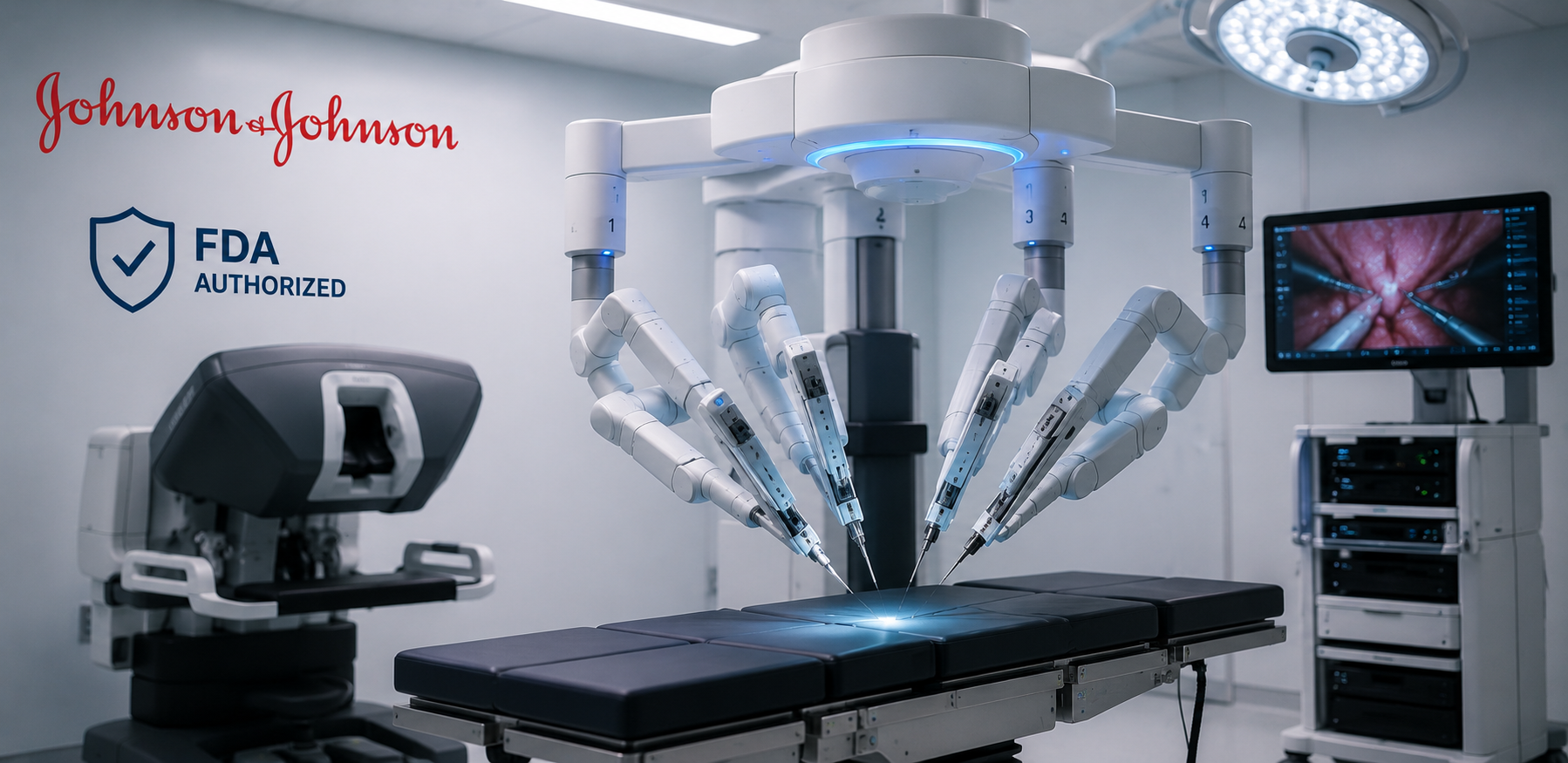
What's Happening
Johnson & Johnson has received U.S. Food and Drug Administration (FDA) marketing authorization for its next-generation robotic surgery platform, marking a major milestone in the company's effort to expand its presence in the fast-growing robotic-assisted surgery market.
The authorization allows Johnson & Johnson to begin marketing the system in the United States for approved surgical procedures, positioning the company to compete more directly with established robotic surgery manufacturers. The approval follows years of development and clinical evaluation designed to demonstrate the system's safety and effectiveness.
The decision represents one of Johnson & Johnson's most significant medical technology milestones in recent years as healthcare providers continue increasing their adoption of robotic-assisted surgical systems.
What Is Robotic-Assisted Surgery?
Robotic-assisted surgery allows surgeons to perform complex procedures using robotic instruments that they control from a specialized surgical console.
Contrary to popular belief, the robot does not operate independently.
Instead, the surgeon remains in complete control while the robotic system translates the surgeon's hand movements into highly precise movements of miniature surgical instruments.
These systems typically provide:
- High-definition three-dimensional visualization.
- Greater instrument precision.
- Improved dexterity.
- Enhanced control in confined surgical spaces.
- Better ergonomics for surgeons.
Robotic surgery is now used across multiple specialties, including general surgery, urology, gynecology, thoracic surgery, and colorectal procedures.
About Johnson & Johnson's New System
Johnson & Johnson's robotic platform is designed to support minimally invasive surgery, where operations are performed through small incisions rather than large open surgical cuts.
The company says the system aims to improve workflow within operating rooms while giving surgeons greater flexibility during procedures.
The FDA authorization permits commercial marketing of the system for approved uses after regulators reviewed clinical and technical evidence demonstrating that the platform met required standards for safety and performance.
Why Minimally Invasive Surgery Matters
Minimally invasive procedures have become increasingly common because they may offer several advantages over traditional open surgery for appropriate patients.
Potential benefits include:
- Smaller incisions.
- Reduced blood loss.
- Lower risk of infection.
- Less postoperative pain.
- Shorter hospital stays.
- Faster recovery.
- Earlier return to normal activities.
While patient outcomes ultimately depend on many factors including the procedure, surgeon experience, and overall health,robotic technology has become an important tool for supporting minimally invasive approaches.
Growing Competition in Robotic Surgery
The robotic surgery market has expanded rapidly over the past decade.
Hospitals are increasingly investing in robotic platforms as demand grows for minimally invasive procedures and advanced surgical technologies.
The market has historically been dominated by a small number of manufacturers, but several medical technology companies are now introducing new systems aimed at expanding competition and innovation.
Johnson & Johnson's FDA authorization positions the company to compete in a market expected to continue growing as hospitals modernize operating rooms and surgeons receive training on newer robotic platforms.
What FDA Marketing Authorization Means
FDA marketing authorization indicates that regulators have determined the device satisfies applicable standards for safety and effectiveness for its intended use.
The authorization allows Johnson & Johnson to:
- Market the system commercially in the United States.
- Begin broader adoption by eligible healthcare providers.
- Expand surgeon training programs.
- Support hospital implementation.
Hospitals considering adoption will continue evaluating factors such as clinical performance, surgeon training requirements, service support, and overall cost.
Industry Impact
- Hospitals and Health Systems: Healthcare organizations now have another major robotic surgery platform to evaluate as they plan future investments in surgical technology.
- Surgeons: Physicians may gain access to additional robotic tools that offer different workflows, instrument designs, and procedural capabilities.
- Medical Device Industry: The authorization increases competition within the robotic surgery market, encouraging continued innovation across surgical technologies.
- Patients: Greater competition may ultimately expand access to minimally invasive surgical options as more healthcare providers adopt advanced robotic platforms.
Why This Matters
The FDA authorization represents an important milestone in the evolution of robotic-assisted surgery.
As healthcare systems increasingly emphasize precision, efficiency, and minimally invasive care, robotic technologies are becoming a central component of modern surgical practice. Greater competition among manufacturers may accelerate innovation while providing hospitals and surgeons with more choices when selecting surgical platforms.
The approval also reflects the growing convergence of healthcare and advanced technology. Modern operating rooms increasingly incorporate robotics, artificial intelligence, imaging, and digital data systems to enhance surgical planning and execution. As these technologies continue evolving, they are expected to play an increasingly important role in improving surgical care and supporting better patient outcomes.
Key Takeaways
- Johnson & Johnson has received FDA marketing authorization for its next-generation robotic surgery platform.
- The authorization allows the company to begin marketing the system in the United States for approved surgical procedures.
- The platform is designed to support minimally invasive surgery while improving precision and surgical workflow.
- The approval strengthens Johnson & Johnson's position in the rapidly growing robotic-assisted surgery market.
- Increased competition could accelerate innovation and expand hospital adoption of robotic surgical technologies.
What This Means for Healthcare Marketers
Johnson & Johnson's FDA authorization highlights the continued transformation of surgical care through advanced medical technologies. As hospitals invest in robotics, digital operating rooms, and minimally invasive procedures, demand is growing for solutions that improve clinical efficiency, precision, and patient outcomes. Companies supporting surgical innovation from imaging and navigation to analytics and training, may benefit from this broader technology adoption.
For healthcare marketers, the announcement emphasizes the importance of communicating measurable clinical and operational value. Hospital purchasing decisions increasingly consider not only device performance but also workflow integration, surgeon education, service support, and long-term return on investment. Messaging that addresses these priorities can better resonate with health system leaders.
For healthcare intelligence teams, the approval signals continued momentum in the surgical robotics market. Monitoring FDA device authorizations, hospital technology investments, competitive product launches, and adoption trends can provide valuable insight into how the medical device landscape is evolving and where future growth opportunities may emerge.