Judge Blocks Colorado's First-in-the-Nation Price Cap on Amgen's Enbrel
What's Happening
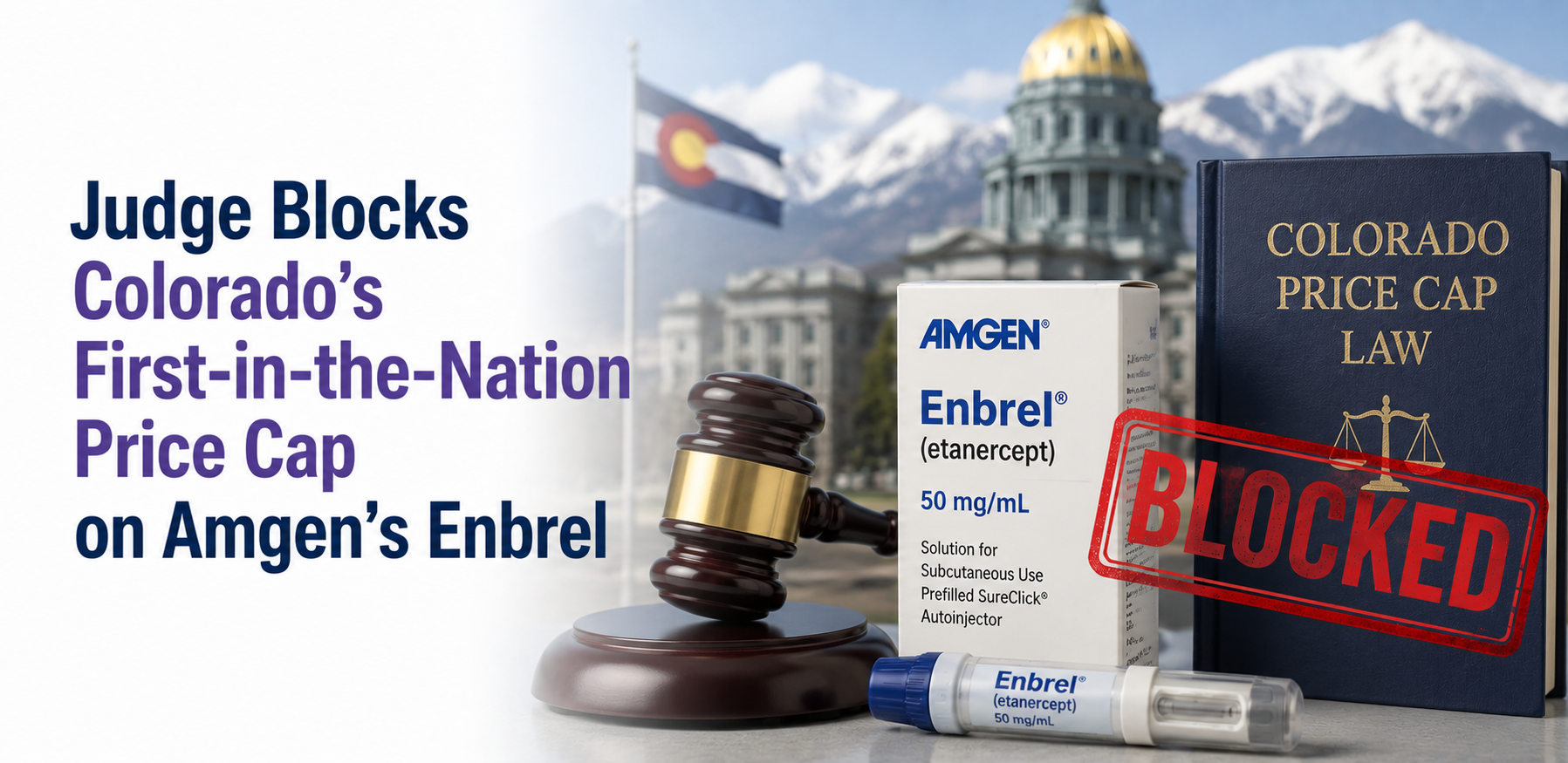
A federal judge has temporarily blocked Colorado's groundbreaking effort to cap the price of Amgen's arthritis drug Enbrel, preventing the state from enforcing what would have been the first government-imposed upper payment limit on a prescription drug in the United States. The ruling pauses Colorado's price cap while the legal challenge moves through the courts. (reuters.com)
The lawsuit was filed by Amgen, which argues that Colorado exceeded its legal authority by setting a maximum payment limit for one of its prescription medicines. The company contends that the state's action conflicts with federal law and could interfere with how prescription drugs are priced and distributed.
Colorado officials, however, say the law is intended to make expensive medications more affordable for residents and to address rising prescription drug costs.
The case is being closely watched because it could influence whether other states pursue similar drug-pricing policies.
What Is Enbrel?
Enbrel (generic name etanercept) is a biologic medicine developed to treat several autoimmune diseases. It works by blocking tumor necrosis factor (TNF), a protein involved in inflammation. Doctors prescribe Enbrel to treat conditions such as:
- Rheumatoid arthritis
- Psoriatic arthritis
- Plaque psoriasis
- Ankylosing spondylitis
- Juvenile idiopathic arthritis
For many patients, Enbrel helps reduce pain, swelling, and joint damage while improving mobility and quality of life. The medication has been available for more than two decades and remains one of the world's best-selling autoimmune therapies.
Why Is Enbrel So Expensive?
Enbrel is a biologic medicine, meaning it is produced using living cells rather than traditional chemical manufacturing. Biologic drugs are generally more expensive because they require:
- Complex manufacturing processes
- Specialized production facilities
- Extensive quality testing
- Temperature-controlled distribution
- Ongoing safety monitoring
In addition, biologics often receive lengthy patent protection and market exclusivity, limiting competition for many years. Although biosimilar versions have become available in some countries, pricing remains a significant concern for patients, insurers, employers, and government healthcare programs.
Why Colorado Tried to Cap the Price
Colorado created a Prescription Drug Affordability Board (PDAB) to examine whether certain high-cost medications create an affordability challenge for residents. After reviewing Enbrel, the board concluded that the drug's price placed a substantial financial burden on many patients.
The board voted to establish an Upper Payment Limit (UPL) a maximum amount that certain purchasers in Colorado could pay for the medicine. Unlike a nationwide price control, the upper payment limit would apply only within Colorado and only under specific circumstances established by state law. Supporters argue that this approach could improve patient access without directly controlling the manufacturer's national list price.
Why Amgen Challenged the Law
Amgen argues that Colorado's pricing policy raises important legal and constitutional issues. According to the company, the state cannot effectively regulate prices for medicines that are manufactured, distributed, and sold through national healthcare markets. Amgen also argues that:
- Federal law governs many aspects of prescription drug regulation.
- State pricing rules could interfere with interstate commerce.
- Different pricing rules in different states could create operational challenges for manufacturers and distributors.
The lawsuit seeks to prevent Colorado from implementing the payment limit while the courts determine whether the law is legally valid.
Why Drug Pricing Has Become a National Debate
Prescription drug affordability has become one of the most important healthcare policy issues in the United States. Patients, employers, insurers, and government programs continue facing rising spending on specialty medicines. Several factors contribute to higher drug costs:
- Increased use of biologic medicines.
- Growth in specialty pharmaceuticals.
- Longer treatment durations.
- Limited competition for certain products.
- High research and development costs.
In response, policymakers have introduced a variety of strategies to improve affordability, including: Medicare drug price negotiations, inflation rebate programs, greater pricing transparency, encouraging biosimilar competition, and state-level affordability initiatives such as Colorado's. The outcome of this lawsuit may influence how aggressively states pursue similar policies in the future.
What Could the Court's Decision Mean?
The judge's ruling is temporary and does not determine whether Colorado's law is ultimately legal. The case will continue through the court system, where judges will examine questions involving:
- State authority
- Federal law
- Constitutional principles
- Healthcare regulation
- Interstate commerce
If Colorado ultimately prevails, other states may consider creating similar affordability boards or payment limits for high-cost medicines. If Amgen succeeds, states may face greater legal barriers when attempting to regulate prescription drug prices independently. Either outcome could shape future healthcare policy nationwide.
Industry Impact
- Pharmaceutical Companies: Manufacturers are closely monitoring the case because it could affect future state efforts to regulate prescription drug prices.
- State Governments: States seeking to improve drug affordability may look to this case for guidance on the legal limits of state pricing authority.
- Health Insurers: Insurers continue searching for ways to manage specialty drug spending while maintaining patient access.
- Patients: Individuals using high-cost medicines may eventually benefit from broader affordability initiatives, depending on how future legal challenges are resolved.
Why This Matters
Colorado's effort represents one of the most ambitious state-level attempts to address prescription drug affordability in the United States. While the case currently focuses on a single medicine, its implications extend much further.
The courts will help define how much authority states have to influence prescription drug prices independently of federal programs. As spending on specialty medicines continues to rise, policymakers are likely to explore additional strategies for improving affordability. The outcome of this case could influence future legislation, healthcare spending, pharmaceutical pricing strategies, and patient access to medicines across the country.
Key Takeaways
- A federal judge temporarily blocked Colorado's first-in-the-nation price cap on Amgen's Enbrel.
- Colorado created an Upper Payment Limit to improve affordability for high-cost prescription drugs.
- Amgen argues the state exceeded its legal authority and that the policy conflicts with federal law.
- The case is expected to influence future state drug-pricing initiatives across the United States.
- The judge's ruling is temporary while the broader legal challenge proceeds.
What This Means for Healthcare Marketers
This case highlights the growing role of state governments in shaping prescription drug affordability. While federal initiatives such as Medicare drug price negotiations receive significant attention, states are increasingly exploring their own strategies to address rising pharmaceutical costs. As a result, market access is becoming more complex, requiring manufacturers to navigate both federal and state policy developments.
For healthcare marketers, pricing has become an increasingly important component of commercialization strategy. Clinical effectiveness alone is no longer sufficient to drive adoption, payers, providers, employers, and policymakers are placing greater emphasis on affordability and value. Companies must therefore demonstrate not only the therapeutic benefits of their medicines but also their broader economic impact on healthcare systems.
For healthcare intelligence teams, legal challenges involving state drug-pricing policies provide valuable insight into the future regulatory environment. Monitoring court decisions, affordability boards, reimbursement policies, and pricing legislation can help organizations anticipate changes that may affect product launches, contracting strategies, and payer negotiations.
More broadly, the Colorado case demonstrates that prescription drug pricing will remain one of the defining healthcare policy issues in the United States. The outcome could shape how states participate in healthcare cost management and influence future discussions around balancing pharmaceutical innovation with patient affordability.