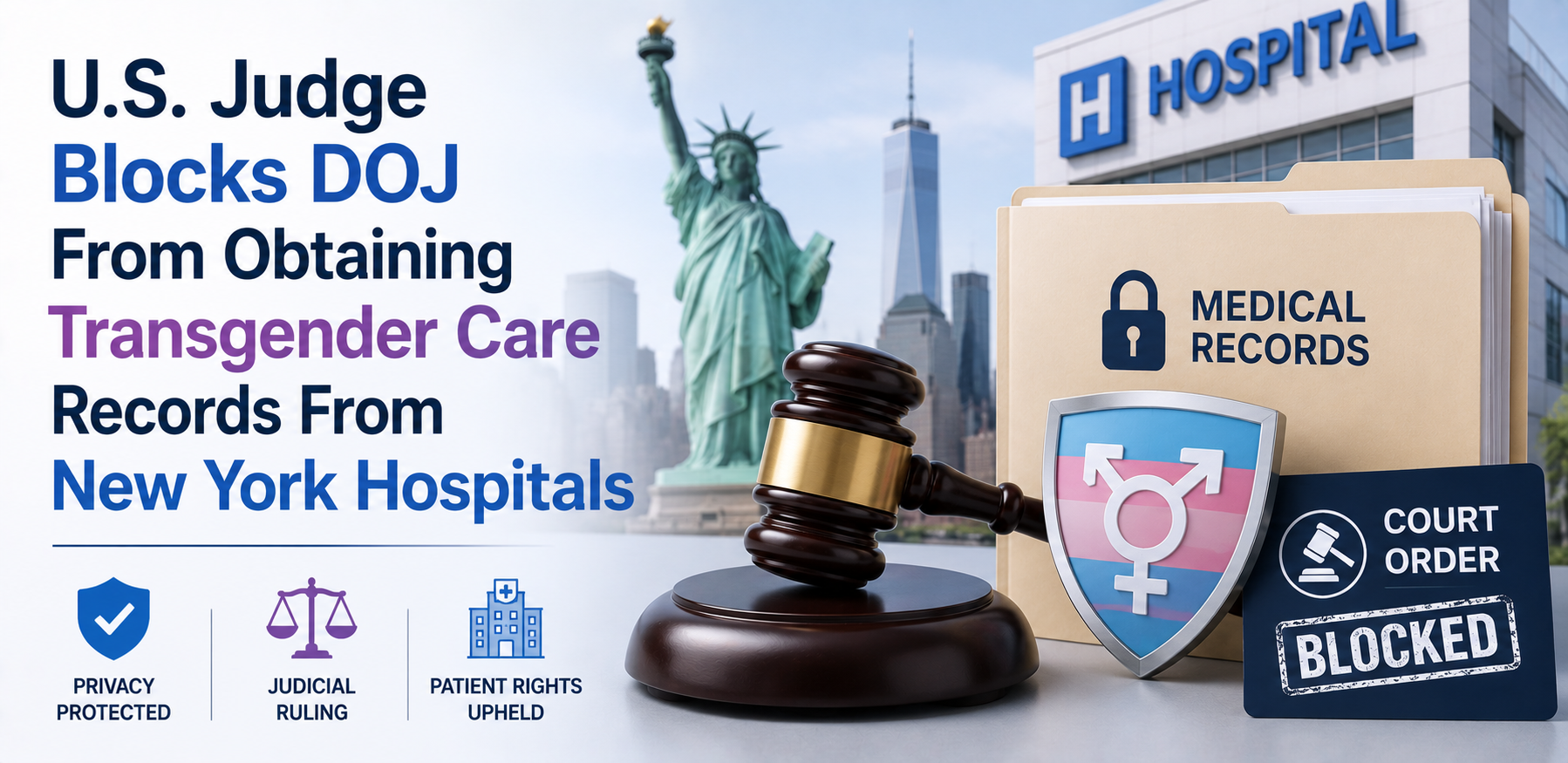
U.S. Judge Blocks DOJ From Obtaining Transgender Care Records From New York Hospitals
What's Happening
A federal judge in New York temporarily blocked the U.S. Department of Justice (DOJ) from obtaining medical records related to transgender patients who received gender-affirming care as minors at New York City hospitals. The ruling came after several families and patients filed a lawsuit challenging federal subpoenas seeking years of sensitive medical information.
The case centers on grand jury subpoenas issued to healthcare providers, including NYU Langone Health, as part of a broader federal investigation into gender-affirming care for minors. The subpoenas sought extensive medical records covering multiple years of treatment.
U.S. District Judge Katherine Polk Failla issued a temporary restraining order preventing the DOJ from accessing the records while the legal challenge moves forward. The judge indicated that the plaintiffs were likely to succeed in arguing that the government's request violated constitutional privacy protections.
A hearing is scheduled to determine whether the temporary block should be extended through a preliminary injunction, which would keep the records protected while the lawsuit continues.
How the Dispute Started
The conflict began after the Trump administration intensified its scrutiny of gender-affirming care provided to transgender minors.
In 2025, the administration directed the Justice Department to investigate treatments involving transgender youth and issued numerous subpoenas to hospitals, clinics, and healthcare providers across the country. Several courts subsequently limited or blocked many of those requests.
Federal prosecutors later shifted toward using grand jury subpoenas issued through courts in Texas, seeking records from hospitals that had provided gender-affirming care. NYU Langone Health disclosed that it had received such a subpoena, prompting patients and families to file suit.
The plaintiffs argued that turning over medical records would violate patient privacy and expose highly sensitive healthcare information without consent.
Why Medical Records Are at the Center of the Case
Medical records contain some of the most sensitive personal information individuals possess. Healthcare providers maintain records that may include:
- Diagnoses
- Treatment plans
- Medication histories
- Mental health assessments
- Physician notes
- Family medical information
Federal and state laws generally provide strong protections for patient privacy. While law enforcement agencies can obtain medical records under certain circumstances, courts often weigh those requests against constitutional and privacy concerns.
In this case, the dispute is not simply about access to records. It is also about whether the federal government can broadly collect information about a specific group of patients as part of an ongoing investigation.
Why the Judge Blocked the Request
Judge Failla's ruling focused heavily on privacy concerns.
According to the court, the government's demand covered years of highly personal healthcare information involving a vulnerable patient population. The judge suggested that the scope of the request could violate constitutional protections under the Fourth and Fifth Amendments.
The court also expressed concern that patients may have their private medical information disclosed without their knowledge or consent.
While the ruling does not end the federal investigation, it prevents the DOJ from obtaining the requested records until further court proceedings take place.
Why This Case Matters Beyond New York
The New York case is part of a larger national legal battle involving transgender healthcare, patient privacy, and federal investigative authority.
Over the past year, courts in several states have reviewed similar DOJ requests involving hospitals and clinics that provided gender-affirming care to minors. In multiple cases, judges have limited, narrowed, or blocked requests for patient records.
Because similar disputes are unfolding in different jurisdictions, future rulings could influence how federal agencies pursue healthcare-related investigations and how courts balance law enforcement interests against patient privacy rights.
Healthcare organizations nationwide are closely monitoring the outcome because it could affect future record requests involving sensitive medical services.
The Broader Debate Around Healthcare Privacy
The case highlights a growing challenge in healthcare: balancing patient privacy with government oversight.
Healthcare systems increasingly manage vast amounts of digital health information. As a result, questions surrounding who can access patient data, under what circumstances, and for what purposes have become increasingly important.
Advocates for stronger privacy protections argue that patients may avoid seeking medical care if they fear their personal information could later become part of government investigations.
Others argue that law enforcement agencies must retain the ability to obtain relevant information when conducting legitimate investigations.
The courts are often responsible for determining where those boundaries should be drawn.
Industry Impact
- Hospitals and Health Systems: Healthcare providers may face increased scrutiny regarding how they respond to subpoenas and government requests for patient information.
- Healthcare Privacy Teams: Organizations are likely to continue reviewing compliance policies related to patient-record disclosures and data protection.
- Legal and Regulatory Professionals: The case could influence future standards governing access to sensitive healthcare information.
- Patients: The outcome may affect how healthcare privacy protections are interpreted in future cases involving medical records.
Why This Matters
The ruling represents an important development in the ongoing debate over healthcare privacy and government access to patient records. Although the decision is temporary, it underscores the legal complexities that arise when federal investigations intersect with highly sensitive healthcare information.
The case is likely to be closely watched by healthcare providers, legal experts, policymakers, and patient advocacy groups because its outcome could influence future healthcare privacy disputes across the United States. As healthcare becomes increasingly data-driven, questions about who controls patient information and how that information can be used will remain central to healthcare policy discussions.
Key Takeaways
- A federal judge temporarily blocked the DOJ from obtaining transgender care records from New York hospitals.
- The case involves grand jury subpoenas seeking records related to gender-affirming care provided to minors.
- Patients and families challenged the requests on privacy and constitutional grounds.
- The judge ruled that the plaintiffs were likely to succeed in their claims that the requests violated privacy protections.
- Additional court hearings will determine whether the block remains in place.
What This Means for Healthcare Marketers
This case highlights the growing importance of healthcare privacy as a strategic issue across the healthcare industry.
For healthcare marketers, patient trust increasingly depends on how organizations collect, store, protect, and communicate about sensitive health information. Privacy concerns are no longer limited to compliance departments; they influence brand reputation, patient engagement, provider relationships, and public perception.
The case also reflects the broader healthcare industry's growing focus on data governance. As healthcare organizations manage larger volumes of digital health information, stakeholders are paying closer attention to privacy protections, consent practices, and data-sharing policies.
For healthcare intelligence teams, legal disputes involving patient records can provide valuable insight into evolving regulatory priorities and future compliance requirements. Organizations that closely monitor these developments may be better positioned to adapt to changing expectations surrounding healthcare data management.
More broadly, the ruling demonstrates that healthcare privacy remains one of the most closely watched issues in modern healthcare, particularly as legal, technological, and political considerations continue to intersect.