Jury Orders Medtronic to Pay $88 Million in First Hernia Mesh Trial Over Covidien Products
What's Happening
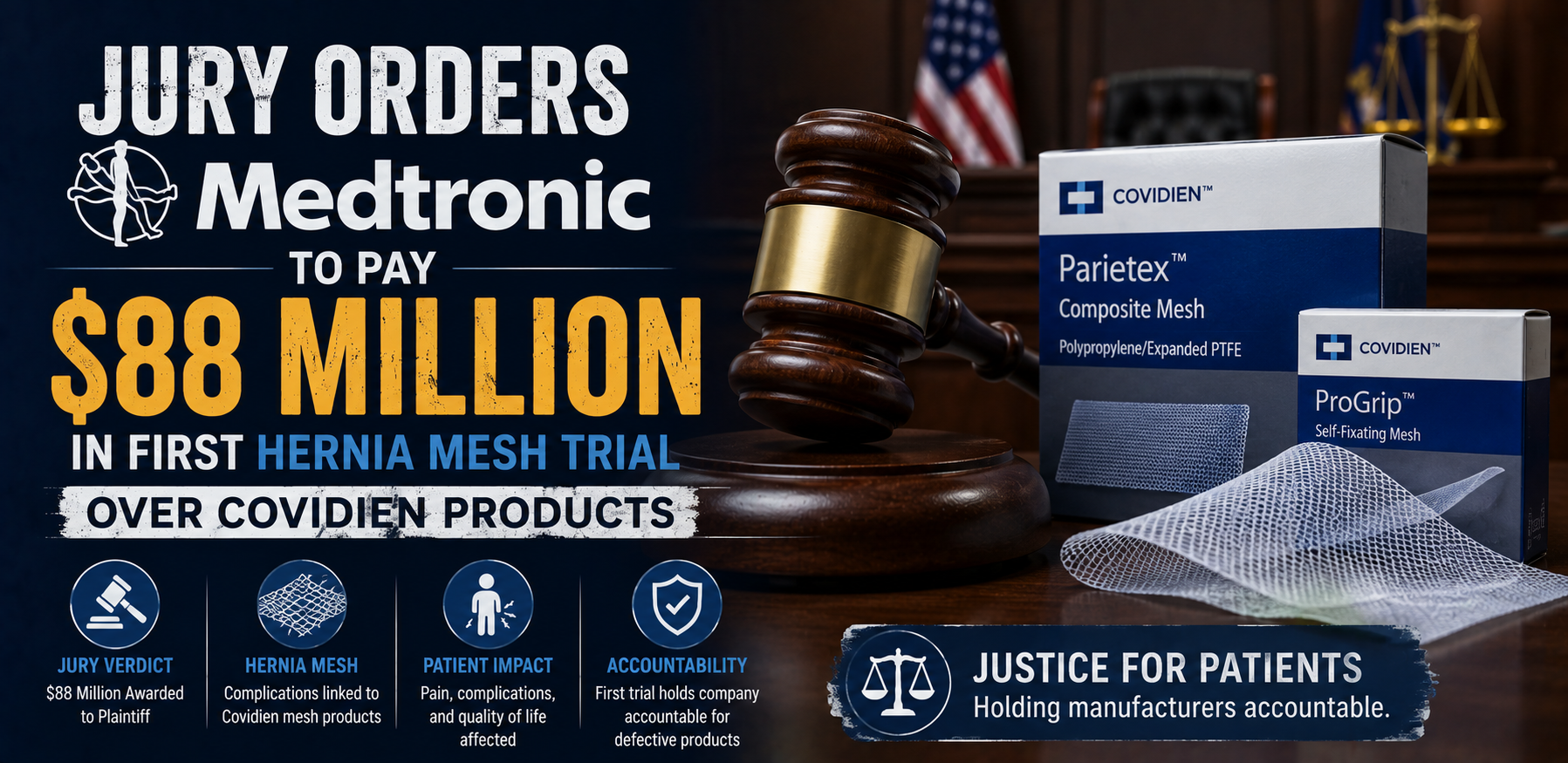
A U.S. jury has ordered Medtronic to pay $88 million in damages in the first case to go to trial involving claims that hernia mesh products manufactured by its Covidien unit caused serious injuries.
The lawsuit was brought by a patient who alleged that the implanted hernia mesh was defectively designed and resulted in complications requiring additional medical treatment. The jury found in favor of the plaintiff, determining that the company failed to provide adequate warnings regarding the risks.
The case is the first of thousands of similar lawsuits filed against Medtronic over its Covidien hernia mesh products, making it a closely watched legal milestone for the medical device industry.
Understanding Hernia Mesh
Hernia mesh is a medical device used to reinforce weakened or damaged tissue during hernia repair surgery.
The mesh is intended to:
- Reduce the risk of hernia recurrence.
- Provide additional support during healing.
- Improve long-term surgical outcomes.
Millions of hernia repair procedures are performed each year, and mesh implants have become a standard treatment for many patients.
However, some patients have reported complications including chronic pain, infections, adhesions, mesh migration, and the need for additional surgeries.
Why the Trial Matters
The verdict represents the first jury decision involving Medtronic's Covidien hernia mesh litigation.
Thousands of similar lawsuits remain pending, with plaintiffs alleging that certain mesh products were defectively designed or inadequately labeled regarding potential risks.
Medtronic has denied the allegations and maintains that its products are safe when used appropriately.
The outcome of this case may influence future settlement discussions and additional trials involving similar claims.
Industry Impact
- Medical Device Manufacturers: The verdict highlights the importance of product safety, clinical evidence, and post-market surveillance for implantable medical devices.
- Healthcare Providers: Surgeons will continue evaluating hernia repair options based on clinical evidence, patient needs, and individual risk factors while monitoring developments in ongoing litigation.
- Patients: The case may increase awareness of both the benefits and potential risks associated with implantable hernia mesh products, encouraging informed discussions between patients and physicians.
- Medical Device Industry: Manufacturers may face increased scrutiny regarding product design, labeling, long-term safety monitoring, and risk communication for implantable devices.
Looking Ahead
Medtronic is expected to challenge the verdict through post-trial motions or appeal.
Meanwhile, thousands of additional hernia mesh lawsuits remain pending, and future court decisions could shape the company's legal strategy as well as broader industry approaches to product liability and risk management.
The litigation may also encourage continued investment in developing safer implant materials and improved surgical technologies.
Why This Matters
Implantable medical devices play a critical role in modern healthcare, making patient safety and product reliability essential priorities.
The verdict underscores the significant legal and financial risks medical device manufacturers face when questions arise regarding product performance and patient outcomes.
The case also highlights the importance of ongoing clinical evaluation, transparent risk communication, and post-market surveillance throughout a medical device's lifecycle.
Key Takeaways
- A U.S. jury ordered Medtronic to pay $88 million in the first hernia mesh trial involving its Covidien products.
- The lawsuit alleged that the implanted mesh caused serious patient injuries due to inadequate warnings.
- The verdict is the first trial outcome among thousands of pending hernia mesh lawsuits.
- Medtronic maintains that its products are safe and is expected to challenge the decision.
- The case highlights the importance of product safety and post-market monitoring for implantable medical devices.
What This Means for Healthcare Marketers
The verdict underscores the growing importance of medical device safety, regulatory compliance, and post-market surveillance. Medical device manufacturers, hospitals, surgical centers, and healthcare technology companies continue investing in product quality, clinical evidence, and patient safety initiatives. For healthcare marketers, organizations involved in implantable devices, surgical innovation, risk management, and medical technology represent high-intent opportunities for provider education, clinical communications, stakeholder engagement, and commercial differentiation.