Obesity Drug Developer Kalohexis Confidentially Files for U.S. IPO Amid Booming GLP-1 Market
What's Happening
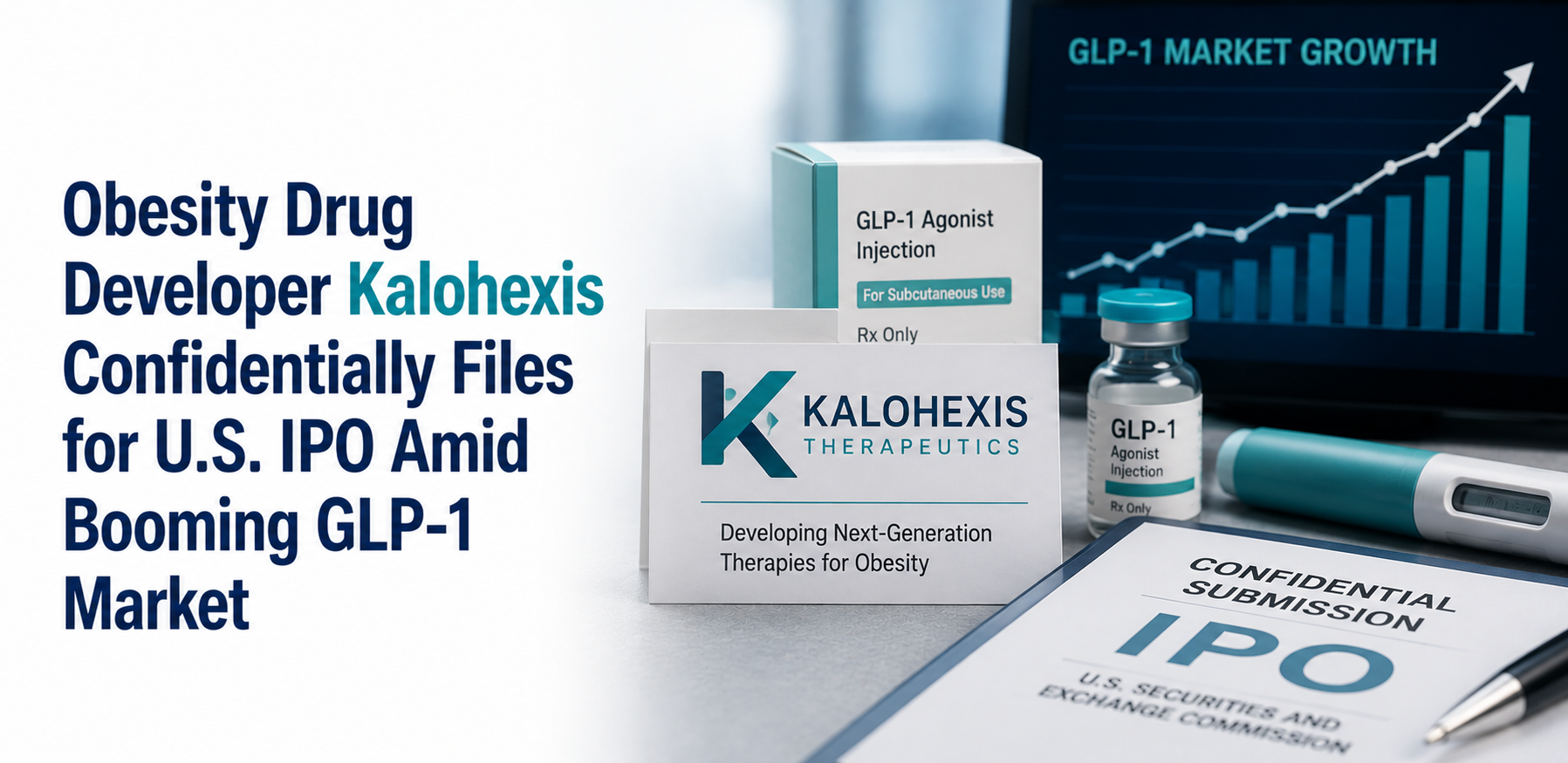
Kalohexis, a biotechnology company developing next-generation obesity treatments, has confidentially filed for an initial public offering (IPO) in the United States, according to Reuters. The company has not yet disclosed the number of shares it plans to sell or its expected valuation. By filing confidentially, Kalohexis can begin the regulatory review process with the U.S. Securities and Exchange Commission (SEC) before publicly releasing its financial information. (reuters.com)
The planned IPO comes at a time when investor interest in obesity treatments remains exceptionally strong, driven by the commercial success of GLP-1 medicines such as Wegovy and Zepbound. Biotechnology companies developing next-generation weight-loss therapies continue attracting significant investment as pharmaceutical companies race to capture a share of one of healthcare's fastest-growing markets.
If market conditions remain favorable, Kalohexis could become one of the latest obesity-focused biotechnology companies to enter the public markets.
What Is an IPO?
An Initial Public Offering (IPO) is the process through which a private company sells shares to public investors for the first time. Going public allows a company to raise capital that can be used to:
- Fund clinical trials.
- Expand research and development.
- Build manufacturing capabilities.
- Hire additional staff.
- Support future commercialization.
- Repay existing investors.
For biotechnology companies, IPO proceeds often provide the financial resources needed to complete expensive late-stage clinical development. Unlike many industries, biotech companies frequently seek public funding before generating significant commercial revenue because drug development requires years of investment before products reach the market.
What Does "Confidentially Filed" Mean?
Under U.S. securities rules, eligible companies may submit draft IPO registration documents confidentially to the SEC. This process allows companies to:
- Receive regulatory feedback before making financial information public.
- Delay public disclosure if market conditions change.
- Continue preparing for a public offering with greater flexibility.
Only later, when the company decides to proceed, does it publicly release its registration statement, including financial performance, business strategy, and risk factors. Confidential filing has become increasingly common among biotechnology companies because it reduces market pressure during the early stages of the IPO process.
Why Obesity Treatments Are Attracting So Much Investment
Obesity has become one of the largest therapeutic opportunities in modern healthcare. More than one billion people worldwide are estimated to be living with overweight or obesity, increasing the risk of conditions such as:
- Type 2 diabetes
- Heart disease
- Stroke
- Sleep apnea
- Chronic kidney disease
- Fatty liver disease
The remarkable commercial success of GLP-1 medicines has transformed investor expectations. These therapies have demonstrated substantial weight loss while also showing benefits for cardiovascular health, kidney disease, and several obesity-related conditions. As a result, investors continue seeking companies developing:
- Next-generation GLP-1 therapies
- Oral weight-loss medicines
- Combination therapies
- Longer-acting treatments
- Novel mechanisms beyond GLP-1
Why Biotech Companies Need Capital
Developing a new medicine is one of the most expensive activities in healthcare. Before receiving regulatory approval, companies must complete:
- Laboratory research
- Animal studies
- Phase 1 clinical trials
- Phase 2 clinical trials
- Phase 3 clinical trials
- Regulatory submissions
- Manufacturing preparation
These activities often require hundreds of millions, or even billions, of dollars. Public markets provide biotechnology companies with access to long-term funding that supports these development programs. For companies working in highly competitive therapeutic areas such as obesity, securing adequate capital is especially important because multiple clinical trials may run simultaneously.
Why Investors Are Watching the Obesity Market
The obesity treatment market has become one of the pharmaceutical industry's fastest-growing sectors. Major companies including Novo Nordisk, Eli Lilly, Amgen, Roche, and several emerging biotechnology firms are investing heavily in next-generation therapies. Investors are paying close attention to companies that can differentiate themselves through:
- Greater weight loss
- Improved safety
- Better tolerability
- More convenient dosing
- Lower manufacturing costs
- New biological mechanisms
Even companies in early clinical development have attracted substantial valuations because of the enormous commercial opportunity. However, investor expectations remain high, and companies must demonstrate meaningful clinical advantages to compete successfully.
Challenges Ahead
Although confidential filing is an important milestone, completing an IPO is not guaranteed. Several factors could influence whether Kalohexis ultimately proceeds with its public offering, including:
- Overall stock market conditions.
- Investor demand for biotechnology companies.
- Clinical trial progress.
- Competitive developments in obesity medicine.
- Regulatory timelines.
Following the IPO, the company will also need to continue demonstrating strong clinical results while managing the costs of drug development.
Industry Impact
- Biotechnology Companies: Strong investor interest continues encouraging obesity-focused biotech firms to seek public financing.
- Pharmaceutical Companies: Publicly funded biotechnology companies may become future licensing or acquisition targets as larger drugmakers expand their obesity pipelines.
- Investors: The IPO pipeline reflects continued confidence in obesity therapeutics despite increasing competition.
- Patients: Additional funding may accelerate the development of new treatment options, potentially expanding future choices for obesity management.
Why This Matters
Kalohexis' confidential IPO filing reflects the continued momentum behind obesity drug development. The success of GLP-1 medicines has fundamentally changed how investors view obesity, transforming it from a relatively overlooked therapeutic area into one of the most attractive markets in biotechnology. As companies pursue next-generation treatments with improved efficacy, convenience, and tolerability, access to capital will play a crucial role in determining which programs successfully reach late-stage clinical trials. Whether or not Kalohexis ultimately completes its IPO, the filing signals that investor confidence in obesity innovation remains strong despite growing competition.
Key Takeaways
- Kalohexis confidentially filed for a U.S. initial public offering.
- The company is developing therapies for obesity, one of healthcare's fastest-growing therapeutic markets.
- Confidential filing allows the company to undergo SEC review before publicly releasing detailed financial information.
- IPO proceeds could help fund clinical development and future commercialization.
- The filing reflects continued investor enthusiasm for next-generation obesity medicines.
What This Means for Healthcare Marketers
Kalohexis' IPO filing demonstrates that obesity has become one of the most attractive investment areas in healthcare. Capital continues flowing into companies developing innovative therapies because investors increasingly view obesity as a chronic disease with enormous unmet medical need and long-term commercial potential. As funding increases, competition will accelerate across pharmaceuticals, digital health, diagnostics, and patient support services.
For healthcare marketers, this means future differentiation will depend on more than clinical efficacy. Companies will increasingly compete on treatment experience, adherence, payer access, physician education, and long-term health outcomes. Organizations entering the obesity market must communicate not only scientific innovation but also clear value for patients, providers, and healthcare systems.
For healthcare intelligence teams, IPO activity provides an early indicator of where investment is heading. Monitoring biotech financings, venture capital activity, licensing agreements, and public offerings can help identify emerging competitors and technologies years before products reach the market. As the obesity treatment landscape continues evolving, capital markets will remain an important signal of future innovation and commercial opportunity.