Kalshi Expands Prediction Markets to Clinical Trials and FDA Decisions, Raising New Questions for Healthcare
What's Happening
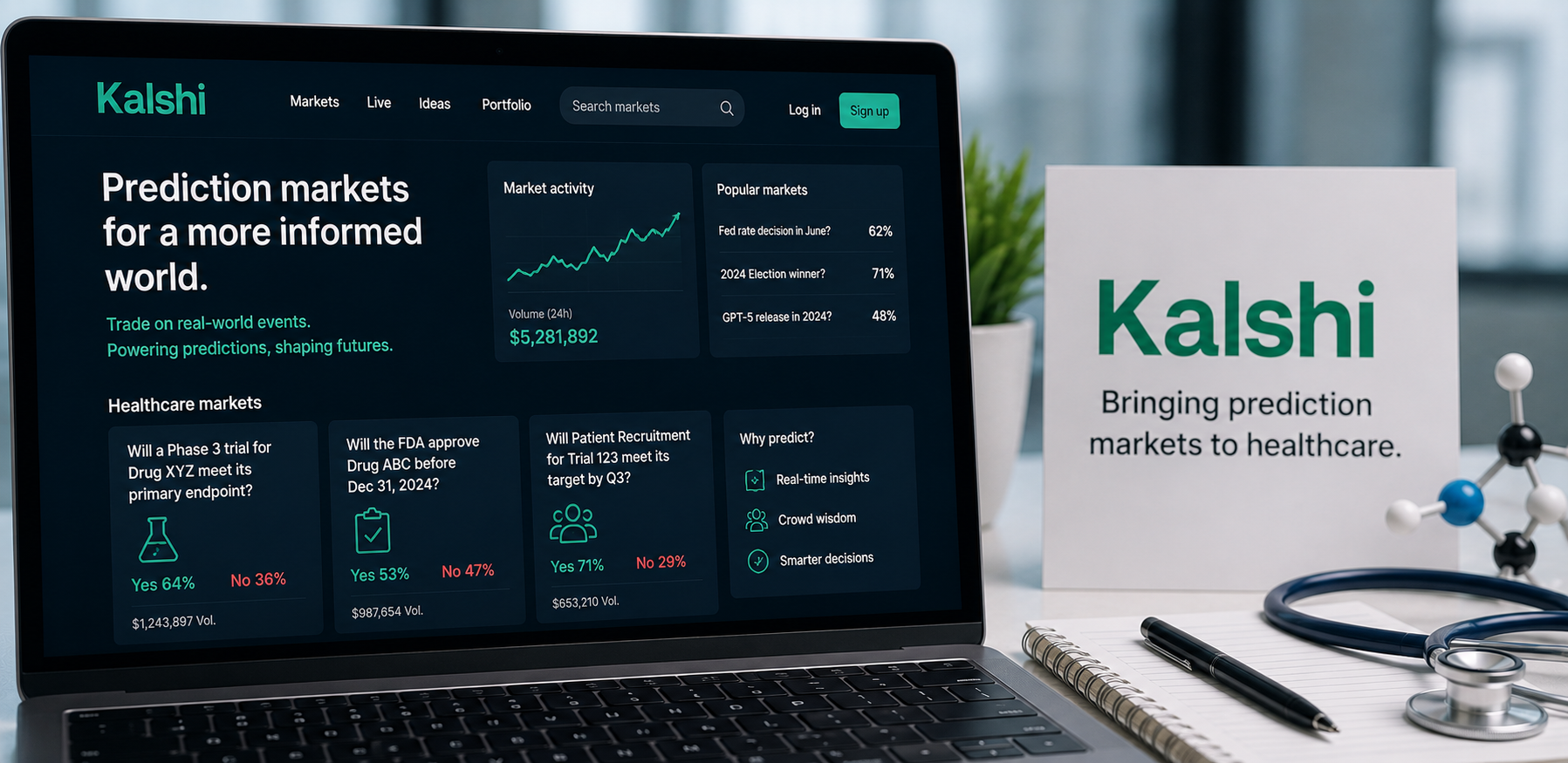
Prediction market platform Kalshi has announced that it will begin offering contracts that allow users to place regulated financial bets on the outcomes of clinical trials and U.S. Food and Drug Administration (FDA) regulatory decisions.
The new markets will enable participants to predict whether a drug will successfully complete a clinical trial, receive FDA approval, or experience other major regulatory milestones. Kalshi says these markets are designed to aggregate information and reflect public expectations about future events rather than encourage gambling for entertainment.
The move represents one of the first major attempts to create regulated financial markets centered on pharmaceutical research and drug development. While supporters believe prediction markets could improve forecasting and provide valuable insights, critics argue they raise ethical and practical questions about healthcare, investing, and public trust.
What Is Kalshi?
Kalshi is a U.S.-regulated prediction market exchange where people trade contracts based on whether specific future events will occur.
Unlike traditional stock investing, participants do not buy ownership in a company. Instead, they purchase contracts tied to a specific yes-or-no outcome.
For example, a market might ask:
- Will Drug X receive FDA approval before December 31?
- Will a Phase III clinical trial meet its primary endpoint?
- Will a healthcare company announce positive trial results this quarter?
If the predicted event occurs, winning contracts pay a fixed amount. If it does not, the contracts expire without value.
Supporters describe these markets as a way to collect collective knowledge from many participants, producing probability estimates that may sometimes outperform individual forecasts.
Why Clinical Trials Matter
Clinical trials determine whether new medicines and medical devices are both safe and effective before they can reach patients.
Drug development typically progresses through several stages:
- Phase I: Researchers evaluate safety and determine appropriate dosing in a small group of volunteers.
- Phase II: The treatment is tested in more patients to evaluate effectiveness while continuing to monitor safety.
- Phase III: Large-scale studies compare the new treatment against existing therapies or placebos to confirm effectiveness and identify less common side effects.
Only after successful clinical testing can a company submit its data to the FDA for regulatory review.
Because most experimental drugs never complete this process successfully, predicting clinical trial outcomes has significant financial implications for pharmaceutical companies and investors.
Understanding FDA Decisions
The FDA reviews extensive scientific evidence before approving new medicines, biologics, and medical devices.
Its evaluation typically includes:
- Clinical trial results.
- Safety data.
- Manufacturing quality.
- Product labeling.
- Benefit-risk analysis.
- Post-marketing safety plans.
Approval decisions can dramatically affect pharmaceutical companies.
A successful approval may open a multibillion-dollar commercial opportunity, while a rejection can significantly delay product launches, reduce company valuations, or require additional studies.
Because these decisions have enormous financial consequences, many investors already attempt to predict regulatory outcomes using publicly available information.
Why Prediction Markets Are Generating Debate
Supporters believe healthcare prediction markets could provide several benefits.
Potential advantages include:
- More accurate forecasting of clinical trial outcomes.
- Better understanding of market expectations.
- Additional information for investors and researchers.
- Greater transparency around perceived regulatory probabilities.
However, critics have raised several concerns.
Some worry prediction markets could:
- Encourage excessive financial speculation around scientific research.
- Influence public perception of experimental medicines.
- Create conflicts if individuals with privileged information participate.
- Increase volatility around important healthcare announcements.
Others question whether financial incentives should become more closely tied to events that directly affect patients' lives and access to future treatments.
How This Could Affect Drug Development
Although prediction markets do not influence FDA decisions directly, they could become another source of information for investors following biotechnology companies.
Biotech firms often experience significant stock price swings after releasing clinical trial data or receiving regulatory decisions.
Prediction markets could provide an additional measure of market expectations before those announcements occur.
Researchers have also suggested that aggregated forecasts might eventually complement traditional forecasting methods used by investors, analysts, and healthcare organizations.
Whether these markets consistently produce accurate predictions remains an open question.
Industry Impact
- Pharmaceutical Companies: Drug developers may see increased attention surrounding major clinical milestones as prediction markets become another source of public expectations.
- Investors: Institutional and retail investors could use prediction markets alongside traditional financial analysis when evaluating biotechnology companies.
- Regulators: Healthcare and financial regulators may closely monitor these markets to ensure compliance, prevent misuse of non-public information, and maintain market integrity.
- Patients: While patients are unlikely to be directly affected by the markets themselves, public attention surrounding clinical trial outcomes and FDA decisions may increase as prediction markets become more widely followed.
Why This Matters
The introduction of prediction markets for clinical trials and FDA decisions represents a unique intersection between healthcare, finance, and data-driven forecasting.
Drug development has always involved uncertainty, and investors have long attempted to estimate the likelihood of successful clinical trials and regulatory approvals. Kalshi's new markets formalize those expectations into regulated financial contracts, potentially creating a new source of real-time insight into market sentiment.
At the same time, the initiative raises important ethical and regulatory questions about how financial markets should interact with scientific research and public health. As healthcare innovation accelerates, regulators, pharmaceutical companies, and investors will likely continue evaluating whether prediction markets improve decision-making or introduce new risks.
Key Takeaways
- Kalshi will launch regulated prediction markets tied to clinical trial outcomes and FDA regulatory decisions.
- Users will be able to trade contracts based on whether specific healthcare events occur.
- Supporters believe prediction markets may improve forecasting and reflect collective market expectations.
- Critics have raised concerns about ethics, speculation, market integrity, and public perception.
- The initiative represents a new intersection of healthcare innovation, financial markets, and regulatory oversight.
What This Means for Healthcare Marketers
Kalshi's expansion highlights how healthcare is increasingly becoming part of broader financial and data ecosystems. Major clinical milestones and regulatory decisions are no longer followed only by pharmaceutical companies and investors—they are becoming events that can generate measurable market expectations in real time. As healthcare innovation accelerates, transparency, credibility, and clear scientific communication become even more important.
For healthcare marketers, this development reinforces the need to communicate clinical progress responsibly. Trial results, regulatory updates, and scientific milestones can influence not only physicians and patients but also investors, partners, and broader market sentiment. Organizations that provide accurate, evidence-based messaging will be better positioned as public interest in drug development continues to grow.
For healthcare intelligence teams, prediction markets may become another signal to monitor alongside clinical trial databases, FDA announcements, scientific publications, and earnings reports. While they should not replace rigorous analysis, these markets could offer additional insight into how the broader market perceives the probability of major healthcare events and emerging therapeutic innovations.