What's Happening
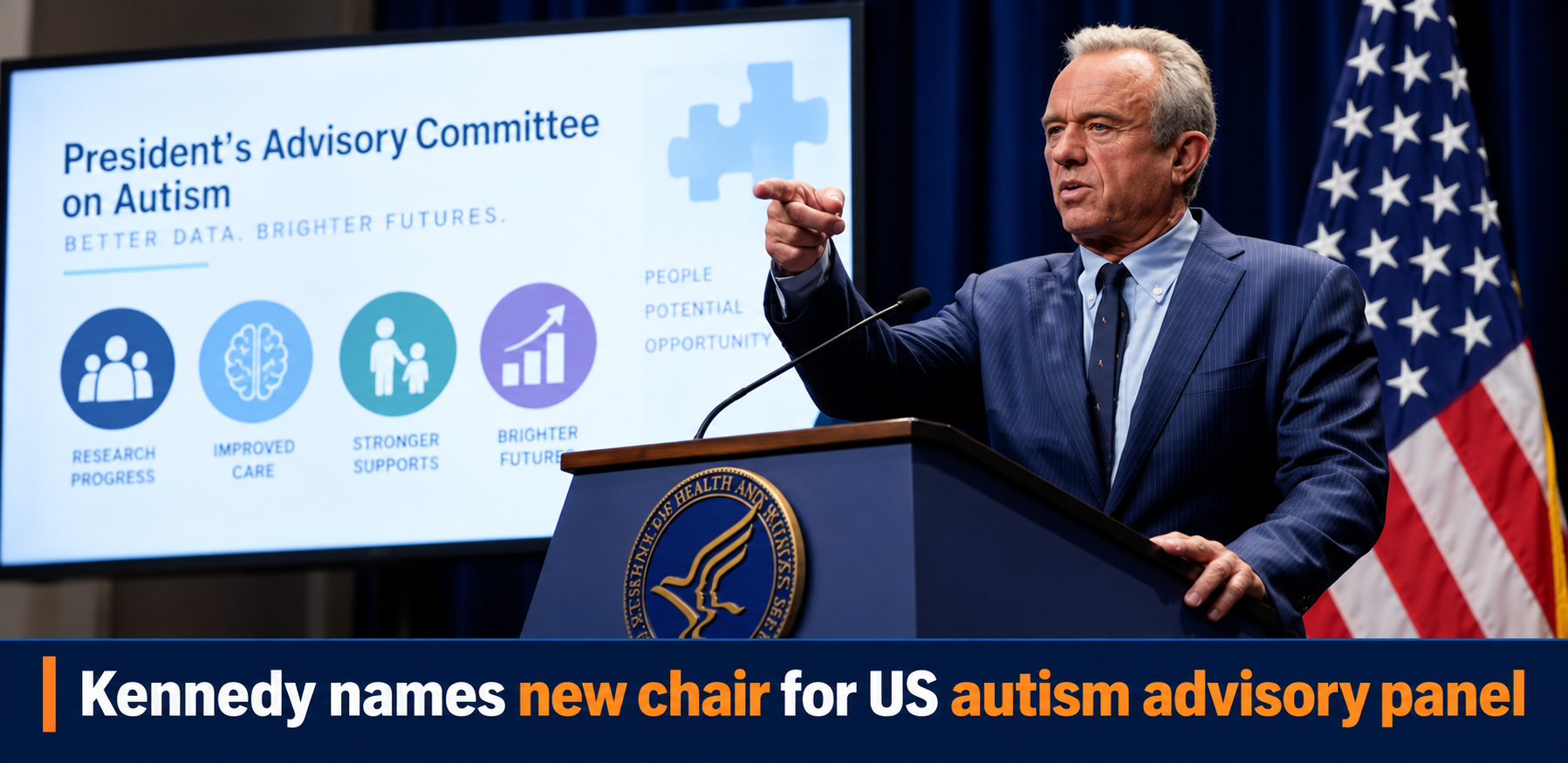
U.S. Health Secretary Robert F. Kennedy Jr. has appointed Dr. John Gaitanis as the new chair of the Interagency Autism Coordinating Committee (IACC), a federal advisory panel that provides recommendations to the government on autism research, services and policy.
Gaitanis, a pediatric neurologist and director of the NIH's Eunice Kennedy Shriver National Institute of Child Health and Human Development (NICHD), replaced Dr. Sylvia Fogel, who had served as chair since January 2026. The appointment took effect September 18, according to the Department of Health and Human Services.
Fogel will remain a member of the committee and will help Gaitanis transition into the role.
What Is the IACC?
The Interagency Autism Coordinating Committee is a federal advisory committee created to coordinate autism-related activities across federal agencies and provide recommendations to the HHS secretary.
Its responsibilities include monitoring autism research and federal programs, developing a strategic plan for autism-related research and services, identifying research priorities and recommending changes to federal activities. (National Institute of Mental Health)
The committee includes both federal members and public members, including people with autism, family members and representatives from research, advocacy and service organizations. (National Institute of Mental Health)
Its recommendations are non-binding, meaning the committee advises the government but does not itself have authority to set federal policy.
Why Fogel Was Replaced
According to people familiar with the committee's meeting, Kennedy said Gaitanis was taking over because the IACC had traditionally been chaired by one of its 21 federal members.
Fogel is one of the committee's 20 outside public members. HHS spokesperson Emily Hilliard said having a federal chair would strengthen the committee's ability to implement its strategic plan and coordinate work across federal agencies.
Kennedy reportedly praised the committee's work under Fogel and said she would remain involved during the transition.
The change therefore shifts the committee's leadership from an outside public member to a senior federal health official.
Fogel's Work on the New Strategic Plan
Fogel had been chair for only about eight months, but during that period the committee developed and adopted a new strategic plan.
The plan focuses on a broad set of issues affecting autistic people and their families, including:
- Medical care: The committee emphasized improving healthcare and understanding medical issues affecting people with autism.
- Housing and lifelong needs: The strategic plan also addressed housing, aging and other challenges that can extend well beyond childhood.
- High-support needs: Under Fogel's leadership, the committee recommended that the government adopt the term "profound autism" for people with particularly high support needs.
HHS has separately highlighted the committee's work on medical screening, wandering and elopement, communication, medical research priorities and lifespan supports. (HHS.gov)
Committee Recommended Much Higher Federal Autism Spending
The IACC also recommended a substantial increase in federal spending on autism-related priorities.
Under Fogel's leadership, the committee recommended nearly doubling federal spending across the NIH, CDC and other agencies to address research, healthcare, services and other issues affecting autistic people and their families.
Kennedy said during the committee meeting that he considered the recommendations strong and suggested that he would have proposed an even more aggressive approach himself, according to people familiar with the meeting.
The financial recommendation is advisory rather than an automatic increase in federal appropriations. Actual funding decisions would still depend on federal agencies and the budget process.
The New Chair's Background
Gaitanis is a pediatric neurologist who previously served as director of child neurology at Brown University.
He was selected in August to lead the NIH's NICHD and took up that role on August 23. The institute manages an annual budget of about $1.7 billion and oversees research involving maternal, gynecologic and child health as well as intellectual and developmental disabilities. (National Institutes of Health)
His new IACC role gives him an additional position at the center of federal autism policy and research coordination.
Gaitanis Has Taken Positions on Vaccination
Gaitanis has publicly promoted the view that families should decide whether to vaccinate their children.
Reuters also reported that he has repeatedly served as a paid medical expert in vaccine-injury cases, including cases involving the MMR vaccine. He signed a January 2025 letter supporting Kennedy's nomination as HHS secretary and has appeared with Children's Health Defense, an organization founded by Kennedy that advocates against some established vaccine policies, according to Reuters.
These positions are relevant because vaccination and autism have become closely connected to the current administration's policy agenda.
The new IACC strategic plan under Fogel did not recommend studying vaccines as a cause of autism or include a vaccine-autism link.
Leucovorin Is Another Major Part of Gaitanis' Autism Work
Gaitanis has also been a longtime advocate for research into leucovorin, a drug that has attracted attention as a possible treatment for some autism-related symptoms.
In August 2025, Gaitanis and other researchers met with NIH Director Jay Bhattacharya to discuss leucovorin research, according to Reuters.
In April 2026, Gaitanis co-founded and became chief medical officer of a company offering telehealth services for families seeking leucovorin treatment for autistic children.
That makes his new position particularly relevant to the federal government's ongoing interest in researching potential treatments and biological explanations for autism.
Leucovorin Has a Limited FDA Approval
The FDA approved leucovorin in 2026 for a rare genetic disorder that can cause autism-like symptoms, but the agency did not approve the drug as a treatment for children with autism more broadly because of insufficient data, according to Reuters.
This distinction is important.
An FDA approval for a rare genetic condition is not the same as an FDA determination that leucovorin treats autism spectrum disorder generally.
Research into whether the drug could have benefits for a broader autism population remains an area of scientific investigation.
Kennedy Previously Reshaped the Committee
The leadership change follows a broader restructuring of the IACC.
Earlier in 2026, HHS announced 21 new members for the committee as part of Kennedy's effort to reshape federal autism research, diagnosis, treatment and prevention priorities. (HHS.gov)
The committee therefore looks substantially different from the group that operated before Kennedy took over HHS.
Reuters reported that Kennedy's overhaul included filling the board with new members, some of whom have promoted possible links between vaccines and autism.
At the same time, the committee's latest strategic plan does not endorse a vaccine-autism connection.
The Administration Is Expanding Autism-Related Initiatives
The IACC leadership change is taking place alongside a wider expansion of federal autism initiatives.
HHS has recently announced programs involving healthcare access, medical training, wandering and elopement, research coordination and services for people with higher support needs. (HHS.gov)
HHS says these initiatives are intended to improve outcomes for autistic people and their families by coordinating federal programs and expanding research and healthcare support. (HHS.gov)
The federal government is therefore placing increased attention on autism across research, healthcare delivery, public-health programs and social services.
What Changes With a Federal Chair?
A federal chair could make coordination between agencies easier because the chair would also be directly involved in the federal health system.
The IACC works across agencies including NIH and CDC, and its recommendations can cover research, screening, healthcare and services. Having a federal official leading the committee may therefore make it easier to connect the committee's strategic priorities with the work of those agencies. HHS specifically cited cross-agency coordination as a reason for the leadership change.
However, the IACC remains an advisory body. Its recommendations do not automatically change clinical guidelines, FDA approvals or federal spending.
Autism Research Remains a Large Federal Focus
The federal government already supports a broad autism research ecosystem through agencies including NIH, CDC and other departments.
The IACC's role is to help coordinate those efforts, identify research gaps and recommend priorities.
That makes its strategic plan particularly important because it can influence how federal agencies think about areas such as causes, diagnosis, treatment, healthcare access and lifelong support, even though agencies are not legally bound to follow every recommendation. (OFACP)
Why This Matters
The leadership change matters because the IACC is one of the federal government's central mechanisms for coordinating autism policy and research.
Gaitanis is taking over at a time when the administration is placing greater emphasis on autism research and treatment while also pursuing changes in federal health policy around vaccines and other areas connected to autism discussions.
His background in pediatric neurology, vaccine-injury litigation and leucovorin research is therefore particularly relevant to the direction of the committee's future discussions. Those are documented aspects of his professional history, while their implications for future IACC policy remain to be determined.
Looking Ahead
The next phase for the IACC will involve implementing and developing recommendations under the committee's new leadership.
Fogel will remain on the committee and assist with the transition, while Gaitanis takes responsibility for leading meetings and coordinating the committee's work.
Key areas to watch include federal autism research funding, studies of potential treatments such as leucovorin, healthcare access for autistic people, support for individuals with high support needs and how federal agencies coordinate autism programs.
The committee's work will also be closely watched because its recommendations can shape federal research priorities even though they are not binding on agencies.
What This Means for Healthcare Marketers
Autism is becoming an increasingly important area across pharmaceutical research, diagnostics, healthcare services, telehealth and specialized care.
Changes in federal research priorities can create new opportunities for companies developing diagnostics, digital-health services, clinical programs or potential treatments.
For healthcare marketers, signals such as new federal research priorities, clinical studies, funding recommendations, FDA activity and changes in autism-related healthcare programs can indicate where the market is developing before those changes become visible in broader commercial data.
The Gaitanis appointment also demonstrates why monitoring individual federal appointments can matter. A change in leadership can influence which research questions receive attention and which healthcare needs become more prominent in federal discussions.
Key Takeaways
- HHS Secretary Robert F. Kennedy Jr. appointed Dr. John Gaitanis as chair of the Interagency Autism Coordinating Committee on September 18.
- Gaitanis recently became director of the NIH's NICHD, which oversees about $1.7 billion in annual funding. (National Institutes of Health)
- He replaces Dr. Sylvia Fogel, who had chaired the IACC since January and will remain on the committee.
- The administration says a federal chair will strengthen implementation of the committee's strategic plan and coordination across agencies.
- Fogel's committee recommended nearly doubling federal autism-related spending across NIH, CDC and other agencies.
- The committee's new strategic plan focuses on areas including medical care, housing, aging and lifelong support and recommends the term "profound autism" for people with high support needs.
- Gaitanis has publicly supported parental choice on vaccination and has served as a paid medical expert in vaccine-injury cases, according to Reuters.
- He has also promoted research into leucovorin and co-founded a telehealth company offering the treatment to families seeking autism care.
- The IACC is an advisory body, so its recommendations do not automatically change federal law, FDA approvals or healthcare practice. (National Institute of Mental Health)