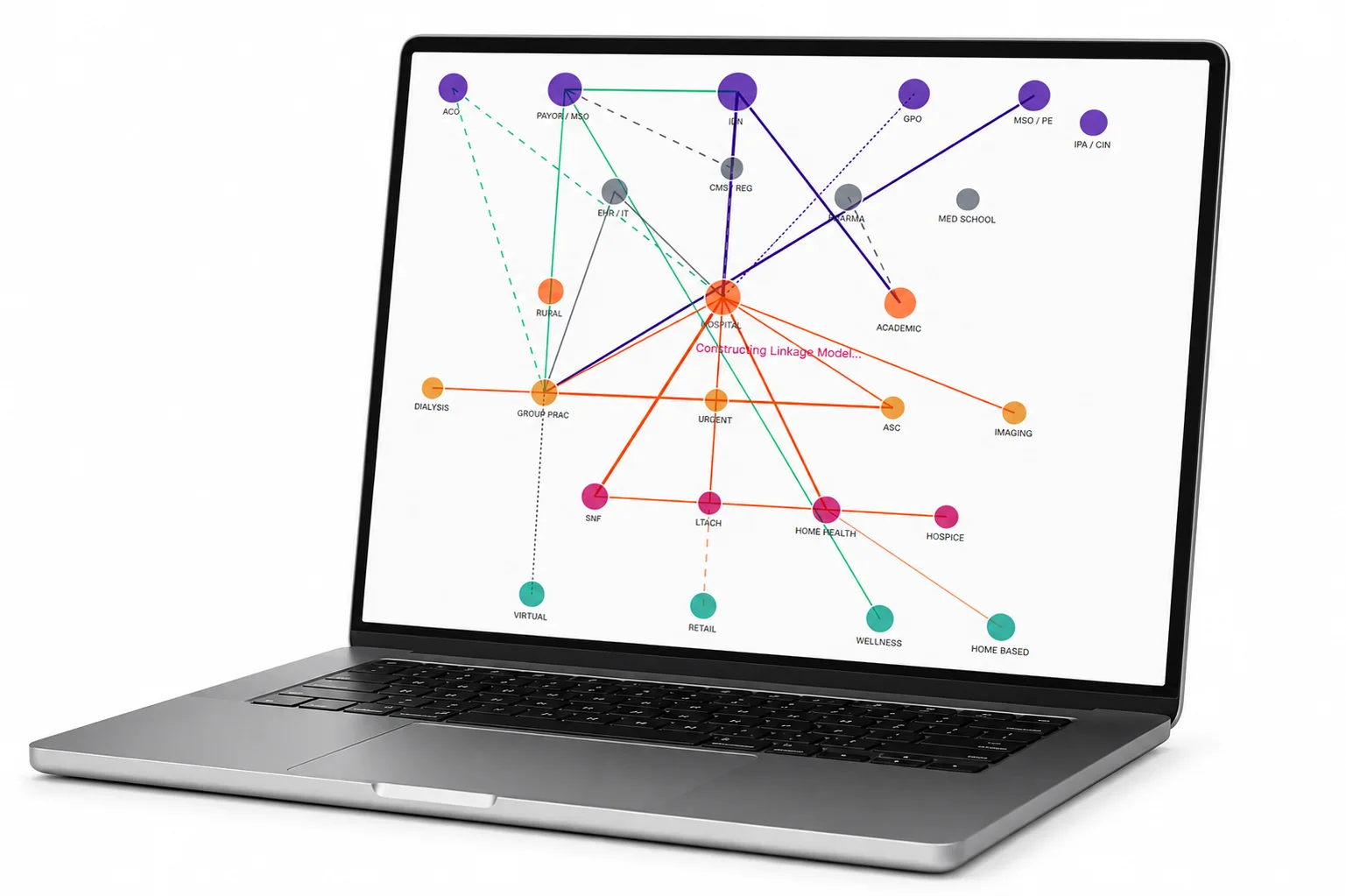
ACUTE CARE
WHERE HEALTHCARE BECOMES REAL & VISIBLE
If Layer 1 (Strategy, Capital & Risk) decides what can scale and Layer 2 (Data, Policy & Influence) decides what is acceptable, Layer 3 is where healthcare decisions are operationalized, and where hospital decision makers and frontline teams interact with solutions in real environments.
This is where patients are admitted, clinicians deliver critical care, and technologies are used under pressure. Most medical software programs are used here, but very few are decided here alone, even when validated by health system decision makers.
WHO OPERATES IN THIS LAYER?

1. HOSPITALS
They handle admissions, surgeries, and diagnostics. As testing grounds for electronic medical records software, they validate what works.

2. HEALTH SYSTEMS
Healthcare leadership uses systems to manage shared services and IT protocols across IDN decision maker contacts.

3. ACADEMIC MEDICAL CENTERS
These institutions combine patient care with teaching and become reference models for broader systems.

4. RURAL & SPECIALTY HOSPITALS
They deliver care in resource-limited environments and influence adoption signals.
THE ACUTE CARE PARADOX
THE MYTH
Many sellers believe that “if clinicians love it, the deal will close.”

LAYER 3 ROLE
- Clinicians validate value
- Operations test feasibility
- Provides proof for enterprise expansion
- Generates real-world signals often captured through healthcare intent data providers
THE REALITY
In reality, this layer is powerful but not autonomous, which is where most healthcare sales intelligence strategies fail.

THE REALITY
- Layer 1 decides scale
- Layer 2 decides legitimacy
- Success here does not guarantee system-wide adoption
HOW Intent.Health HELPS
We help you position strategically by mapping how hospitals connect to IDNs, combining healthcare decision intelligence with real-world usage signals.
Instead of relying on fragmented hospital sales intelligence or static health system database tools, we provide a unified B2B healthcare data platform that shows:
- 1. Who is using your product vs who is deciding (hospital decision maker data)
- 2. How influence flows across systems (healthcare GTM intelligence)
-
3. Where to engage the right stakeholders using verified
(health system contacts database and hospital c-suite contacts)