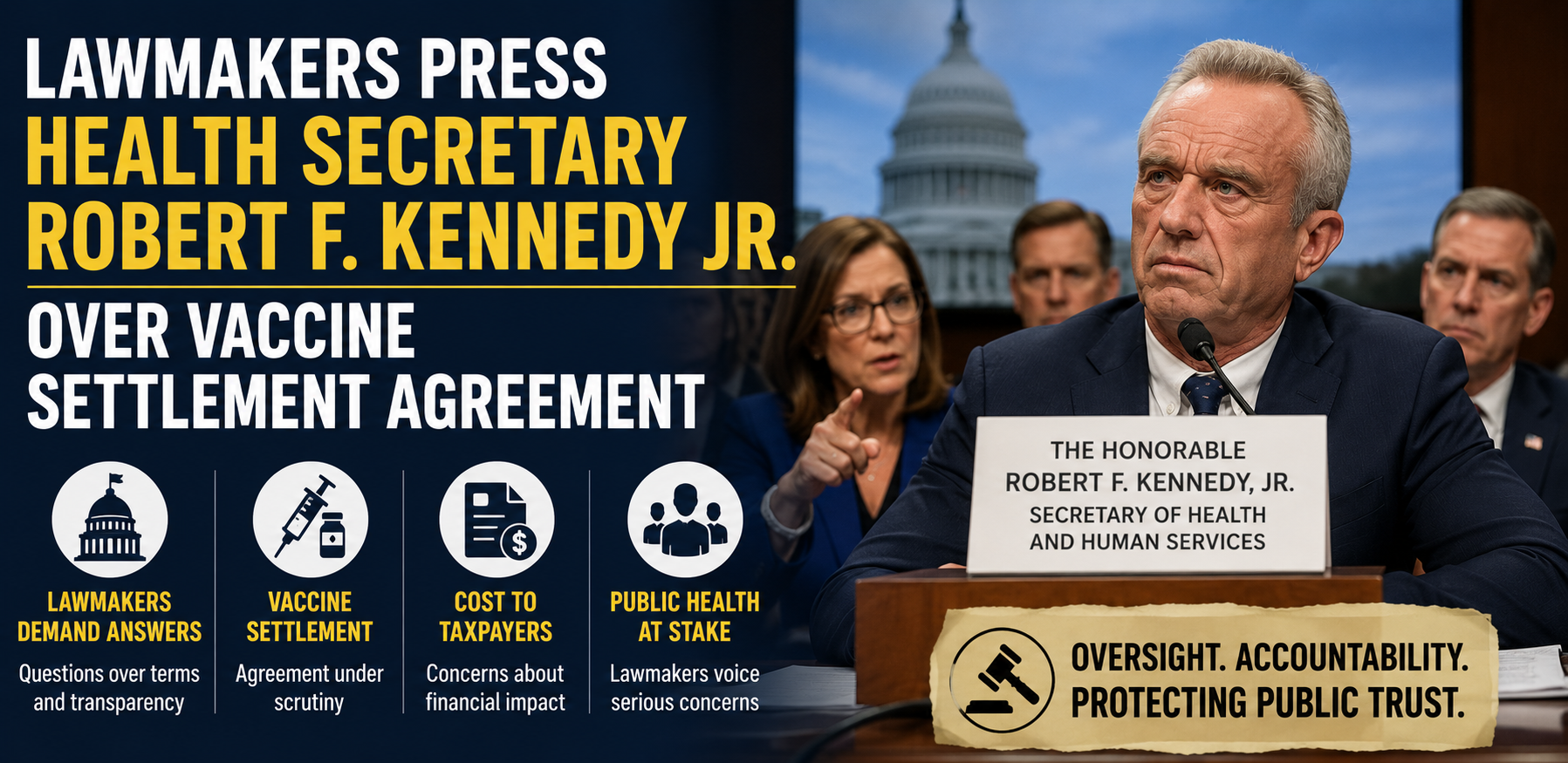
Lawmakers Press Health Secretary Robert F. Kennedy Jr. Over Vaccine Settlement Agreement
What's Happening
A group of U.S. lawmakers has called on Health and Human Services Secretary Robert F. Kennedy Jr. to provide additional information regarding a vaccine-related settlement agreement, raising concerns about transparency, oversight, and the potential implications for public health policy.
The lawmakers are seeking greater clarity on the circumstances surrounding the settlement, how the agreement was reached, and whether it could influence future vaccine regulation, public confidence, or ongoing immunisation programmes.
The request reflects continued congressional oversight of vaccine policy as public health agencies, healthcare providers, and policymakers work to maintain confidence in immunisation programmes while ensuring accountability in government decision-making.
Why Congressional Oversight Matters
Congress regularly reviews the actions of federal agencies to ensure government programmes operate transparently and in accordance with the law.
Lawmakers often request documents, briefings, or testimony when they believe additional information is needed about decisions that could affect public health, healthcare funding, or regulatory policy.
These oversight activities are designed to:
- Improve government transparency.
- Ensure accountability.
- Review agency decision-making.
- Assess potential policy impacts.
- Strengthen public confidence.
- Inform future legislation.
Healthcare policy is frequently the subject of congressional review because decisions made by federal agencies can influence patients, providers, manufacturers, insurers, and public health programmes nationwide.
Why Vaccine Policy Receives Close Attention
Vaccination remains one of the most significant public health interventions for preventing infectious diseases.
Federal agencies play an important role in evaluating vaccine safety, supporting immunisation programmes, monitoring adverse events, and communicating scientific evidence to healthcare professionals and the public.
Because vaccines affect millions of people each year, decisions involving vaccine regulation, funding, legal matters, or public policy often receive extensive attention from lawmakers, healthcare organisations, researchers, and patient advocacy groups.
Maintaining confidence in these programmes requires transparent decision-making and clear communication about how policies are developed.
The Importance of Transparency in Public Health
Public trust is essential for effective healthcare delivery.
Whether responding to disease outbreaks, approving new therapies, or managing national immunisation programmes, health agencies rely on public confidence to ensure recommendations are understood and followed.
Transparency helps by:
- Explaining how decisions are made.
- Clarifying scientific evidence.
- Addressing public concerns.
- Supporting accountability.
- Strengthening confidence in healthcare institutions.
- Encouraging informed public discussion.
When questions arise regarding significant policy decisions, oversight reviews provide an opportunity for agencies to explain their actions and respond to concerns.
Industry Impact
- Federal Health Agencies: Government health agencies may face increased requests for documentation, briefings, and policy reviews as congressional oversight continues.
- Healthcare Providers: Physicians, pharmacists, and public health professionals rely on clear guidance from federal agencies to support vaccination programmes and answer patient questions.
- Vaccine Manufacturers: Manufacturers continue monitoring policy developments that could influence vaccine regulation, public communication, reimbursement, or future immunisation strategies.
- Public Health Organisations: Public health agencies and advocacy groups remain focused on maintaining confidence in vaccination programmes through evidence-based communication and continued public education.
Looking Ahead
Congressional review of vaccine policy is expected to continue as lawmakers examine broader public health issues.
Future areas of focus may include:
- Vaccine policy oversight.
- Public health transparency.
- Regulatory decision-making.
- Immunisation programme funding.
- Public communication strategies.
- Scientific review processes.
- Federal healthcare policy.
While oversight hearings and information requests are a routine part of government, their findings can influence future legislation, agency procedures, and public health priorities.
Why This Matters
Public health decisions often involve balancing scientific evidence, regulatory responsibilities, legal considerations, and public communication.
As healthcare policy continues to evolve, maintaining transparency and accountability remains essential for preserving trust between government agencies, healthcare providers, and the public.
Congressional oversight helps ensure that major policy decisions receive appropriate review while providing opportunities to strengthen future public health governance.
Key Takeaways
- U.S. lawmakers have requested additional information from Health and Human Services Secretary Robert F. Kennedy Jr. regarding a vaccine-related settlement agreement.
- The request reflects ongoing congressional oversight of federal healthcare policy and public health decision-making.
- Transparency and accountability remain central to maintaining confidence in national immunisation programmes.
- Federal agencies, healthcare providers, and vaccine manufacturers continue monitoring policy developments that could influence future healthcare regulation.
- Oversight activities may contribute to future legislative, regulatory, and public health policy discussions.
What This Means for Healthcare Marketers
Continued congressional attention on vaccine policy highlights the importance of public health communication, regulatory engagement, and healthcare policy monitoring. Federal agencies, health systems, vaccine manufacturers, pharmaceutical companies, public health organisations, research institutions, and healthcare communications teams may increase investment in education, stakeholder engagement, policy analysis, and scientific communication. For healthcare marketers, organisations navigating vaccine policy, regulatory affairs, public health initiatives, and provider education represent high-intent opportunities for communications support, healthcare analytics, policy intelligence, and engagement solutions.