What's Happening
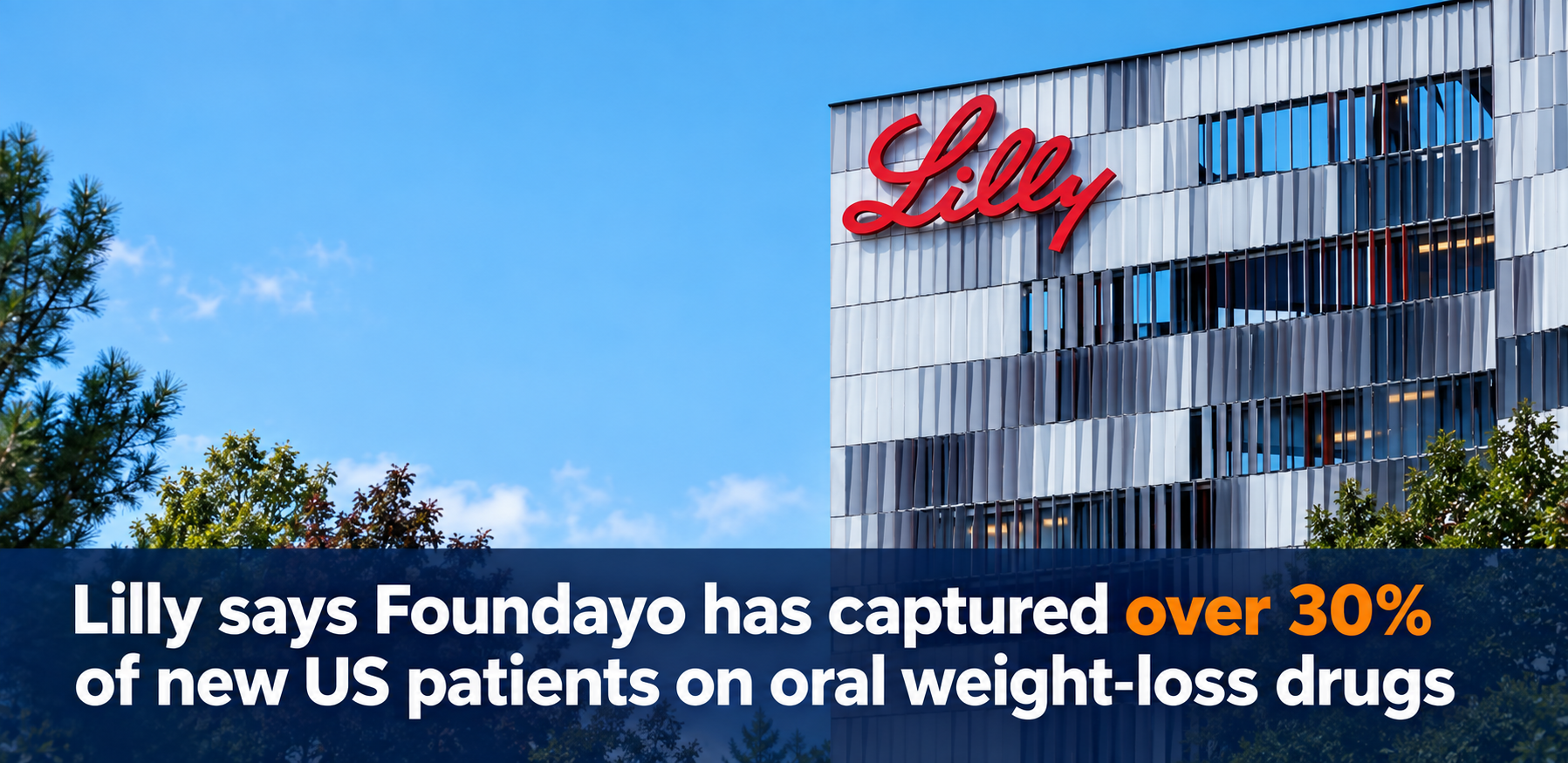
Eli Lilly said its oral weight-loss drug Foundayo has captured more than 30% of new U.S. patients starting oral obesity treatments, showing that the company is rapidly gaining ground against Danish rival Novo Nordisk in the emerging market for obesity pills. (Reuters)
The update is significant because Novo had initially established a dominant position with its Wegovy pill. In August, Novo CEO Mike Doustdar estimated that Wegovy had captured around 90% of the U.S. oral obesity market, despite competition from Lilly's Foundayo. (Reuters)
Lilly's latest figure suggests the competitive balance is changing quickly as more patients consider oral GLP-1 treatments instead of injectable drugs.
The Race Between Lilly and Novo
Oral treatments open a new segment of the market
The obesity-drug market has been dominated by injectable GLP-1 therapies such as Lilly's Zepbound and Novo's Wegovy.
Lilly says Foundayo has already secured more than 30% of new U.S. patients taking oral obesity medicines. That puts the company in a much stronger position than it appeared to be earlier in the year, when Novo's Wegovy pill had established a substantial lead. (Reuters)
The shift is being closely watched by investors because the success of oral treatments could influence how quickly the overall obesity-treatment market expands and how market share is divided between the two companies.
Why Oral Weight-Loss Drugs Matter
Pills could attract people who are reluctant to use injections
Although injectable GLP-1 drugs have become increasingly mainstream, an oral option removes the need for regular injections and could make obesity treatment more acceptable to some patients.
Oral drugs could also help address some supply challenges associated with injectable treatments, particularly as demand for obesity medicines continues to grow. (Reuters)
That gives oral therapies the potential to expand the number of people receiving pharmacological treatment for obesity rather than simply moving existing injectable patients from one product to another.
A Market That Could Reach More Than $100 Billion
The commercial opportunity is enormous
Novo said in January that it expects oral drugs to account for more than one-third of GLP-1 weight-loss treatment use by 2030.
Analysts expect the overall U.S. obesity-treatment market to exceed $100 billion annually by 2030. (Reuters)
That makes even a relatively small shift in market share financially meaningful.
For Lilly and Novo, the competition is therefore not simply about winning patients today. It is about establishing brand loyalty and treatment preferences in a market that could continue expanding dramatically over the next several years.
Lilly's Broader Obesity Strategy
Medicare obesity drug pilot drives new patient acquisition
Foundayo's growth comes alongside strong demand for Lilly's injectable obesity treatment Zepbound.
Lilly Executive Vice President Ilya Yuffa said at the Morgan Stanley healthcare conference that Zepbound has been particularly preferred by patients participating in the U.S. government's Medicare obesity drug pilot.
The program, launched in July, allows eligible beneficiaries to obtain weight-loss drugs for a $50 monthly copay. (Reuters)
According to Yuffa, between 60% and 70% of patients entering the program are new to obesity treatments.
That is important because it suggests government-supported access may be expanding the treated population rather than simply shifting existing GLP-1 users into a different payment channel.
The Medicare Opportunity
Lowering out-of-pocket costs expands the treated population
The federal obesity-drug pilot could become an important growth channel for Lilly and other manufacturers.
Medicare covers approximately 66 million people, primarily adults aged 65 and older as well as people with certain disabilities. (Reuters)
If a large share of participants are genuinely new to weight-loss medication, programs that lower patients' out-of-pocket costs could materially increase the number of people entering the obesity-treatment market.
For manufacturers, that creates an additional commercial opportunity beyond traditional employer insurance and self-pay channels.
Competition Is Also Increasing Outside the U.S.
Generic alternatives in international markets
Lilly is facing additional pressure internationally.
In India and Canada, generic versions of Novo's blockbuster obesity and diabetes drugs, Wegovy and Ozempic, are available at prices as much as 70% lower than the original products. (Reuters)
Rather than describing those launches purely as a threat, Lilly said the lower prices have helped expand the market.
Yuffa argued that while Lilly's market share may decline as cheaper alternatives become available, overall treatment volumes can continue to rise.
This illustrates an important dynamic in obesity care: competition can reduce prices and individual product share while simultaneously expanding the number of people receiving treatment.
Why This Matters for the Obesity Market
The competition between Lilly and Novo is evolving from a battle over injectable GLP-1 drugs into a much broader race covering different delivery methods, prices and patient segments.
Oral treatments could bring new patients into the market, particularly people who dislike injections.
At the same time, lower-cost alternatives in international markets could broaden access while putting pressure on branded manufacturers to defend both pricing and market share.
The combination of expanding demand, new formulations and growing competition means the obesity market is becoming less dependent on a small number of injectable blockbuster products.
Looking Ahead
Next steps for oral treatments and market growth
The next phase of the obesity-drug race will likely focus on how quickly oral treatments gain adoption and whether Lilly can continue closing the gap with Novo.
Foundayo's reported share of more than 30% among new U.S. oral-treatment patients is an early indication that the market may be more competitive than Novo's initial dominance suggested.
Meanwhile, Lilly's Zepbound remains an important part of the company's obesity portfolio, while government programs that lower patient costs could bring substantially more Americans into treatment.
The larger question is whether oral GLP-1 medicines will simply redistribute existing demand or significantly expand the total obesity-treatment market.
Key Takeaways
- Lilly says Foundayo has captured more than 30% of new U.S. patients starting oral obesity treatments.
- Novo previously estimated that its Wegovy pill held around 90% of the U.S. oral obesity market.
- Oral weight-loss drugs could attract patients who are unwilling or reluctant to use injectable therapies.
- Novo expects oral medicines to represent more than one-third of GLP-1 weight-loss use by 2030.
- Analysts expect the U.S. obesity-treatment market to surpass $100 billion annually by 2030.
- Lilly says 60% to 70% of participants in the U.S. Medicare obesity-drug pilot are new to weight-loss treatments.
- Generic competition is also growing internationally, particularly in India and Canada, with some products priced up to 70% lower.
- The obesity market is expanding through new products, lower prices, broader access and additional treatment formats. (Reuters)
What This Means for Healthcare Marketers
The obesity market is shifting from a two-product injectable race into a much broader competition involving oral therapies, injectables, affordability and access.
For healthcare marketers, patient acquisition may increasingly depend on identifying not just who is already using GLP-1 medicines, but who is newly considering treatment. The growth of oral options also creates new signals around treatment intent, price sensitivity and preferences for convenience.
The Medicare pilot is another important signal. As coverage expands and out-of-pocket costs fall, previously untreated populations may become commercially relevant prospects for manufacturers, providers, pharmacies and other healthcare organizations.