
Lung Transplant May Offer a Lifesaving Option for Select Patients with Advanced Lung Cancer, Study Finds
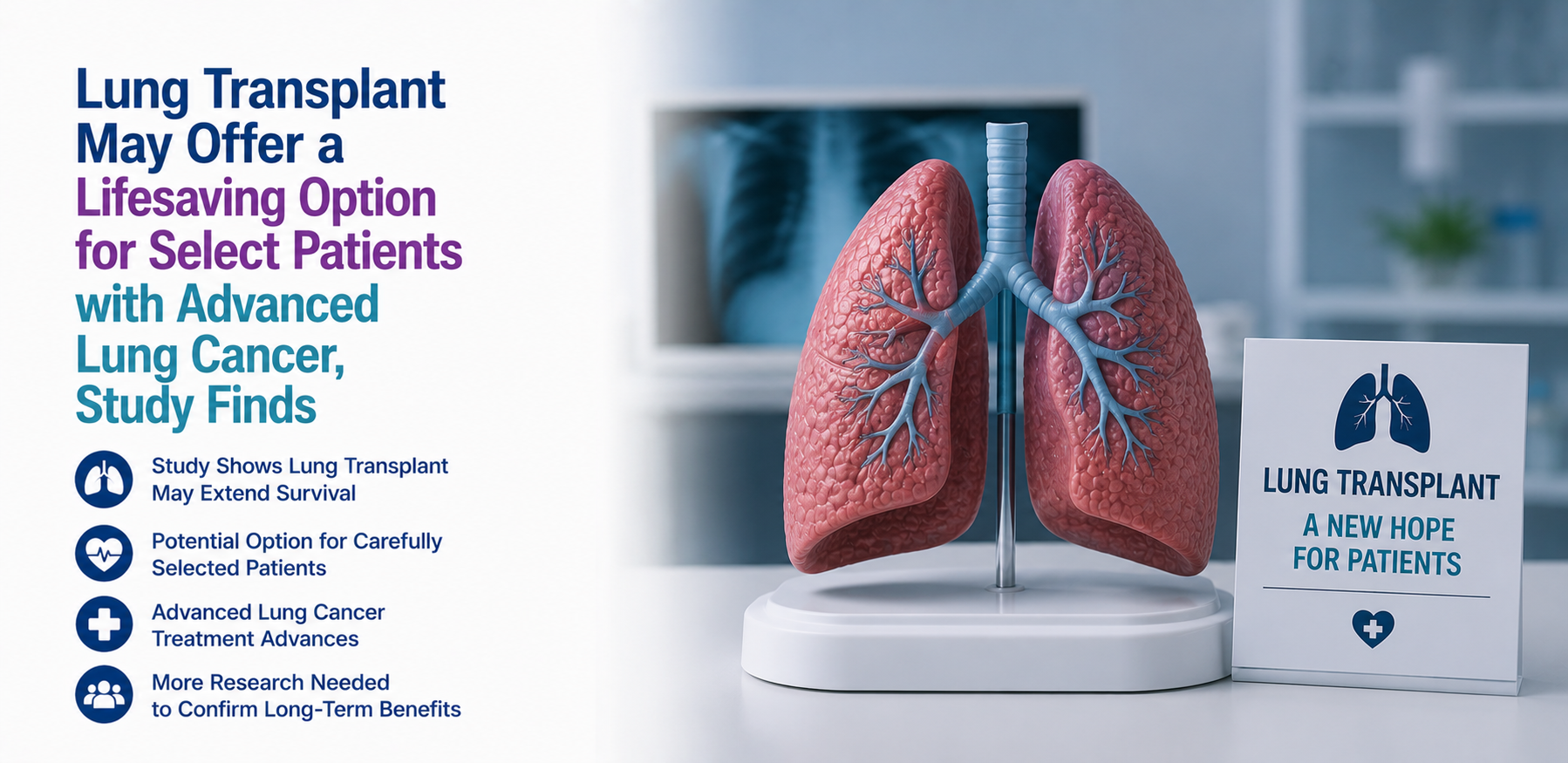
What's Happening
A new study suggests that lung transplantation may significantly improve survival for a carefully selected group of patients with advanced lung cancer, challenging the long-held belief that people with advanced disease are generally not candidates for organ transplantation. Researchers found that some patients with cancer confined to the lungs experienced encouraging long-term outcomes after receiving donor lungs. (reuters.com)
The findings focus on patients with a rare form of lung cancer that remains confined to the lungs but cannot be removed surgically through conventional methods. For these individuals, replacing both diseased lungs may eliminate the cancer while restoring lung function. Although the approach is appropriate for only a small number of patients, researchers believe it could provide a new treatment option for individuals who previously had few alternatives.
Why Lung Transplants Are Rarely Used for Cancer
Lung transplantation has traditionally not been considered an appropriate treatment for most patients with lung cancer. There are several reasons for this:
- Cancer may have already spread beyond the lungs.
- Anti-rejection medications suppress the immune system, potentially allowing remaining cancer cells to grow.
- Donor lungs are extremely limited and must be allocated carefully.
- The risk of cancer recurrence has historically been considered too high.
Because of these concerns, lung transplants have generally been reserved for patients with severe non-cancerous lung diseases such as pulmonary fibrosis, chronic obstructive pulmonary disease (COPD), cystic fibrosis, and pulmonary hypertension. The new study suggests there may be carefully selected exceptions to this long-standing practice.
Which Patients May Benefit?
The research focused on patients with advanced lung cancer that remained confined entirely to the lungs without spreading to other organs. These patients often have:
- Extensive disease affecting both lungs.
- Tumors that cannot be surgically removed.
- No evidence of cancer elsewhere in the body.
- Good overall health apart from their lung disease.
For this very specific group, replacing both lungs may remove all visible cancer while allowing patients to regain normal breathing function. Researchers emphasize that this approach is not suitable for most lung cancer patients and requires extensive evaluation by specialized transplant teams.
What Did the Study Find?
Researchers reported that carefully selected patients who underwent double-lung transplantation experienced encouraging outcomes. The study found:
- Improved long-term survival.
- Low rates of cancer recurrence in selected patients.
- Successful recovery following transplantation.
- Better quality of life for survivors.
The favorable outcomes were achieved through strict patient selection and comprehensive screening to ensure the cancer had not spread beyond the lungs before transplantation. Although additional research is needed, the results suggest that lung transplantation may become an option for a small subset of patients previously considered untreatable.
Challenges of Lung Transplantation
Lung transplantation remains one of the most complex procedures in modern medicine. Patients require careful donor matching, major surgery, lifelong anti-rejection medication, and regular medical monitoring, including frequent follow-up visits. Potential complications include organ rejection, serious infections, medication side effects, and reduced immune function. Because donor lungs remain in limited supply, transplant centers must carefully determine which patients are most likely to benefit.
How Lung Cancer Treatment Is Changing
Treatment for lung cancer has evolved dramatically over the past decade. Many patients now benefit from targeted therapies, immunotherapy, precision medicine, minimally invasive surgery, advanced radiation techniques, and personalized treatment plans. The new research suggests transplantation could eventually become another highly specialized option for a small group of patients whose disease does not fit traditional treatment pathways. Rather than replacing existing treatments, transplantation would complement the growing range of personalized approaches available in modern oncology.
Why Organ Allocation Matters
Every year, more patients need organ transplants than there are donor organs available. Because of this shortage, transplant programs must carefully balance medical urgency, likelihood of long-term survival, ethical allocation of donated organs, and potential benefit for each recipient. If lung transplantation becomes more widely accepted for selected cancer patients, transplant programs will continue evaluating how best to incorporate these patients into existing organ allocation systems.
Industry Impact
- Transplant Centers: The findings may encourage further research into expanding transplant eligibility for highly selected cancer patients.
- Oncologists: Cancer specialists may consider transplantation as a potential option for rare cases involving lung-confined advanced disease.
- Researchers: The study opens new opportunities to investigate how transplantation and oncology can work together to improve patient outcomes.
- Patients: Although applicable to only a small number of individuals, the research offers hope for patients with advanced lung cancer who currently have limited treatment options.
Why This Matters
The study challenges a long-standing assumption in transplant medicine, that advanced lung cancer automatically excludes patients from receiving lung transplants. By identifying a carefully selected group of patients who achieved favorable outcomes, researchers have opened the door to a potential new treatment strategy for one of the world's deadliest cancers. The findings also demonstrate the growing role of personalized medicine in oncology. Rather than treating all advanced lung cancers the same way, physicians are increasingly tailoring treatment based on tumor characteristics, disease location, and individual patient factors. While lung transplantation will likely remain appropriate for only a small number of patients, the research highlights how advances in both transplant medicine and cancer care continue expanding treatment possibilities.
Key Takeaways
- A new study suggests lung transplantation may significantly improve survival for carefully selected patients with advanced lung cancer confined to the lungs.
- Traditionally, lung cancer has been considered a contraindication for lung transplantation because of recurrence concerns.
- Researchers reported encouraging long-term survival and low recurrence rates in selected patients.
- The approach is appropriate only for a small subset of patients after extensive evaluation.
- The findings may reshape how transplant specialists and oncologists approach certain advanced lung cancer cases.
What This Means for Healthcare Marketers
The study highlights the continued evolution of personalized medicine beyond drug development. Increasingly, healthcare innovation involves identifying highly specific patient populations that may benefit from treatment approaches previously considered inappropriate. Advances in diagnostics, imaging, multidisciplinary care, and patient selection are enabling clinicians to reconsider established treatment paradigms for complex diseases.
For healthcare marketers, the findings demonstrate the growing importance of precision patient selection in modern oncology. As treatments become more individualized, organizations must communicate not only clinical efficacy but also which patients are most likely to benefit. Educational initiatives aimed at transplant specialists, oncologists, and multidisciplinary care teams will become increasingly important as evidence supporting specialized treatment pathways continues to emerge.
For healthcare intelligence teams, this research illustrates how innovation often comes from re-evaluating existing medical procedures rather than developing entirely new therapies. Monitoring advances in transplant medicine, oncology, precision diagnostics, and multidisciplinary care can help organizations identify emerging opportunities that may influence future standards of care for patients with complex diseases.