What's Happening
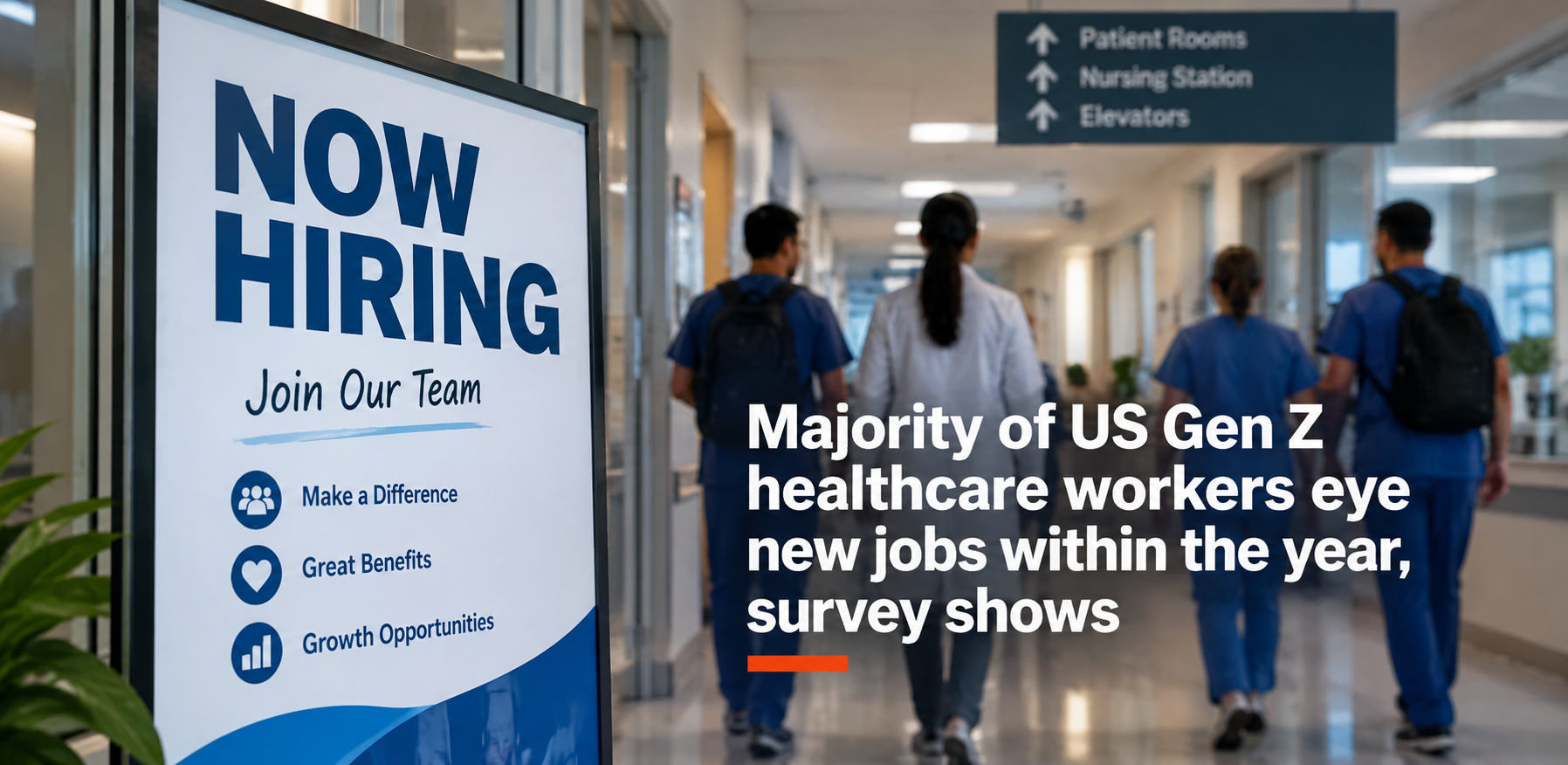
Approximately 70% of Generation Z healthcare workers in the United States expect to explore a new job within the coming year, compounding retention pressures for employers navigating a projected shortage of nearly 500,000 workers by 2038. (Investing.com)
Despite high job-exploration rates, 65% of these young professionals express a desire to remain with a single employer for five years or more, signaling a demand for career mobility and professional growth rather than outright industry abandonment. (Investing.com)
The Gen Z Retention Paradox
Balancing a strong desire for career stability with active exploration of new roles
Younger healthcare employees seek both security and rapid advancement, meaning job-seeking behavior often reflects a lack of perceived internal progress rather than a rejection of long-term employment. (The Harris Poll)
Career Growth Is a Major Driver
Professional stagnation identified as a primary catalyst for potential turnover
While nearly half of surveyed employers cite inadequate career growth or training as a leading reason staff leave, only about one in four healthcare workers trust that their employer will invest in their future. (Investing.com)
Younger Workers Are Not Necessarily Rejecting Long-Term Employment
Desire for multi-year tenure depends heavily on viable advancement pathways
When organizations fail to offer clear opportunities for skill development and leadership, employees look elsewhere while still retaining long-term commitment in principle. (Investing.com)
Turnover Intent Is High Across Healthcare
Workforce mobility extends well beyond the youngest generational cohort
With 59% of healthcare workers across all age groups planning to seek new roles within the year, organizations face a broad re-assessment of employment expectations sector-wide. (Investing.com)
The Workforce Shortage Makes Retention More Important
Impending staffing gaps heighten the necessity of institutional preservation
Addressing a projected deficit of 500,000 workers by 2038 requires stabilizing current staff to protect institutional knowledge, patient relationships, and operational continuity. (Investing.com)
Training Is Becoming a Retention Strategy
Professional development evolves into a vital workforce planning instrument
Providing clear learning pathways equips employees to acquire new responsibilities, addressing both retention goals and internal skill shortages simultaneously.
There Is a Trust Gap Between Employees and Employers
Low confidence in organizational investment undermines educational benefit offerings
Merely providing training resources is insufficient if workers do not see a direct connection between those programs and meaningful career advancement within the company.
Employers May Be Underestimating Turnover
Perception gaps complicate proactive workforce planning
While workers report a 59% overall turnover intent, employers estimate those figures closer to 39%, creating a dangerous lag in responding to emerging retention risks. (medicaleconomics.com)
AI Skills Are Still Important, but the Signal Is Changing
Technological integration shifts from specialized asset to baseline competency
Employers rating AI skills as critical dropped from 89% to 79% in 2026, indicating a maturation phase where artificial intelligence becomes standard across healthcare workflows. (Investing.com)
AI Adoption Can Also Affect Employee Experience
Automation must balance productivity gains with realistic workload expectations
If digital tools streamline administrative burdens only to elevate output demands, staff may not experience true relief from burnout and workplace friction.
The Healthcare Workforce Is Changing
Multiple converging pressures reshape clinical and administrative environments
Sector leaders must concurrently manage an aging workforce approaching retirement, rising patient demand, shifting generational expectations, and rapid technological adoption.
Why Gen Z Matters to Healthcare Employers
New market entrants carry high onboarding costs and critical replacement challenges
High early-career turnover among specialized clinical and administrative staff places a heavy financial and operational burden on healthcare institutions.
What Healthcare Employers Are Being Asked to Provide
Holistic support models combine transparency, training, and technological enablement
Retention strategies increasingly require clear career roadmaps, structured professional development, workplace stability, and relevant digital upskilling.
The Importance of Internal Mobility
Facilitating internal transitions preserves institutional knowledge and boosts retention
Creating credible pathways for workers to advance internally prevents them from having to change employers to secure professional growth.
What the Survey Says About Employee Priorities
Complex employee expectations demand multifaceted organizational responses
The convergence of a 65% desire for long-term tenure with high job exploration highlights that workers want stability matched with visible organizational investment. (Investing.com)
Why This Matters
High turnover intent among Gen Z and general healthcare staff forces organizations to look beyond compensation, emphasizing professional pathways and trust-building to stabilize workforces amid looming shortages. (Investing.com)
Looking Ahead
Adapting recruitment, retention, and training models to future demands
As care demand climbs and technology transforms daily responsibilities, organizations that successfully link training to career progression will best navigate workforce instability.
Key Takeaways
- 70% of U.S. Gen Z healthcare workers expect to explore new jobs within the year. (Investing.com)
- 65% express a desire to stay with one employer for five years or more. (Investing.com)
- 59% of healthcare workers across all age groups plan to seek a new role. (Investing.com)
- Nearly half of employers note lack of career growth or training as a top exit driver. (Investing.com)
- Only about 25% of employees trust their employer to invest in their future. (Investing.com)
- U.S. healthcare faces a projected deficit of nearly 500,000 workers by 2038. (Investing.com)
- Employers rating AI skills critical shifted from 89% to 79% in 2026. (Investing.com)
- Survey conducted between June 12 and July 1, 2026, comprising 1,514 employees and 304 employers. (Investing.com)
What This Means for Healthcare Marketers
For healthcare marketers, this workforce trend matters because employee capacity directly affects healthcare delivery, patient experience and organizational growth.
Hospitals, health systems, healthcare technology companies and staffing organizations can use workforce signals to understand where demand for recruitment, training, employee benefits and workforce-management solutions is increasing.
The important signals extend beyond job openings. Employee turnover intent, career-development gaps, training investment, internal mobility and changing technology requirements can reveal where healthcare organizations are likely to face workforce pressure next.
For companies selling technology or services into healthcare organizations, these signals can also indicate when a workforce problem is becoming a higher-priority buying problem.