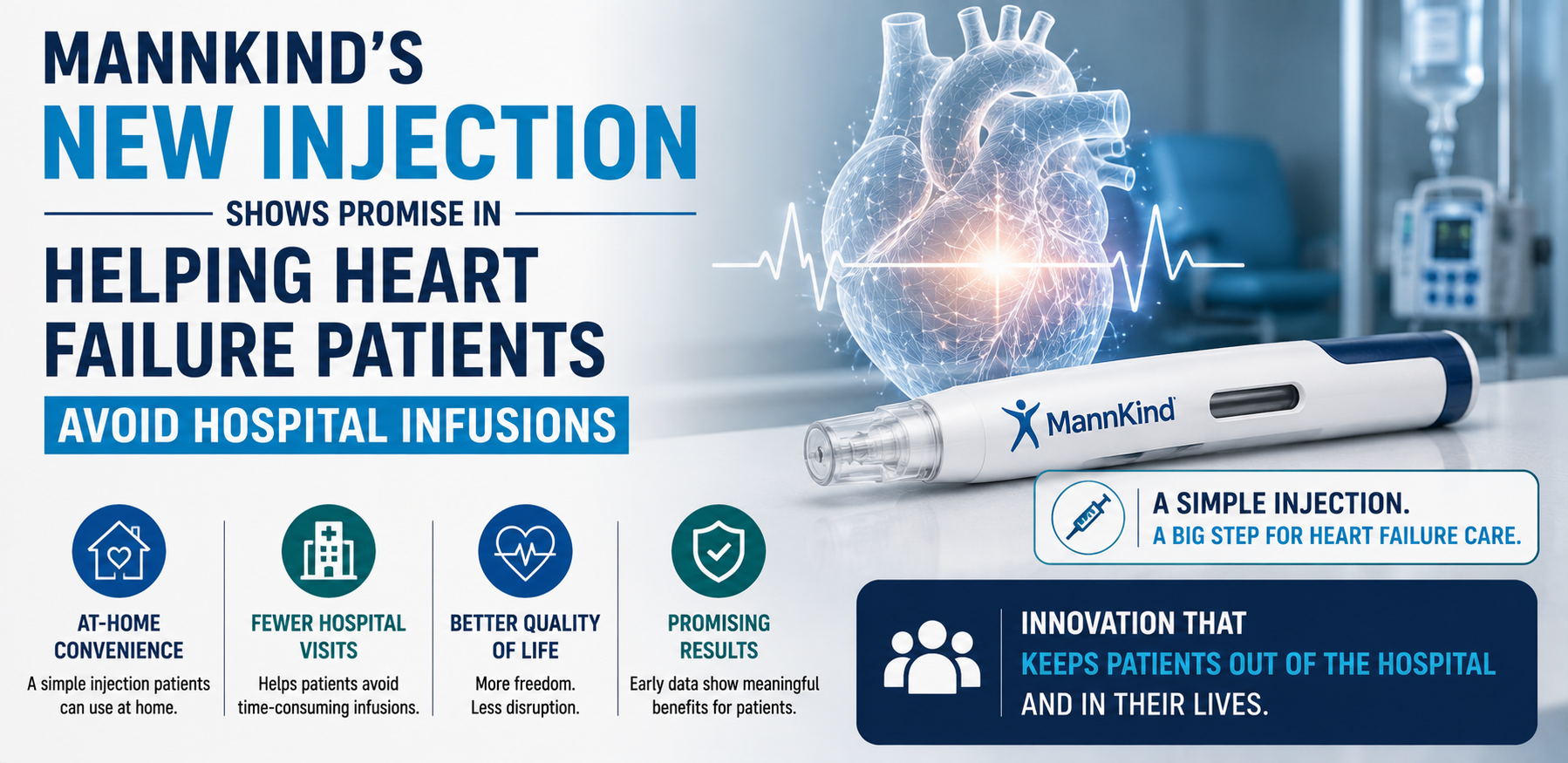
MannKind's New Injection Shows Promise in Helping Heart Failure Patients Avoid Hospital Infusions
What's Happening
MannKind Corporation has announced positive clinical trial results for an investigational injection designed to help heart failure patients avoid frequent hospital-based intravenous treatments.
According to the study, the therapy enabled many patients to receive treatment through a simple injection instead of requiring intravenous infusions delivered in hospitals or infusion centres. If approved, the treatment could make heart failure management more convenient while reducing the burden on both patients and healthcare providers.
Heart failure affects millions of people worldwide and remains one of the leading causes of hospital admissions. As healthcare systems increasingly shift toward outpatient and home-based care, therapies that reduce the need for hospital visits are receiving growing attention.
Understanding Heart Failure
Heart failure is a chronic condition in which the heart cannot pump blood efficiently enough to meet the body's needs.
It does not mean the heart has stopped working. Instead, the heart becomes weaker or stiffer over time, making it more difficult to circulate blood effectively.
Common causes include:
- Coronary artery disease.
- High blood pressure.
- Previous heart attacks.
- Diabetes.
- Heart valve disorders.
- Certain genetic conditions.
People living with heart failure often experience:
- Shortness of breath.
- Fatigue.
- Swelling in the legs and ankles.
- Difficulty exercising.
- Fluid retention.
- Frequent hospitalisations.
Although there is no cure for most forms of heart failure, modern treatments can significantly improve symptoms, reduce complications, and extend survival.
Why Avoiding Hospital Infusions Matters
Many patients with worsening heart failure require intravenous medications that must be administered in hospitals or specialised infusion centres.
While these treatments can be highly effective, they also present several challenges.
Patients often need to:
- Travel to healthcare facilities.
- Spend several hours receiving treatment.
- Coordinate transportation and caregivers.
- Miss work or other daily activities.
- Face repeated hospital visits over time.
For older adults and individuals with limited mobility, these visits can become physically and emotionally demanding.
A treatment that can be delivered through an injection instead of an intravenous infusion may offer greater convenience while helping patients receive care in outpatient clinics or potentially even at home in the future.
The Shift Toward More Convenient Care
Healthcare delivery has steadily moved beyond the traditional hospital setting.
Advances in medicine now allow many treatments that once required inpatient admission to be delivered safely in outpatient clinics, physician offices, or patients' homes.
This shift offers several benefits:
- Greater convenience for patients.
- Reduced healthcare costs.
- Lower pressure on hospitals.
- Improved access to treatment.
- Better patient adherence.
- Enhanced quality of life.
For chronic conditions such as heart failure, reducing unnecessary hospital visits has become an important objective for healthcare providers and health systems alike.
Industry Impact
- Pharmaceutical Companies: Drug developers continue investing in therapies that simplify treatment while maintaining clinical effectiveness. Products that reduce hospital dependence may become increasingly attractive as healthcare systems prioritise outpatient care.
- Healthcare Providers: Cardiologists and heart failure specialists continue seeking treatments that improve disease management while reducing avoidable hospital admissions and emergency department visits.
- Health Systems: Hospitals are expanding outpatient programmes that allow patients to receive advanced therapies in lower-cost settings without compromising quality of care.
- Patients: Patients may benefit from greater flexibility, fewer hospital visits, reduced travel, and treatment options that fit more easily into everyday life.
Looking Ahead
While the early results are encouraging, additional clinical development and regulatory review will determine whether the therapy ultimately becomes available to patients.
Future areas of focus include:
- Larger clinical studies.
- Long-term safety evaluation.
- Regulatory review.
- Real-world effectiveness.
- Integration into heart failure treatment guidelines.
- Expanded outpatient care programmes.
- Patient access and reimbursement.
If future studies continue to demonstrate positive outcomes, injectable therapies could become an increasingly important part of heart failure management.
Why This Matters
Heart failure remains one of the most common chronic diseases treated by healthcare providers and accounts for significant healthcare spending each year.
Innovations that make treatment more accessible while reducing hospital dependence have the potential to improve both patient experience and healthcare efficiency.
As healthcare increasingly moves toward outpatient and home-based care, therapies that simplify treatment without compromising effectiveness are expected to play a growing role in chronic disease management.
The development also reflects a broader trend across healthcare, where convenience, accessibility, and patient-centred care are becoming just as important as clinical outcomes.
Key Takeaways
- MannKind reported positive clinical results for an investigational heart failure injection.
- The therapy may help some patients avoid hospital-based intravenous infusions.
- More convenient treatment options could improve patient experience and reduce healthcare system burden.
- The development supports the broader shift toward outpatient and home-based care.
- Additional clinical studies and regulatory review will determine the therapy's future availability.
What This Means for Healthcare Marketers
Positive clinical data in heart failure continues to drive investment across cardiovascular care, outpatient treatment, remote patient management, and chronic disease programmes. Health systems, cardiology practices, specialty pharmacies, infusion providers, pharmaceutical companies, payer organisations, and digital health platforms supporting cardiovascular care may continue expanding services that reduce hospital utilisation. For healthcare marketers, organisations investing in heart failure management, ambulatory care, care coordination, patient engagement, and innovative drug delivery technologies represent high-intent opportunities for partnerships, provider education, clinical support services, and commercial growth.