Mead Johnson Wins New Trial After Court Reverses $60 Million Premature Infant Formula Verdict
What's Happening
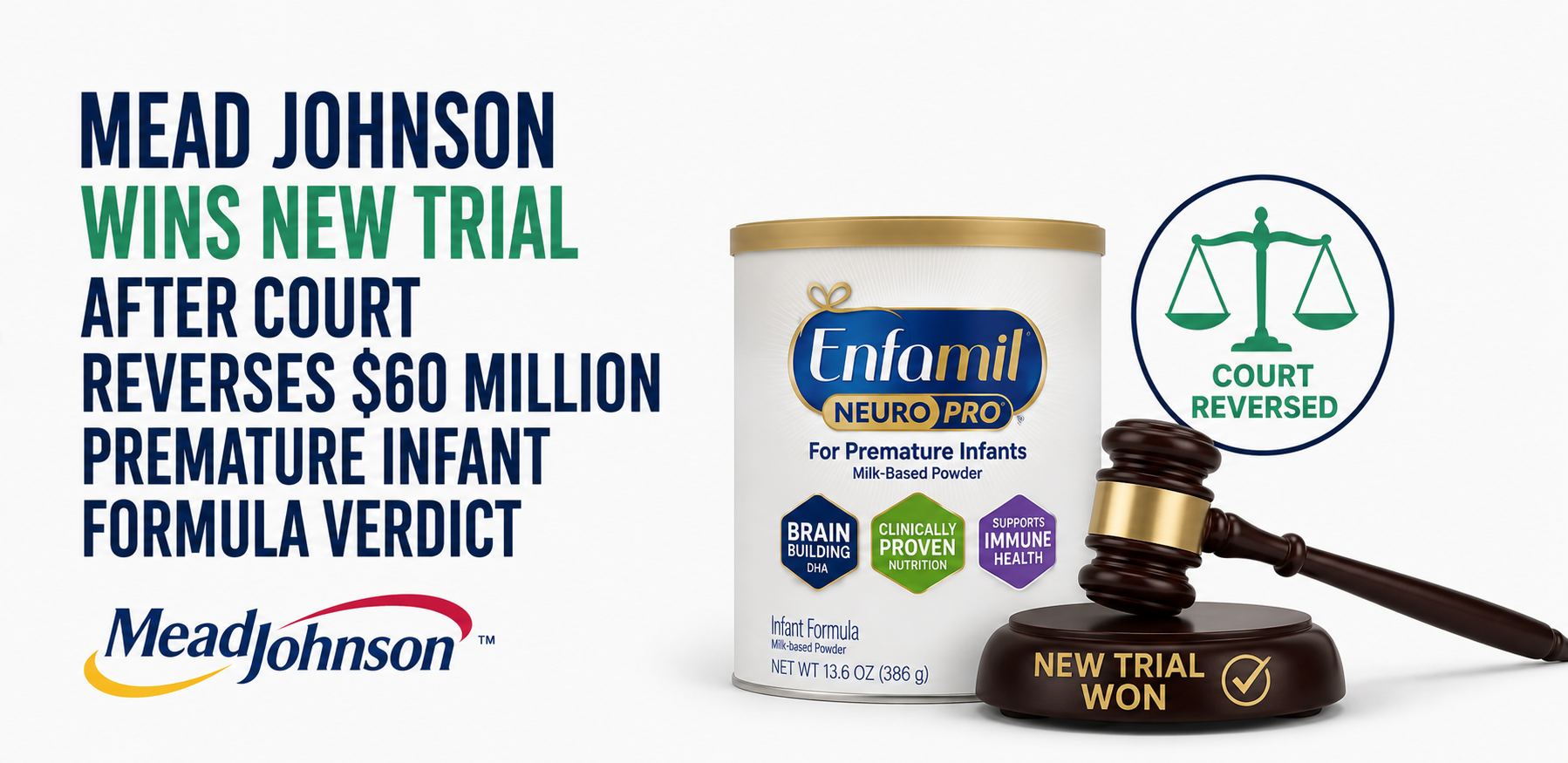
A court overturned a $60 million jury verdict against Mead Johnson and ordered a new trial in a closely watched lawsuit involving infant formula and premature babies.
The original case involved allegations that Mead Johnson's formula products increased the risk of necrotizing enterocolitis (NEC), a serious intestinal disease that primarily affects premature infants.
A jury had previously awarded $60 million to the family involved in the lawsuit. However, the appeals court concluded that legal errors occurred during the trial process and determined that the case should be heard again.
Importantly, the ruling does not mean Mead Johnson has won the case or that the claims have been dismissed. Instead, it means the court believes a new trial is necessary before a final decision can be reached.
The decision is significant because hundreds of similar lawsuits involving infant formula manufacturers are currently moving through courts across the United States.
Understanding NEC and Why These Lawsuits Exist
Necrotizing enterocolitis, commonly known as NEC, is one of the most serious medical conditions affecting premature infants.
The disease causes inflammation and damage to intestinal tissue. In severe cases, parts of the intestine can die, leading to life-threatening complications.
Although NEC has been studied for decades, doctors still do not fully understand why some premature infants develop the condition while others do not.
Researchers have identified several risk factors, including:
- Premature birth
- Low birth weight
- Immature digestive systems
- Feeding practices
- Certain medical complications
The lawsuits focus on whether cow's milk-based formula products may increase the risk of NEC in some premature infants compared with human breast milk.
Families bringing lawsuits argue that manufacturers failed to adequately warn healthcare providers and parents about these potential risks.
Formula manufacturers strongly dispute those claims and maintain that their products are supported by scientific evidence and have been used safely for many years.
Why This Case Matters Beyond One Family
The ruling is important because it affects much more than a single lawsuit.
Mead Johnson and Abbott Laboratories face hundreds of similar claims involving premature infant formula.
As these cases move through the legal system, courts are helping define:
- What scientific evidence is admissible
- How juries should evaluate risk
- What manufacturers are required to disclose
- How liability should be determined
Every major ruling influences how future cases may be argued.
Investors, hospitals, healthcare providers, insurers, and manufacturers are all closely monitoring the litigation because the financial exposure could be substantial if large numbers of cases result in verdicts against formula companies.
The Scientific Debate
One reason these lawsuits have become so complicated is that the science itself remains heavily debated.
Most experts agree that breast milk is generally associated with lower rates of NEC in premature infants.
However, the legal cases focus on a different question:
Did formula manufacturers provide adequate warnings about the potential risks?
Plaintiffs argue that stronger warnings should have been provided.
Manufacturers argue that scientific evidence does not support the allegations being made in the lawsuits and that healthcare providers already understand the risks associated with feeding premature infants.
As a result, many of these cases become battles between competing medical experts rather than straightforward product-defect claims.
Potential Impact on Hospitals and Neonatal Care
The litigation is receiving significant attention from hospitals because neonatal intensive care units frequently care for premature infants who require specialized nutrition.
Healthcare providers continuously evaluate feeding strategies based on:
- Medical evidence
- Clinical guidelines
- Patient needs
- Product availability
While the lawsuits do not change current medical practices overnight, they have increased discussion around feeding protocols for premature infants.
Many hospitals are reviewing nutrition policies and monitoring emerging research more closely as the litigation continues.
Industry Impact
Formula Manufacturers: Companies face ongoing legal risks and potential financial liabilities as hundreds of cases move through the courts.
Hospitals and NICUs: Healthcare providers may continue reviewing feeding protocols and risk-management practices.
Investors: Large verdicts and ongoing litigation can affect company valuations and future financial forecasts.
Families: The lawsuits continue drawing attention to the risks faced by premature infants and the importance of informed healthcare decisions.
Key Takeaways
- A court overturned a $60 million verdict against Mead Johnson and ordered a new trial.
- The case involves allegations linking premature infant formula to NEC.
- The ruling does not end the litigation or determine who is right.
- Hundreds of similar lawsuits remain active across the United States.
- The outcome could influence future infant-formula litigation nationwide.
What This Means for Healthcare Marketers
This story demonstrates how legal and scientific debates can quickly become major reputation-management challenges for healthcare companies.
For healthcare marketers, the case highlights the importance of evidence-based communication, particularly when products are used in vulnerable patient populations.
Manufacturers operating in highly regulated healthcare markets increasingly face scrutiny not only from regulators but also from courts, healthcare providers, patient advocacy groups, and the public.
The litigation also underscores the growing importance of trust in healthcare branding. Even when scientific questions remain unresolved, public perception can significantly influence purchasing decisions, provider relationships, and long-term brand reputation.
Healthcare marketers should pay close attention to how companies communicate risk, safety, clinical evidence, and transparency. As healthcare products become more complex and public scrutiny increases, trust and credibility often become just as important as the products themselves.