Single Measles Outbreak Can Cost Millions of Dollars, Study Finds
What's Happening
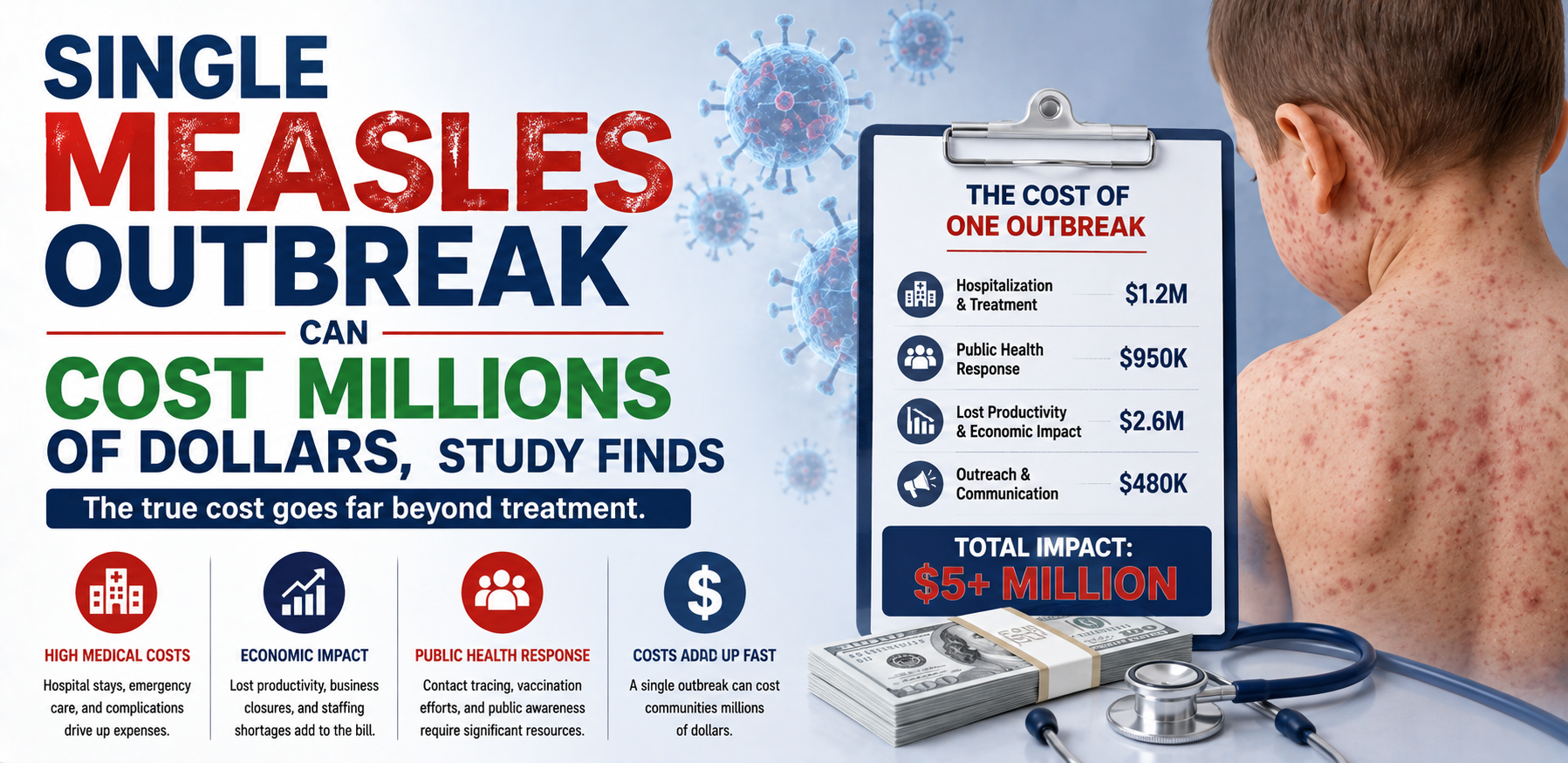
A new U.S. study has found that responding to a single measles outbreak can cost millions of dollars, placing a significant financial burden on public health agencies and healthcare systems.
The research estimates that outbreak response efforts require substantial spending on case investigations, contact tracing, laboratory testing, vaccination campaigns, public communication, and medical care. Even relatively small outbreaks can consume considerable public health resources because measles is one of the most contagious infectious diseases.
The findings highlight the economic consequences of declining vaccination rates and reinforce the importance of maintaining high immunization coverage to prevent future outbreaks.
Understanding Measles
Measles is a highly contagious viral disease that spreads through the air when an infected person coughs, sneezes, or breathes.
Symptoms typically include:
- High fever.
- Cough.
- Runny nose.
- Red, watery eyes.
- A characteristic red skin rash.
Although many people recover, measles can lead to serious complications such as pneumonia, brain inflammation (encephalitis), hearing loss, and death, particularly among young children and individuals with weakened immune systems.
The disease is largely preventable through the measles, mumps, and rubella (MMR) vaccine.
Why Outbreaks Are So Expensive
Managing a measles outbreak requires a coordinated response involving multiple healthcare and public health organizations.
Major costs include:
- Identifying and isolating infected individuals.
- Contact tracing.
- Laboratory testing.
- Emergency vaccination clinics.
- Public health investigations.
- Healthcare treatment.
- Public education and communication.
Healthcare facilities may also incur additional expenses from infection control measures, staff monitoring, and temporary disruptions to normal operations.
Industry Impact
- Public Health Agencies: The study demonstrates the significant financial and operational burden outbreaks place on local and state health departments responsible for disease control.
- Healthcare Providers: Hospitals and clinics must dedicate additional staff, isolation facilities, and infection prevention resources during measles outbreaks.
- Health Insurers: Preventable outbreaks can increase healthcare spending through emergency care, hospitalizations, laboratory testing, and vaccination efforts.
- Communities: Maintaining high vaccination coverage remains one of the most effective ways to reduce both the health and economic impact of measles outbreaks.
Looking Ahead
Public health experts continue encouraging routine childhood immunization and community vaccination programs to prevent future outbreaks.
Healthcare organizations are also expected to strengthen disease surveillance, improve vaccination outreach, and enhance rapid response capabilities to contain outbreaks more efficiently.
Continued investment in immunization programs could significantly reduce both healthcare costs and disease transmission.
Why This Matters
Measles was once declared eliminated in the United States, but declining vaccination rates have increased the risk of new outbreaks.
Beyond the serious health risks, the study demonstrates that preventable infectious disease outbreaks can create substantial financial strain for healthcare systems and public health agencies.
The findings reinforce that vaccination remains one of the most cost-effective public health interventions available.
Key Takeaways
- A U.S. study estimates that responding to a single measles outbreak can cost millions of dollars.
- Outbreak response requires extensive spending on contact tracing, laboratory testing, vaccination, and public health investigations.
- Measles remains one of the world's most contagious infectious diseases despite being vaccine-preventable.
- High vaccination coverage remains the most effective way to prevent outbreaks and reduce healthcare costs.
- The study highlights both the public health and economic value of routine immunization.
What This Means for Healthcare Marketers
The study highlights continued investment in immunization programs, infectious disease surveillance, public health infrastructure, and preventive healthcare. Public health agencies, healthcare providers, vaccine manufacturers, diagnostic laboratories, and health technology companies play a critical role in preventing and responding to infectious disease outbreaks. For healthcare marketers, organizations supporting vaccination, disease surveillance, diagnostics, and public health education represent high-intent opportunities for provider engagement, community outreach, partnership development, and healthcare innovation.