Medical Journal Retracts Amgen Tavneos Clinical Trial Paper Following FDA Findings
What's Happening
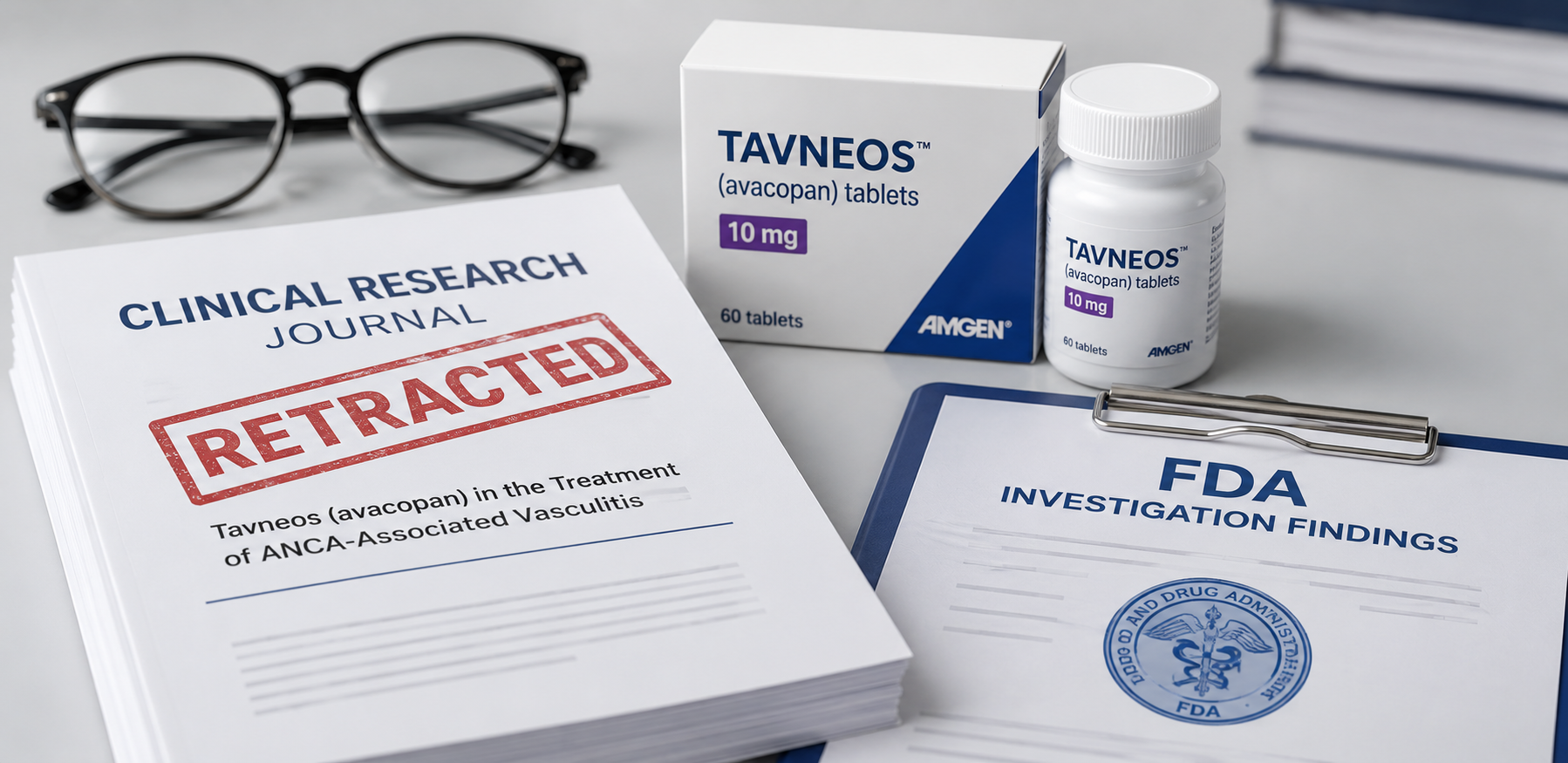
A leading medical journal has retracted a published research paper describing a clinical trial of Amgen's autoimmune drug Tavneos (avacopan) after findings from the U.S. Food and Drug Administration (FDA) raised concerns about the integrity of data collected during the study.
The retraction follows an FDA inspection of one of the clinical trial sites, where investigators identified serious violations involving clinical research practices. According to the FDA, problems at the site affected the reliability of some of the study data that had been included in the published research.
After reviewing the FDA's findings, the journal decided to withdraw the paper from the scientific literature.
Importantly, the retraction does not mean Tavneos has been found to be unsafe or ineffective. Instead, it means the journal concluded that the published study could no longer be considered scientifically reliable because of concerns about how portions of the research were conducted.
The case highlights the critical role regulators, scientific journals, and researchers play in maintaining the integrity of clinical research.
What Is Tavneos?
Tavneos (generic name avacopan) is a prescription medicine approved to treat ANCA-associated vasculitis, a rare autoimmune disease.
In autoimmune diseases, the immune system mistakenly attacks the body's own tissues.
ANCA-associated vasculitis causes inflammation of small blood vessels, which can damage organs such as the:
- Kidneys
- Lungs
- Skin
- Nervous system
- Sinuses
Without treatment, the disease can become life-threatening.
Traditionally, patients have been treated with powerful steroids and immunosuppressive drugs.
Tavneos offers a different approach by blocking a protein called the C5a receptor, which plays an important role in the inflammatory process.
By targeting this pathway, the drug helps reduce inflammation while allowing physicians to reduce the amount of steroid medication patients need.
Why Clinical Trials Matter
Before a new medicine reaches patients, it must undergo multiple phases of clinical testing.
Clinical trials are designed to answer several important questions:
- Does the drug work?
- Is it safe?
- What side effects occur?
- Which patients benefit the most?
- How does it compare with existing treatments?
The data collected during these studies form the foundation of regulatory decisions made by agencies such as the FDA.
Healthcare providers also rely on published trial results when deciding how to treat patients.
Because of this, every piece of clinical data must be accurate, complete, and collected according to strict scientific standards.
Why Was the Paper Retracted?
The retraction was not based on newly discovered safety problems with Tavneos.
Instead, it stemmed from concerns about how some clinical trial data were collected and documented.
During an inspection, FDA investigators reportedly found serious deficiencies at one clinical trial site.
Although Reuters reported that the agency's findings related to research conduct rather than the drug itself, those issues raised enough concern that the medical journal concluded the published study no longer met scientific publication standards.
Scientific journals occasionally retract published papers when evidence shows that:
- Data cannot be verified.
- Research methods were flawed.
- Ethical standards were not followed.
- Important errors affect the study's conclusions.
- Clinical data are considered unreliable.
Retraction is intended to protect the integrity of the scientific record rather than serve as punishment.
What Does a Retraction Mean?
Retraction is one of the most serious actions a scientific journal can take.
It means the journal no longer recommends that readers rely on the published findings.
However, a retracted paper does not automatically mean:
- The medicine is ineffective.
- The medicine is unsafe.
- The FDA approval has been withdrawn.
- All previous research is invalid.
Instead, it indicates that confidence in the specific publication has been compromised.
Other studies supporting the medicine may still remain valid.
Regulators typically review all available evidence—not just one published paper—when evaluating a medicine's safety and effectiveness.
The FDA's Role in Clinical Research
The FDA does much more than review final study results.
The agency also conducts inspections of:
- Clinical trial sites
- Research investigators
- Sponsors
- Contract research organizations
- Manufacturing facilities
These inspections help ensure that:
- Patients are protected.
- Clinical data are accurate.
- Research follows ethical standards.
- Regulatory requirements are met.
If inspectors identify serious deficiencies, the FDA may:
- Issue warning letters.
- Exclude unreliable data.
- Require additional studies.
- Delay regulatory decisions.
- Refer matters for enforcement action.
Maintaining confidence in clinical research depends heavily on these oversight activities.
Why Research Integrity Is So Important
Healthcare decisions rely on scientific evidence.
Doctors prescribe medicines based on published clinical trials.
Regulators approve therapies using those data.
Patients trust that treatments have been evaluated through rigorous research.
If clinical trial data cannot be trusted, it affects multiple stakeholders:
- Patients
- Physicians
- Researchers
- Regulators
- Pharmaceutical companies
- Investors
For this reason, the healthcare industry places enormous importance on research quality and transparency.
Even isolated problems can damage confidence in scientific findings.
What Happens Next?
The journal's decision does not automatically change Tavneos' regulatory status.
Amgen and healthcare providers will continue monitoring the medicine's safety through ongoing studies and post-marketing surveillance.
Regulators may review additional evidence if necessary, but Reuters reported that the retraction primarily relates to concerns about one published study rather than the overall evidence supporting the drug.
Researchers will likely continue studying Tavneos in future clinical trials to better understand its long-term safety and effectiveness.
The broader scientific community will also examine the case as another reminder of the importance of maintaining rigorous research standards.
Industry Impact
- Pharmaceutical Companies: Drug developers may face increased scrutiny regarding clinical trial oversight and data quality.
- Medical Journals: Scientific publishers continue strengthening review processes to maintain confidence in published research.
- Regulators: The FDA's inspection program remains an essential safeguard for ensuring clinical trial integrity.
- Healthcare Providers: Clinicians rely on high-quality published evidence when making treatment decisions and may closely follow developments involving important clinical studies.
Why This Matters
The retraction demonstrates that scientific oversight continues even after research has been published.
The healthcare system depends on trustworthy evidence to guide regulatory approvals, medical practice, and future research.
By investigating clinical trial conduct and correcting the scientific record when necessary, regulators and medical journals help preserve confidence in healthcare innovation.
Although the case may raise questions about one specific study, it also reinforces that multiple layers of oversight exist to identify problems and protect patients.
Ultimately, maintaining research integrity is essential for ensuring that new medicines are evaluated using accurate, reliable, and transparent scientific evidence.
Key Takeaways
- A medical journal retracted a published Tavneos clinical trial paper following FDA inspection findings.
- The retraction relates to concerns about the reliability of clinical trial data collected at one study site.
- The decision does not mean Tavneos has been found unsafe or ineffective.
- FDA inspections help ensure clinical research follows scientific and ethical standards.
- The case highlights the importance of research integrity throughout the drug development process.
What This Means for Healthcare Marketers
This story underscores that credibility is one of the most valuable assets in healthcare. Successful commercialization depends not only on developing innovative medicines but also on generating high-quality scientific evidence that healthcare providers, regulators, and patients can trust.
For healthcare marketers, research integrity directly affects brand reputation. Clinical trial publications are often used to educate physicians, support reimbursement discussions, and demonstrate product value. When questions arise about study quality, organizations must communicate carefully, transparently, and in alignment with regulatory guidance while continuing to rely on the broader body of clinical evidence.
For healthcare intelligence teams, this case highlights the importance of monitoring regulatory inspections, journal publications, and scientific retractions alongside traditional FDA approvals and clinical trial results. These developments can influence physician confidence, investor sentiment, competitive positioning, and future commercialization strategies.
More broadly, the incident demonstrates that scientific scrutiny does not end when a drug reaches the market. Ongoing oversight by regulators, journals, and the research community remains essential for maintaining confidence in healthcare innovation and ensuring that clinical decisions are based on reliable evidence.