
Medtronic Boosts Fiscal 2027 Forecasts on Strong Heart-Device Demand
What’s Happening
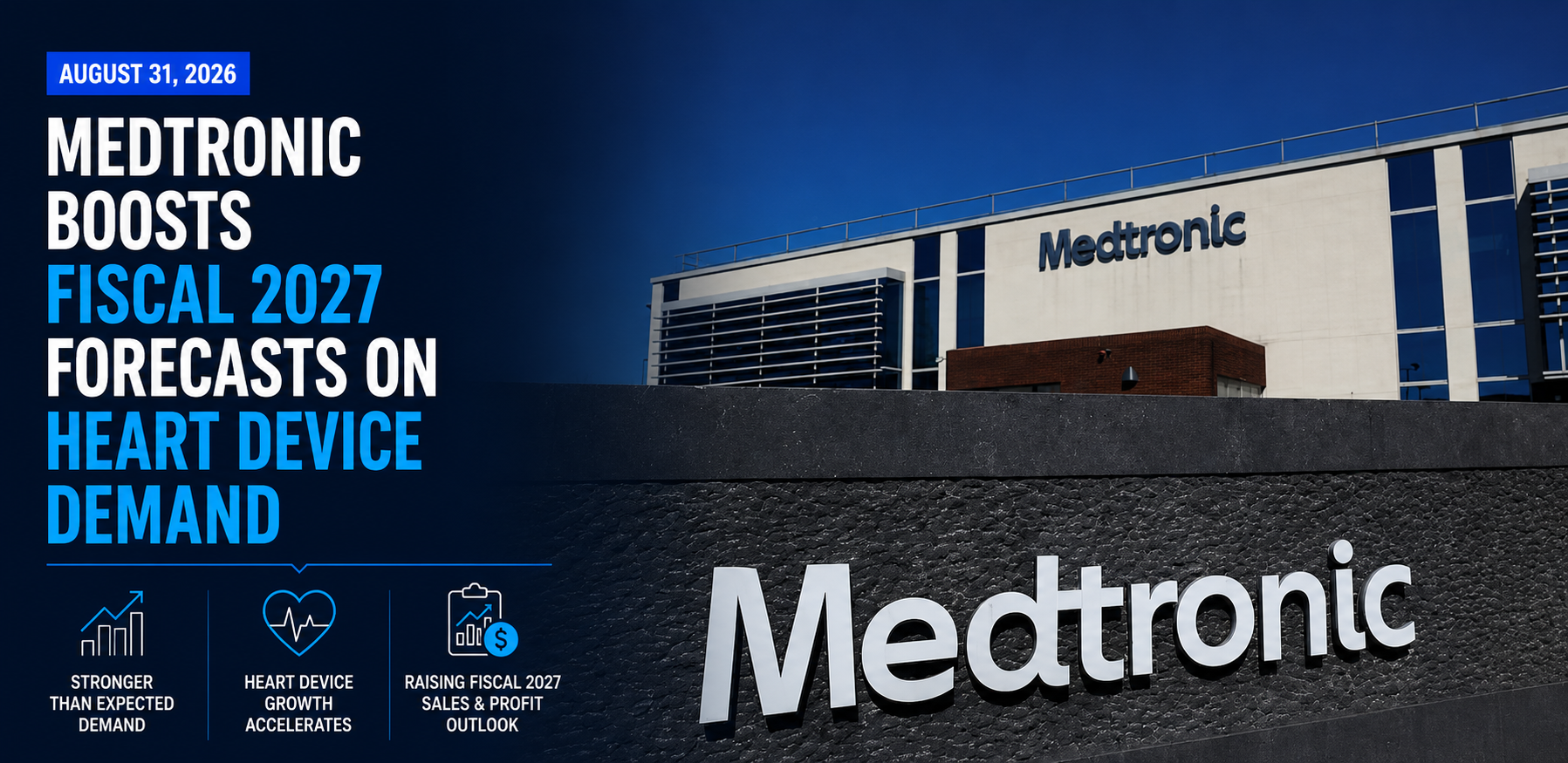
Medtronic has raised its financial forecasts for fiscal 2027, citing stronger-than-expected demand for its heart devices and continued momentum across parts of its medical-device business.
The company increased its expectations for both adjusted revenue growth and adjusted earnings per share, signaling that demand for cardiovascular products is providing a stronger foundation for the business than previously anticipated.
The update is significant because Medtronic is one of the world's largest medical-device manufacturers, and cardiovascular products represent one of its most important business areas.
Strong Demand for Cardiovascular Devices
Heart products are driving momentum
Medtronic said demand for its cardiovascular devices has been particularly strong.
The company produces a broad range of products used to diagnose and treat heart conditions, including devices used in procedures involving the heart rhythm, structural heart disease and vascular conditions.
The stronger demand reflects continued healthcare activity in areas where patients have delayed or postponed procedures and are now returning for treatment.
As hospitals work through procedure backlogs and physicians perform more interventions, medical-device manufacturers can benefit from higher procedure volumes.
Medtronic Raises Its Fiscal 2027 Outlook
The company now expects organic revenue growth of approximately 7.25% to 7.75% for fiscal 2027, compared with its previous expectation.
Medtronic also raised its adjusted earnings-per-share outlook to approximately $5.94 to $6.00, up from its previous forecast.
The improved guidance indicates that management is becoming more confident that demand for its products can support stronger growth than initially anticipated.
Cardiovascular Care Is a Major Growth Area
Procedure volumes remain important
Medical-device companies are highly sensitive to changes in procedure volumes.
When hospitals perform more heart procedures, demand rises for the devices, implants and other equipment used during those procedures.
That makes cardiovascular device demand an important indicator for Medtronic because stronger procedure volumes can translate directly into higher product sales.
The company's latest forecast suggests that this underlying demand remains healthy.
Aging populations support long-term demand
The cardiovascular-device market also benefits from long-term demographic trends.
Older populations generally have higher rates of cardiovascular disease and are more likely to require interventions involving implanted or minimally invasive medical devices.
That creates a structural source of demand for companies such as Medtronic, even when healthcare spending fluctuates in the short term.
The Medical-Device Market Is Recovering From Earlier Pressure
Post-pandemic procedure normalization
The medical-device sector has spent several years adjusting to disruptions caused by the COVID-19 pandemic.
During the pandemic, many elective procedures were postponed as hospitals redirected resources toward COVID patients and dealt with staffing and capacity constraints.
As healthcare systems normalized, procedure volumes recovered, creating an increasingly favorable environment for device manufacturers.
Medtronic's stronger outlook suggests this recovery is continuing across important cardiovascular categories.
Medtronic's Position in the Healthcare Device Market
Medtronic operates across several major medical-device categories, including cardiovascular, neuroscience, diabetes and surgical products.
That diversification provides some protection against weakness in any one market.
However, cardiovascular devices remain particularly important because they involve high-value procedures and long-term relationships with hospitals, physicians and healthcare systems.
The company's performance therefore provides a useful read on broader demand for interventional and cardiovascular medical technology.
Hospitals Are an Important Part of the Demand Story
Procedure capacity affects device sales
The number of procedures hospitals can perform is influenced by staffing, operating-room availability, physician capacity and patient demand.
Even when patients need procedures, hospitals may not be able to immediately accommodate them if there are capacity constraints.
As those constraints ease, procedures can move forward, creating additional demand for medical devices.
This is one reason why device companies closely monitor hospital procedure volumes and trends in elective care.
Cardiovascular care is becoming more technology intensive
Modern heart care increasingly relies on minimally invasive procedures and sophisticated devices.
As physicians adopt newer technologies and hospitals expand their procedural capabilities, device manufacturers can gain opportunities to introduce higher-value products.
For Medtronic, stronger demand can therefore come not only from more procedures but also from new technology adoption within existing procedures.
Competition Remains Intense
Medtronic competes with major medical-device companies across cardiovascular and other specialties.
Companies including Abbott, Boston Scientific and Edwards Lifesciences are also investing heavily in cardiovascular technologies.
That competition creates pressure to continuously innovate, improve clinical outcomes and demonstrate value to hospitals and physicians.
Strong demand can benefit the entire category, but companies still need differentiated products to gain market share.
What the Forecast Means for the Broader Medical-Device Industry
Medtronic's guidance is an important signal for the wider medical-device market.
When one of the industry's largest companies reports stronger cardiovascular demand, investors and competitors can interpret that as evidence that procedure volumes and healthcare utilization remain resilient.
It can also encourage other manufacturers to reassess their own expectations around hospital demand, elective procedures and capital spending.
The trend is particularly relevant for companies selling products tied to cardiovascular procedures because they operate in a market where device demand can be closely linked to the number and type of procedures being performed.
Why This Matters
The revised forecast shows that healthcare utilization is translating into stronger commercial demand for medical devices.
For Medtronic, this means hospitals and physicians are ordering and using more of its cardiovascular products than the company had previously anticipated.
For the broader healthcare industry, the announcement offers another indication that procedural care remains an important growth engine.
It also demonstrates why healthcare companies need to monitor operational signals such as procedure volumes, hospital capacity and technology adoption rather than relying only on broad healthcare-spending forecasts.
Looking Ahead
Medtronic's performance will depend on whether strong cardiovascular demand continues through fiscal 2027.
The company will also need to maintain its competitive position as rival device manufacturers introduce new products and expand in high-growth cardiovascular categories.
Another important factor will be whether hospitals continue increasing procedure volumes and investing in advanced medical technologies.
If those trends persist, cardiovascular devices could remain an important source of growth for Medtronic and the broader medical-device industry.
Key Takeaways
- Medtronic raised its fiscal 2027 financial forecasts.
- The company cited strong demand for heart and cardiovascular devices as a key driver.
- Organic revenue growth is now expected to be around 7.25% to 7.75%.
- Adjusted EPS guidance was raised to approximately $5.94 to $6.00.
- The outlook suggests continued recovery and strength in cardiovascular procedure volumes.
- Hospital activity, procedure capacity and adoption of newer medical technologies remain important demand drivers.
- Medtronic's results provide a useful indicator for the broader U.S. medical-device market.
- Competition remains strong among major cardiovascular-device manufacturers.
What This Means for Healthcare Marketers
For medical-device marketers, the biggest signal is the connection between clinical activity and commercial demand.
Strong cardiovascular procedure volumes create opportunities not just for manufacturers, but also for distributors, healthcare technology companies, clinical-service providers and companies selling products that support those procedures.
The important insight is that demand can often be detected before it appears in revenue. Changes in procedure volumes, hospital capacity, physician adoption and technology utilization can act as early indicators of where healthcare spending is moving.
For healthcare companies, tracking those real-world signals can make it easier to identify markets that are beginning to accelerate rather than waiting for quarterly financial results to confirm the trend.