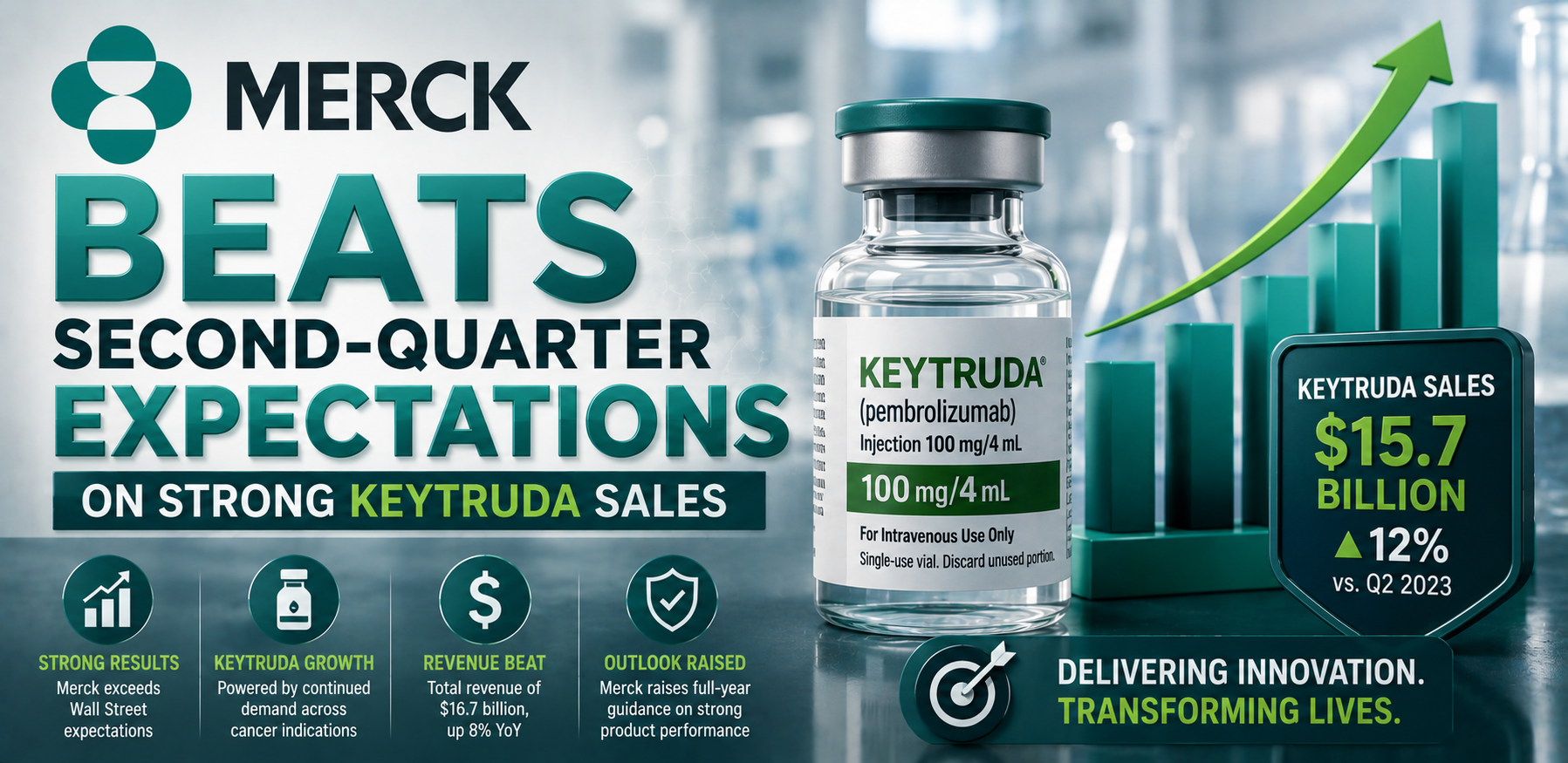
Merck Beats Second-Quarter Expectations on Strong Keytruda Sales
What's Happening
Merck reported stronger-than-expected second-quarter financial results as continued demand for its blockbuster cancer drug Keytruda helped drive revenue and profit above Wall Street expectations.
The pharmaceutical company benefited from sustained growth in oncology, with Keytruda remaining the largest contributor to its revenue. Strong performance across its broader portfolio also supported quarterly results, demonstrating the company's continued leadership in cancer treatment despite increasing competition in the pharmaceutical industry.
Merck reaffirmed its focus on expanding its oncology pipeline while investing in new therapies to support long-term growth beyond Keytruda.
What's Driving the Strong Results
The company's quarterly performance was primarily driven by continued global demand for Keytruda, an immunotherapy used to treat multiple types of cancer.
Merck also generated revenue from medicines across several therapeutic areas, including:
- Oncology.
- Vaccines.
- Infectious diseases.
- Cardiometabolic diseases.
- Animal health.
The strong commercial performance reflects increasing adoption of immunotherapy as a standard treatment for many cancers.
Understanding Keytruda
Keytruda is an immunotherapy that belongs to a class of medicines known as PD-1 inhibitors.
Rather than attacking cancer cells directly, it helps the body's immune system recognize and destroy cancer cells more effectively.
The medicine is approved to treat numerous cancers, including:
- Lung cancer.
- Melanoma.
- Kidney cancer.
- Bladder cancer.
- Head and neck cancer.
- Esophageal cancer.
- Several other solid tumors.
Its broad range of approved uses has made it one of the world's best-selling prescription medicines.
Industry Impact
- Pharmaceutical Companies: Merck's results highlight continued growth in oncology and reinforce the commercial importance of immunotherapy in modern cancer care.
- Healthcare Providers: Oncologists continue relying on immunotherapies such as Keytruda to improve survival outcomes across multiple types of cancer.
- Patients: Strong commercial performance supports continued investment in new cancer treatments and combination therapies that may further improve patient outcomes.
- Investors: The better-than-expected results reinforce confidence in pharmaceutical companies with diversified oncology portfolios and strong research pipelines.
Looking Ahead
Merck plans to continue expanding Keytruda into additional cancer indications while advancing new oncology medicines that can support future growth.
The company is also investing in clinical trials, combination therapies, and next-generation immunotherapies to strengthen its oncology leadership as future patent expirations approach.
Future regulatory approvals and clinical trial results will remain important drivers of Merck's long-term strategy.
Why This Matters
Cancer remains one of the leading causes of death worldwide, making continued innovation in oncology a major healthcare priority.
Merck's strong quarterly results demonstrate the growing role of immunotherapy in cancer treatment while highlighting the pharmaceutical industry's continued investment in precision oncology.
The company's ongoing research also reflects broader efforts to develop more effective, personalized cancer therapies.
Key Takeaways
- Merck reported stronger-than-expected second-quarter financial results.
- Continued demand for Keytruda drove revenue and profit above analyst expectations.
- Keytruda remains one of the world's leading immunotherapy treatments for multiple cancers.
- Merck continues investing in expanding its oncology pipeline and next-generation cancer therapies.
- The results reinforce continued growth across the global oncology market.
What This Means for Healthcare Marketers
Merck's strong performance underscores continued investment in oncology, immunotherapy, and precision medicine. Pharmaceutical companies, cancer centers, healthcare providers, specialty pharmacies, and biotechnology firms continue expanding innovative cancer treatments to address growing patient needs. For healthcare marketers, organizations involved in oncology, immunotherapy, clinical research, and specialty pharmaceuticals represent high-intent opportunities for physician education, medical affairs, scientific communications, and commercial growth.