Michigan Cyclosporiasis Cases Surpass 4,000 as Health Officials Urge Food Safety and Early Diagnosis
What's Happening
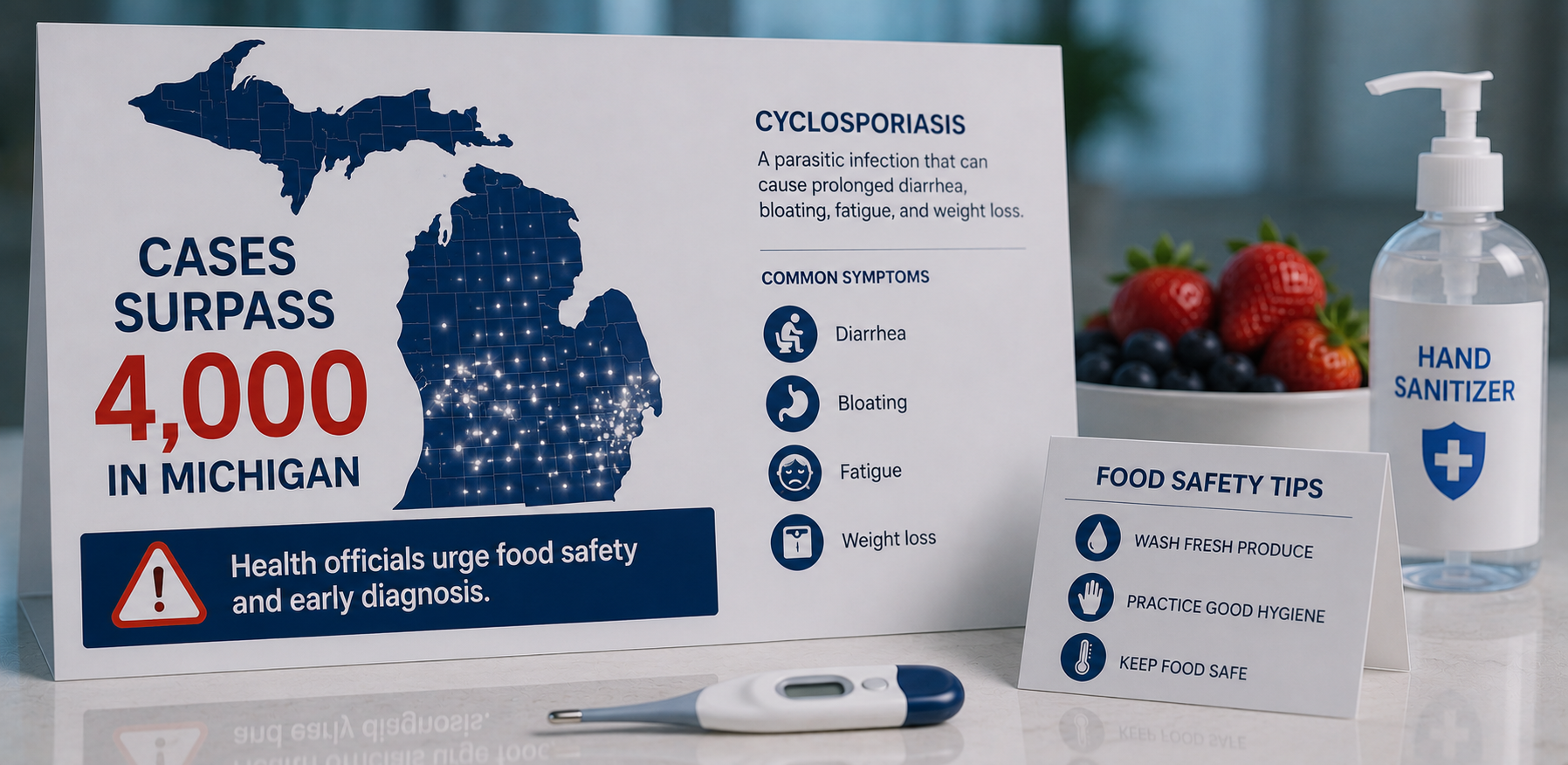
Health officials in Michigan have reported that more than 4,000 cases of cyclosporiasis have now been identified in the state, making it one of the largest outbreaks of the intestinal illness in recent years. Public health authorities continue investigating the source of the infections while urging residents and healthcare providers to remain vigilant for symptoms and report suspected cases.
The outbreak has prompted renewed attention to food safety practices and disease surveillance, as cyclosporiasis is commonly linked to contaminated fresh produce. Officials are working with local, state, and federal agencies to identify potential sources of contamination and prevent additional illnesses.
While most people recover with appropriate treatment, health experts emphasize that early diagnosis is important to reduce complications and help trace the outbreak more effectively.
What Is Cyclosporiasis?
Cyclosporiasis is an intestinal illness caused by the microscopic parasite Cyclospora cayetanensis.
People become infected after consuming food or water contaminated with the parasite, most often fresh fruits and vegetables that have been exposed to contaminated water during growing, harvesting, or processing.
Unlike many foodborne bacteria, Cyclospora is not spread directly from person to person because the parasite requires time outside the human body before it becomes infectious.
Common foods previously associated with outbreaks include:
- Bagged salad mixes.
- Cilantro.
- Basil.
- Raspberries.
- Snow peas.
- Fresh herbs and leafy greens.
Because these foods are often eaten raw, contamination can be difficult to eliminate before consumption.
Symptoms Can Last for Weeks
Symptoms typically begin about one week after exposure, although the timing can vary.
Common symptoms include:
- Frequent watery diarrhea.
- Loss of appetite.
- Stomach cramps.
- Nausea.
- Fatigue.
- Bloating.
- Weight loss.
- Low-grade fever.
Without treatment, symptoms may come and go for several weeks or even months.
Healthy individuals usually recover, but prolonged illness can lead to dehydration and significant weight loss, particularly in older adults or people with weakened immune systems.
How Is It Diagnosed and Treated?
Diagnosing cyclosporiasis can be challenging because its symptoms resemble many other gastrointestinal infections.
Healthcare providers typically confirm the diagnosis through specialized laboratory testing that identifies the Cyclospora parasite in stool samples.
The recommended treatment is an antibiotic called trimethoprim-sulfamethoxazole (TMP-SMX), which is generally very effective when started promptly.
Patients who cannot take this medication because of allergies or other medical conditions may require supportive care and consultation with infectious disease specialists.
Most patients recover completely with appropriate treatment.
Why Large Outbreaks Are Difficult to Investigate
Foodborne outbreaks involving Cyclospora present unique challenges for investigators.
Fresh produce often has:
- Short shelf lives.
- Complex international supply chains.
- Distribution through multiple retailers.
- Seasonal availability.
By the time illnesses are reported, the contaminated food has often already been consumed or discarded, making laboratory confirmation difficult.
Public health investigators rely on interviews with patients, purchase records, traceback investigations, and laboratory analysis to identify common exposure sources.
Even when a likely food source is identified, determining the exact point of contamination can take weeks or months.
Preventing Cyclosporiasis
Although washing produce is always recommended, it may not completely eliminate Cyclospora because the parasite can adhere tightly to fruits and vegetables.
Health experts recommend:
- Washing hands before preparing food.
- Rinsing fresh produce thoroughly under running water.
- Refrigerating perishable foods promptly.
- Purchasing produce from reputable suppliers.
- Following food recall announcements from public health authorities.
Restaurants, food distributors, and growers also play a critical role by following safe agricultural and food handling practices throughout the supply chain.
Industry Impact
- Public Health Agencies: The outbreak requires extensive disease surveillance, laboratory testing, and coordination between local, state, and federal agencies to identify the source and limit additional cases.
- Healthcare Providers: Physicians and emergency departments are encouraged to consider cyclosporiasis in patients with persistent diarrhea, particularly during outbreak periods or when patients report consuming fresh produce.
- Food Industry: Growers, distributors, and retailers may face increased inspections, traceback investigations, and additional food safety measures as authorities work to identify contaminated products.
- Consumers: The outbreak serves as a reminder that fresh produce, while an important part of a healthy diet, can occasionally become contaminated and should be handled carefully before consumption.
Why This Matters
The Michigan outbreak demonstrates how foodborne illnesses remain a significant public health challenge despite advances in food safety systems.
As modern food supply chains become increasingly global, identifying contamination sources has become more complex. Rapid disease reporting, effective laboratory testing, and close collaboration between healthcare providers and public health agencies are essential for limiting outbreaks and protecting communities.
The event also reinforces the importance of ongoing investments in food safety surveillance, outbreak investigation, and public health infrastructure that can detect emerging threats before they spread more widely.
Key Takeaways
- Michigan has reported more than 4,000 cases of cyclosporiasis, making it one of the state's largest recent outbreaks.
- Cyclosporiasis is caused by the parasite Cyclospora cayetanensis and is commonly linked to contaminated fresh produce.
- Symptoms include prolonged diarrhea, fatigue, stomach cramps, nausea, and weight loss.
- The illness is treatable with antibiotics when diagnosed promptly.
- Public health officials continue investigating the outbreak source while encouraging healthcare providers and residents to remain alert for symptoms.
What This Means for Healthcare Marketers
Large foodborne outbreaks highlight the continued importance of rapid disease surveillance, laboratory diagnostics, and public health communication. Healthcare organizations that support infectious disease testing, epidemiology, food safety monitoring, and outbreak response play a critical role in helping communities detect and manage emerging public health threats. Clear, timely communication is equally important for educating clinicians and the public during evolving outbreaks.
For healthcare marketers, this event underscores the growing demand for solutions that improve public health preparedness, diagnostic accuracy, and real-time disease tracking. Organizations that help strengthen laboratory capacity, streamline reporting, or enhance food safety monitoring are well positioned as healthcare systems continue investing in preventive public health infrastructure.
For healthcare intelligence teams, outbreaks like this provide valuable insight into infectious disease trends and the importance of coordinated surveillance across healthcare providers, laboratories, and government agencies. Monitoring foodborne illness patterns, public health advisories, and regulatory actions can help organizations anticipate future risks and identify opportunities for innovation in population health and disease prevention.