
Michigan Cyclosporiasis Cases Surge Past 2,600 as State Investigates Ongoing Outbreak
What's Happening
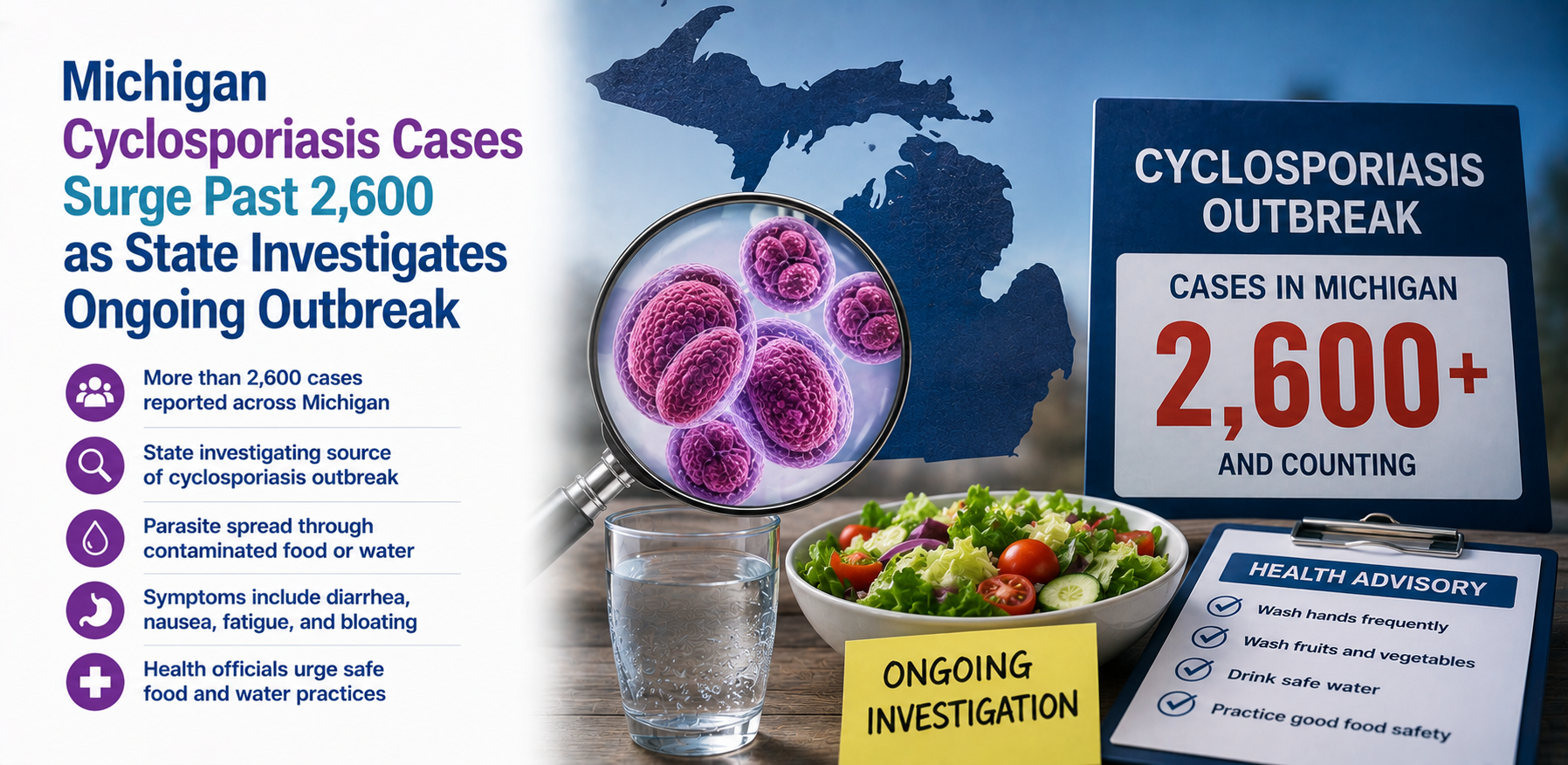
Michigan health officials are reporting a sharp increase in cyclosporiasis cases, with the number of confirmed infections now exceeding 2,600. The outbreak is one of the largest the state has experienced and is part of broader efforts by public health authorities to investigate the spread of the intestinal illness and identify its source.
State officials are working alongside the U.S. Centers for Disease Control and Prevention (CDC) and local health departments to determine whether the cases are linked to contaminated food products distributed within or beyond Michigan. Investigators continue interviewing patients, tracing food purchases, and analyzing supply chains to locate the source of the infections.
The growing number of cases highlights the importance of rapid outbreak detection and coordinated public health investigations.
What Is Causing the Outbreak?
The illness is caused by Cyclospora cayetanensis, a microscopic parasite that infects the intestines after a person consumes contaminated food or water.
Unlike viruses or bacteria that can spread directly between people, Cyclospora requires time outside the human body before becoming infectious.
As a result, outbreaks are most commonly linked to contaminated fresh produce rather than person-to-person transmission.
Health officials have not yet confirmed the specific source responsible for the Michigan outbreak.
Why Are Cases Increasing?
Public health officials are investigating several possible factors behind the rise in infections.
These include:
- Contaminated fresh produce distributed through food supply chains.
- Seasonal increases in Cyclospora infections during warmer months.
- Improved laboratory testing and case reporting.
- Expanded surveillance by public health agencies.
Because fresh fruits and vegetables are often shipped across multiple states, a single contaminated source can result in hundreds or even thousands of illnesses before it is identified.
Recognizing the Symptoms
Symptoms of cyclosporiasis usually begin about one week after exposure.
Common symptoms include:
- Frequent watery diarrhea.
- Stomach cramps.
- Nausea.
- Fatigue.
- Loss of appetite.
- Weight loss.
- Bloating.
- Low-grade fever.
Without treatment, symptoms may continue for several weeks and sometimes recur after temporarily improving.
People with weakened immune systems may experience more severe illness.
How Public Health Officials Respond
When large outbreaks occur, health departments work to quickly identify the source and prevent additional infections.
Their response typically includes:
- Confirming cases through laboratory testing.
- Interviewing infected individuals.
- Identifying common food exposures.
- Tracing produce distribution networks.
- Coordinating investigations with federal agencies.
- Informing healthcare providers and the public.
If investigators identify a contaminated product, public health agencies may issue recalls or consumer advisories.
Treatment and Prevention
Cyclosporiasis is generally treated with the antibiotic trimethoprim-sulfamethoxazole (TMP-SMX).
Most patients recover fully after appropriate treatment.
Consumers can reduce their risk by:
- Washing fresh produce before eating.
- Practicing proper hand hygiene.
- Following food recall notices.
- Seeking medical attention if diarrhea persists for several days.
Although washing fruits and vegetables is recommended, it may not completely remove Cyclospora from contaminated produce.
Preventing contamination during farming, harvesting, and food processing remains the most effective way to reduce outbreaks.
Why Large Outbreaks Matter
Large foodborne outbreaks place additional demands on:
- Public health laboratories.
- Healthcare providers.
- State health departments.
- Food safety investigators.
- Agricultural suppliers.
Early identification helps prevent additional illnesses while improving food safety practices throughout the supply chain.
The Michigan outbreak also demonstrates how closely state and federal agencies work together during multistate foodborne illness investigations.
Industry Impact
- Public Health Agencies: State and federal investigators continue monitoring cases while working to identify the contamination source.
- Food Industry: Growers, distributors, and retailers may face increased inspections and traceability reviews as investigators examine the food supply chain.
- Healthcare Providers: Clinicians are encouraged to consider cyclosporiasis when evaluating patients with prolonged diarrhea, particularly during seasonal outbreaks.
- Consumers: Greater public awareness can help individuals recognize symptoms early and seek timely diagnosis and treatment.
Why This Matters
The rapid increase in Michigan's cyclosporiasis cases highlights the ongoing challenge of preventing foodborne illnesses within complex food supply chains.
Because fresh produce is often distributed across multiple regions, outbreaks can quickly affect large populations before contamination is detected.
The investigation also demonstrates the importance of strong disease surveillance, laboratory testing, and collaboration between healthcare providers, food safety officials, and public health agencies.
Identifying the contamination source as quickly as possible will be essential to limiting additional infections and strengthening future food safety efforts.
Key Takeaways
- Michigan has reported more than 2,600 cases of cyclosporiasis as investigators continue examining the outbreak.
- The illness is caused by the parasite Cyclospora cayetanensis and is commonly linked to contaminated fresh produce.
- Public health officials are working to identify the source through interviews, laboratory testing, and food supply chain investigations.
- Symptoms include prolonged diarrhea, stomach cramps, fatigue, nausea, and weight loss.
- The outbreak highlights the importance of food safety monitoring and coordinated public health response.
What This Means for Healthcare Marketers
The Michigan outbreak demonstrates the growing importance of real-time public health surveillance and coordinated disease response. Rapid identification of foodborne illnesses depends on collaboration between healthcare providers, diagnostic laboratories, public health agencies, and food safety authorities. As outbreaks become more complex due to interconnected supply chains, organizations that support disease surveillance and laboratory diagnostics play an increasingly important role in protecting public health.
For healthcare marketers, the event reinforces the value of solutions that improve outbreak detection, laboratory testing, epidemiology, and food traceability. Healthcare technology companies, diagnostic providers, and public health organizations have opportunities to highlight how their products support earlier detection, faster investigations, and more effective disease prevention strategies.
For healthcare intelligence teams, foodborne illness investigations provide insight into evolving public health priorities and food safety challenges. Monitoring outbreak trends, surveillance data, laboratory advances, and regulatory responses can help organizations anticipate emerging risks while supporting innovation in disease prevention and population health management.