Michigan Reports 5,002 Cyclosporiasis Cases as Officials Intensify Search for Outbreak Source
What's Happening
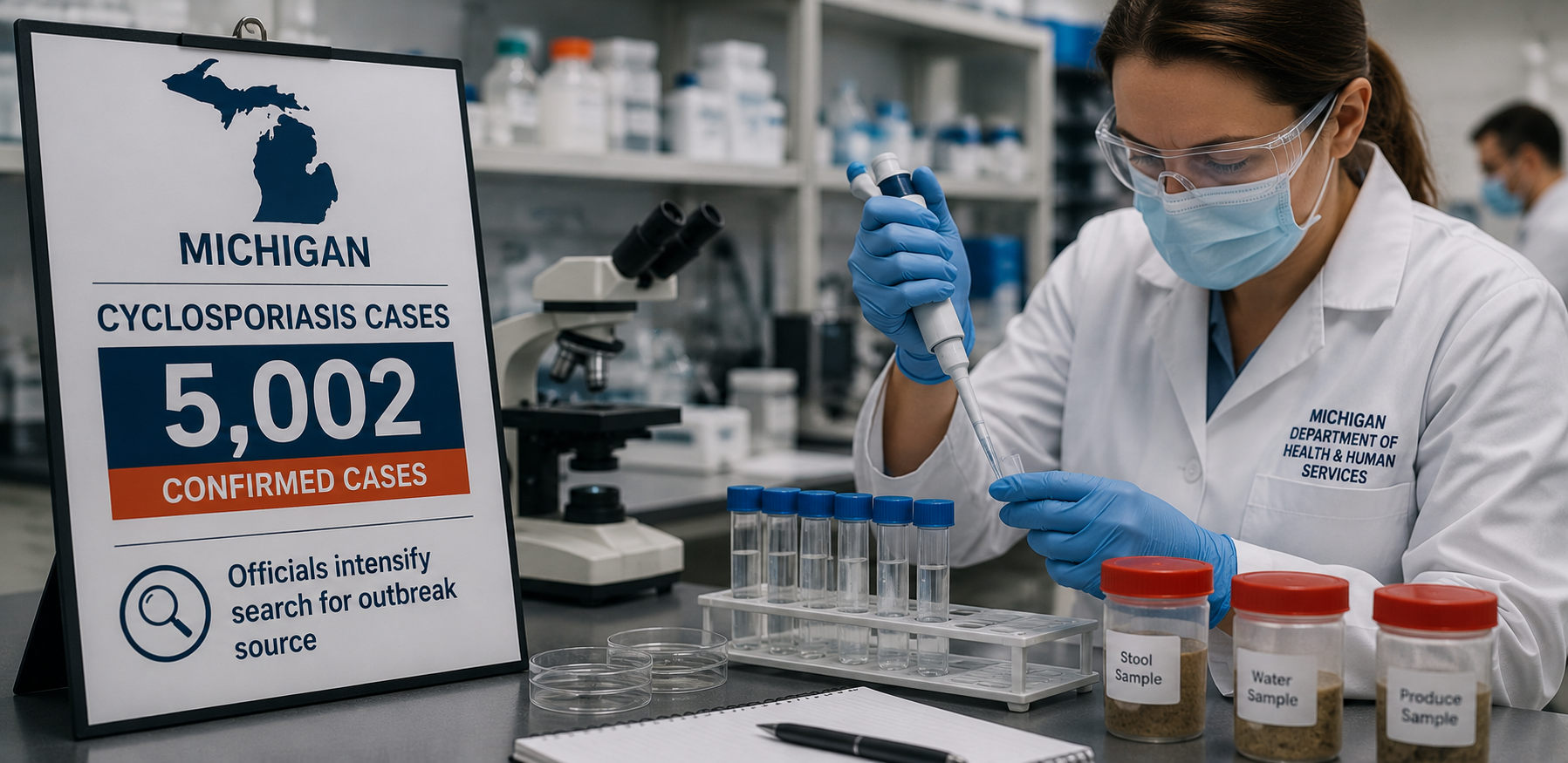
Michigan health officials have reported 5,002 confirmed cases of cyclosporiasis, making it one of the state's largest documented outbreaks of the parasitic illness. Public health investigators are continuing to trace the source of the infections while working with federal agencies to determine how contaminated food entered the supply chain.
The outbreak has drawn national attention because of its scale and because Cyclospora infections are commonly linked to fresh produce, particularly fruits and leafy vegetables that are consumed raw. Investigators are examining food distribution networks, suppliers, and purchasing records to identify the origin of the contamination. (reuters.com)
Officials are urging consumers and healthcare providers to remain vigilant while the investigation continues.
What Is Cyclosporiasis?
Cyclosporiasis is an intestinal illness caused by the microscopic parasite Cyclospora cayetanensis.
People become infected by consuming food or water contaminated with the parasite. Unlike many bacterial foodborne illnesses, Cyclospora generally requires time outside the human body before it becomes infectious, meaning direct person-to-person transmission is uncommon.
Common symptoms include:
- Persistent watery diarrhea.
- Stomach cramps.
- Loss of appetite.
- Nausea.
- Fatigue.
- Weight loss.
- Low-grade fever.
Without treatment, symptoms can persist for several weeks or even recur over time.
Why Fresh Produce Is Often Involved
Cyclospora outbreaks are frequently associated with fresh produce because many fruits and vegetables are eaten without cooking, allowing the parasite to survive if contamination occurs.
Foods previously linked to outbreaks include:
- Lettuce.
- Cilantro.
- Basil.
- Raspberries.
- Snow peas.
Contamination can occur at several stages, including:
- Agricultural production.
- Irrigation.
- Harvesting.
- Processing.
- Distribution.
Because fresh produce often travels through complex supply chains before reaching consumers, tracing the exact source of contamination can be challenging.
The Investigation
Michigan health officials are working alongside federal public health agencies to determine whether the cases share a common source.
Investigators are reviewing:
- Patient interviews.
- Restaurant dining histories.
- Grocery purchase records.
- Produce suppliers.
- Distribution networks.
Laboratory testing and epidemiological analysis are helping officials identify common exposure patterns that may connect the reported cases.
According to Reuters, officials have not yet confirmed a single definitive source of the outbreak. (reuters.com)
Why Rapid Identification Matters
Identifying the source of a foodborne outbreak quickly is essential because it allows health authorities to:
- Remove contaminated products from the market.
- Alert consumers.
- Prevent additional illnesses.
- Assist healthcare providers in recognizing symptoms.
- Reduce the geographic spread of contaminated food.
Modern food supply chains often distribute produce across multiple states, making early detection and coordinated investigations particularly important.
Public Health Response
Health authorities continue to encourage individuals experiencing prolonged gastrointestinal symptoms after consuming fresh produce to seek medical evaluation.
Healthcare providers are also being advised to consider Cyclospora infection in patients presenting with persistent diarrhea, especially during seasonal outbreaks.
Public health agencies are continuing surveillance while coordinating with laboratories, food distributors, and regulatory partners to monitor additional cases.
Industry Impact
- Food Producers: Growers and produce suppliers may face increased inspections, traceback investigations, and quality assurance reviews as officials work to identify the contamination source.
- Restaurants and Retailers: Businesses sourcing fresh produce may increase supplier verification and food safety monitoring to minimize future risks.
- Public Health Agencies: The outbreak underscores the importance of coordinated surveillance systems that enable state and federal agencies to rapidly identify foodborne illness clusters.
- Consumers: The investigation serves as a reminder of the importance of food safety monitoring and the critical role public health agencies play in identifying and containing outbreaks.
Why This Matters
Large foodborne illness outbreaks demonstrate how interconnected modern food supply chains have become. A single contamination event can affect thousands of people across multiple communities before investigators identify the source.
Cyclospora outbreaks also present unique challenges because symptoms may not appear immediately, making it more difficult for patients to remember exactly what they consumed. This can delay investigations and complicate efforts to trace contaminated products.
The Michigan investigation highlights the importance of strong disease surveillance, laboratory testing, and collaboration between healthcare providers, regulators, and food industry stakeholders to protect public health.
Key Takeaways
- Michigan has reported 5,002 confirmed cases of cyclosporiasis while officials continue investigating the source of the outbreak. (reuters.com)
- Cyclospora is a foodborne parasite commonly associated with contaminated fresh produce.
- Investigators are reviewing patient histories, food purchases, and supply chains to identify the contamination source.
- Rapid traceback investigations are essential for removing contaminated products and preventing additional illnesses.
- The outbreak highlights the importance of food safety surveillance and coordinated public health response.
What This Means for Healthcare Marketers
The Michigan outbreak demonstrates how food safety events extend well beyond the food industry, influencing public health planning, healthcare utilization, regulatory activity, and consumer awareness. Organizations involved in diagnostics, infectious disease surveillance, laboratory services, and public health technologies may see increased demand for solutions that support faster outbreak detection and response.
For healthcare marketers, the event reinforces the value of communicating scientific credibility, transparency, and preparedness. As public health agencies and healthcare providers respond to foodborne illness outbreaks, organizations that help improve disease surveillance, laboratory testing, and health data sharing can strengthen their position as trusted partners.
For healthcare intelligence teams, large outbreaks provide important signals about emerging public health risks, supply chain vulnerabilities, and evolving regulatory priorities. Monitoring these developments can help organizations anticipate future healthcare needs and identify opportunities related to infectious disease management, diagnostics, and population health.